


A Man of Dignity and Defiance
Before there was a stadium, there was the man. Arthur Ashe was a monumental figure who transcended sport. Born in segregated Richmond, Virginia, he became the first African American man to win the US Open (1968), Australian Open (1970), and Wimbledon
(1975). His victory in the inaugural US Open in 1968, the first year professionals could compete, was a landmark moment. But Ashe was more than a champion; he was a powerful voice for social justice. He leveraged his global platform to protest apartheid in South Africa, advocate for Haitian refugees, and champion education and public health. He was arrested for his activism and stood as a model of quiet courage and unwavering integrity until his death in 1993. Naming the stadium after him was a deliberate choice to honor not just a tennis great, but a humanitarian who broke barriers with grace and conviction.
A New Home for American Tennis
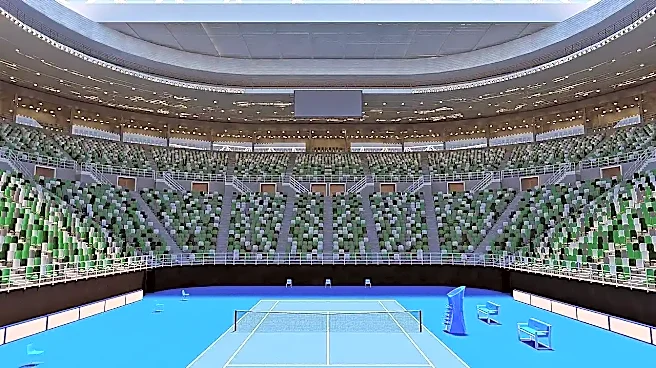
By the 1990s, the US Open had outgrown its primary venue, Louis Armstrong Stadium. The United States Tennis Association (USTA) envisioned a grander stage that could match the tournament's growing global stature. In 1997, that vision became a reality. Arthur Ashe Stadium opened in Flushing Meadows-Corona Park, Queens, replacing Louis Armstrong Stadium as the tournament's centerpiece. The project cost $254 million and was designed by Rossetti Architects to be the largest tennis-only venue in the world. At its opening, the stadium had an original capacity of 22,547 seats, 90 luxury suites, and multiple restaurants. The inauguration ceremony itself was a tribute to its namesake, with Whitney Houston dedicating her performance of "One Moment in Time" to the late Arthur Ashe.
Engineering an Icon
From day one, the stadium was an architectural marvel, but it had a significant vulnerability: no roof. For five straight years, from 2008 to 2012, rain delayed the men's singles final, frustrating players, broadcasters, and fans. The challenge was immense; the stadium wasn't originally designed to support a roof, and the site's poor soil conditions—a former coal ash dump—made adding one incredibly complex. After extensive planning, an innovative solution was found. A massive, 5,000-ton superstructure was built to support the roof independently of the stadium itself. In 2016, the $150 million retractable roof was completed. Made of a lightweight fabric, the roof can close in under ten minutes, finally weather-proofing the tournament's main stage. This engineering feat ensured that the drama of the US Open would no longer be at the mercy of the New York sky.
A Stage for History and the Future
With a current capacity of 23,771, Arthur Ashe Stadium remains the largest tennis arena on the planet. Its court has been graced by every modern legend, hosting epic five-set thrillers, emotional farewells, and the coronation of new champions. The electric atmosphere of the night sessions, a tradition at the US Open since 1975, is amplified to a deafening roar under its lights. Beyond tennis, the stadium has hosted esports tournaments like the Fortnite World Cup and professional wrestling events, demonstrating its versatility. Today, the stadium stands at the heart of the USTA Billie Jean King National Tennis Center, a fitting pairing of two of the sport's greatest social pioneers. And it continues to evolve, with major renovations underway to further enhance the fan and player experience for decades to come, ensuring the venue remains a world-class destination.