



Defining the 'First Read'
In the world of football analytics, we love our acronyms and advanced stats, but few cut through the noise like the first-read target rate. So, what is it? Put simply, the first read is the receiver the quarterback is coached to look at immediately after
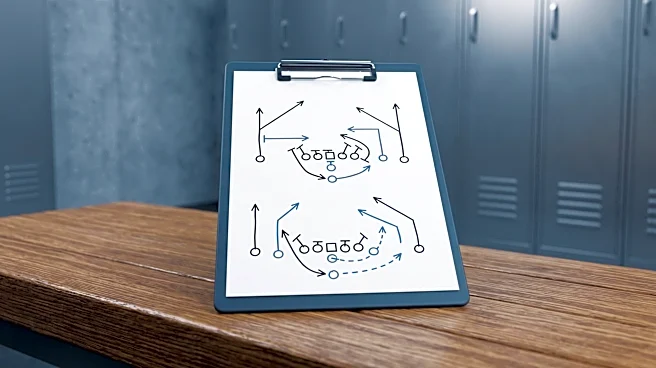
the snap based on the play design. It’s the offense's intended destination for the football. A first-read target, therefore, is a pass thrown to that primary, designed option. This isn't just about who gets the ball the most; it’s about who the offense is built around on any given play. It separates the player who is a core part of the game plan from the one who gets the ball after the initial play breaks down and the QB is scrambling.
More Than Just Target Share
For years, fantasy managers and analysts have leaned on 'target share'—the percentage of a team's total passes thrown to a specific player—as the gold standard for measuring opportunity. It’s a useful stat, but it has a massive blind spot. A receiver can rack up a high target share by catching a slew of low-value checkdowns or garbage-time throws when the game is out of hand. These are often called 'empty volume' targets. First-read target rate adds a layer of intent and quality to the equation. It asks a more important question: How often is this player the preferred option? A receiver who combines a healthy target share with a high first-read rate is the holy grail: he's getting both volume and, more importantly, high-value, schemed-up looks. It tells you he isn't just an option; he's the option. Research has shown that first-read targets have a stronger correlation to future fantasy success than raw target numbers alone.
A Window into the QB's Mind
Ultimately, a high first-read target rate is a measurement of trust. It signals a deep connection between the quarterback and the receiver. When the play is called in the huddle, that receiver is the one the quarterback is already thinking about. This is especially critical in high-pressure situations. Defenses are designed to take away an offense’s first read, but the truly elite receivers get open anyway. When a player consistently earns that primary look, it’s a blinking neon sign that the coaching staff and the quarterback view him as their most reliable playmaker. In a crowded receiver room, this is the ultimate tiebreaker. You might have three guys with similar speed and route-running ability, but the one who consistently commands the first look is the one the team relies on to move the chains and score touchdowns.
Decoding a Crowded Receiver Room
Let's apply this to a classic NFL scenario: a team with a solid veteran, a rising second-year player, and a high-priced free agent. On paper, it's a fantasy nightmare. The targets could be split three ways, making all of them unreliable week-to-week starters. This is where first-read data becomes your secret weapon. By tracking which of these three receivers is getting the first look—even if the ball ultimately goes elsewhere due to coverage—you can identify the emerging alpha. For instance, if the veteran's first-read rate starts to dip while the younger player's rate climbs, it's a powerful indicator of a changing of the guard, often before it shows up in the box score. A player might only see five targets in a game, but if four of them were first reads, his underlying role is far more valuable than a teammate who saw eight targets on broken plays.