


A Concrete Stage for Greatness
The story of the US Open's unique identity begins with its surface. Unlike the soft grass of Wimbledon or the sliding clay of the French Open, the tournament is played on hard courts. This isn't just a technical detail; it's a statement of philosophy.
The hard court is a great equalizer, a neutral battleground that rewards power, athleticism, and endurance in equal measure. It doesn't favor the serve-and-volley purist or the baseline grinder exclusively. Instead, it demands a complete game. The tournament has been played on three different surfaces throughout its long history—grass, clay, and finally, hard court since its move to Flushing Meadows in 1978. This evolution reflects the tournament’s uniquely American willingness to adapt and modernize. The unforgiving surface, combined with the often-sweltering late-summer New York heat, creates one of the most physically grueling tests in sports. Winning here isn't just about skill; it's about survival.
The Magic of a New York Night
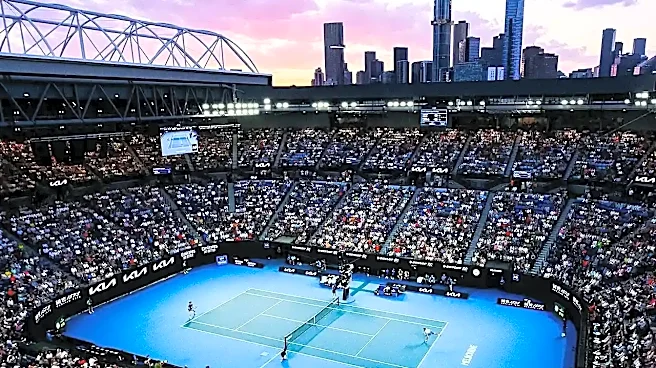
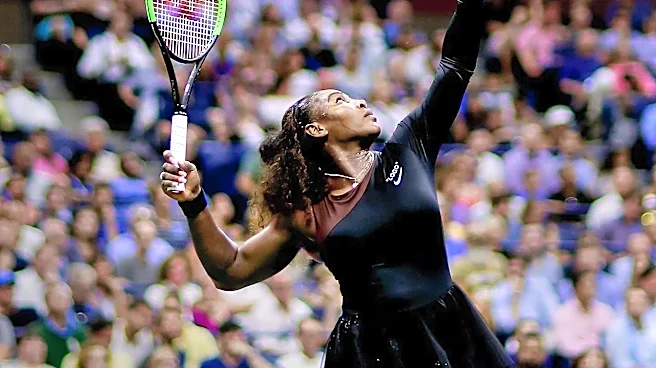
No feature defines the US Open more than its night sessions at Arthur Ashe Stadium. As the sun sets over Queens, the world’s largest tennis venue—seating nearly 24,000 fans—transforms into a cauldron of noise and drama. The polite applause of daytime matches gives way to a roaring crowd that becomes an active participant in the contest. Players feed off the energy, and epic five-set battles that stretch past midnight are a beloved tournament tradition. Matches like the 2001 quarterfinal between Andre Agassi and Pete Sampras, or Agassi's 2005 comeback win against James Blake that ended at 1:15 a.m., have become legendary precisely because of this electric atmosphere. Agassi himself said it best after that match: "I wasn't the winner—tennis was." This primetime stage turns championship tennis into a must-see spectacle, blending the intensity of sport with the thrill of big-city entertainment.
The Loudest, Toughest Crowd in Tennis
The US Open crowd is a subject of constant debate, and that's exactly what makes it special. While players at other majors expect near-total silence during play, they get no such courtesy in New York. The fans are famously loud, opinionated, and fiercely loyal, especially to American players and underdogs. Some players find it distracting, while others, like Coco Gauff, have described the feeling of the crowd getting behind them as surreal. This environment creates a unique mental challenge. A player has to be able to block out the noise, handle the pressure, and win over a crowd that can feel like a 12th man for their opponent. It's a test of concentration and character that exists nowhere else on the Grand Slam calendar. Love it or hate it, the crowd’s raw, unfiltered passion is an essential part of the tournament’s DNA, making it the most intense and unpredictable major on the tour.
A Tradition of Innovation and Opportunity
While steeped in history dating back to 1881, the US Open has always been the most forward-looking of the four majors. It was the first Grand Slam to award equal prize money to men and women, a landmark decision made in 1973 thanks to the efforts of champions like Billie Jean King. It was also the first to introduce final-set tiebreaks, a move now adopted by all four Slams to create more consistent and fan-friendly matches. This spirit of innovation extends to the court, where the Open has a reputation as a stage for breakthroughs and Cinderella stories. From Arthur Ashe’s barrier-breaking win at the inaugural Open in 1968 to Emma Raducanu’s improbable run from qualifier to champion in 2021, the tournament has a knack for producing career-defining moments. It’s a place where legends are solidified and new stars are born, all on the biggest and loudest stage the sport has to offer.