

The Five-Lateral Miracle
There are chaotic finishes, and then there is “The Play.” On November 20, 1982, Stanford, led by future NFL icon John Elway, kicked a go-ahead field goal against rival Cal with only four seconds left. Victory seemed certain. But on the ensuing kickoff,
the improbable happened. Cal players began a frantic, desperate series of backward passes. One, two, three, four, five laterals, with the ball careening wildly between players. As Cal’s Kevin Moen received the final pitch, he charged toward the end zone, not just through Stanford defenders, but through the Stanford marching band, which had prematurely stormed the field to celebrate. Moen famously flattened a trombone player as he crossed the goal line for the winning touchdown, sealing a 25-20 victory that remains one of the most bizarre and debated finishes in all of sports.
The Hail Mary Heard 'Round the World
One play can define a career and immortalize a player. For Boston College quarterback Doug Flutie, that moment came on November 23, 1984. Down 45-41 to defending national champion Miami with just seconds remaining, Flutie and the Eagles were on their own 37-yard line. With time for one last heave, the 5-foot-9 quarterback scrambled back, dodged the pass rush, and launched the ball 65 yards into a driving rainstorm. His receiver, Gerard Phelan, found a sliver of space in a crowded end zone and fell to the ground with the ball. The “Hail Flutie” gave Boston College an incredible 47-45 victory and is widely credited with securing Flutie the Heisman Trophy that year, cementing his status as a college football giant. It remains the benchmark for any last-second, miracle touchdown pass.
The Game That Broke Barriers
Sometimes a game's impact is felt far beyond the stadium. In 1970, USC’s fully integrated football team, featuring a Black starting quarterback and star running back, traveled to play Bear Bryant’s all-white Alabama squad. At the time, many Southern football programs remained segregated. USC dominated the game, winning 42-21 in a performance powered by its African-American players. Fullback Sam “Bam” Cunningham ran for 135 yards and two touchdowns. Legend has it that the decisive loss, and Cunningham’s powerful performance, gave Coach Bryant the final push he needed to persuade university boosters and officials to fully integrate Alabama's team. The game is now seen as a pivotal moment that helped accelerate the integration of college football across the South.
The Legend of the 12th Man
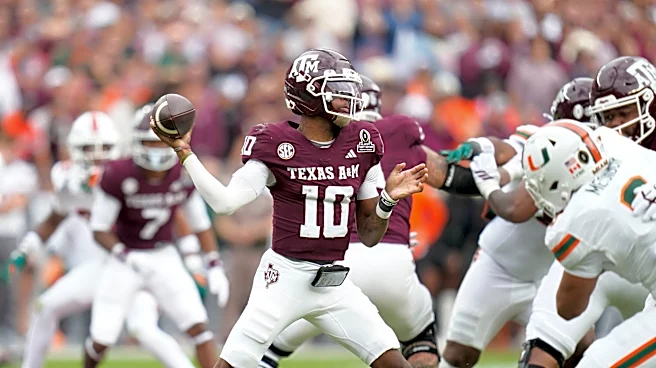
Not all legends are made by players on the field. The story of Texas A&M’s “12th Man” began on January 2, 1922, during the Dixie Classic against the top-ranked Centre College. The underdog Aggies were suffering so many injuries that Coach Dana X. Bible worried he would run out of players. He remembered E. King Gill, a student who was a former football player, helping reporters in the press box. Bible called him down from the stands, had him suit up in an injured player's uniform, and told him to be ready. Gill never entered the game, but he stood on the sideline, prepared to serve if needed. The Aggies pulled off a stunning 22-14 upset. Gill’s readiness to answer the call inspired a tradition that endures a century later: the entire Texas A&M student body stands for the whole game, symbolizing their role as the 12th Man, always ready to support their team.