



A Backyard Dream in Williamsport
The story begins not with a grand vision, but with a simple idea. In 1938, a Williamsport oil company clerk named Carl Stotz was looking for a way to provide organized baseball for his young nephews. With the help of neighbors, he developed a scaled-down
version of the game, complete with smaller fields and modified rules. The first league was formed in 1939 with just three teams sponsored by local businesses. After a pause during World War II, the idea exploded. By 1947, there were enough leagues to hold a tournament. That first event, then called the National Little League Tournament, featured 12 teams, mostly from Pennsylvania. A local team, the Maynard Midgets, won the first-ever title.
Going Global and On the Air
What started in Pennsylvania didn't stay there for long. Word of the tournament spread, and leagues popped up across the country. The first leagues outside the U.S. were established in 1950 in Panama. The tournament's profile skyrocketed in 1953 when CBS televised the championship game for the first time. A major turning point came in 1957, when a team from Monterrey, Mexico, became the first international team to win the championship, led by pitcher Ángel Macías, who threw the first and only perfect game in a LLWS final. This underdog victory captured global attention and solidified the event's international identity. The tournament soon became a fixture on television, transforming it from a local competition into a worldwide spectacle.
The Fight for Inclusion
For its first few decades, Little League was exclusively for boys. While a girl named Kathryn "Tubby" Johnston played in 1950, a rule was quickly passed to officially ban girls from participating. That policy was challenged in the early 1970s. In 1972, 12-year-old Maria Pepe of Hoboken, New Jersey, sued after being forced off her team. Backed by the National Organization for Women, her case reached the New Jersey Supreme Court. In 1974, facing mounting legal pressure and changing social attitudes, Little League officially reversed its policy and welcomed girls. That same year, the organization launched Little League Softball. The change was signed into federal law by President Gerald Ford, marking a landmark moment for gender equality in youth sports.
Growing Pains and Scandals
With increased prestige came higher stakes and, inevitably, controversy. The most infamous scandal occurred in 2001, when Danny Almonte, a flamethrowing pitcher from the Bronx, captivated the nation with his dominance. However, an investigation by Sports Illustrated revealed that Almonte was 14 years old, two years over the age limit of 12. His team's wins were forfeited, and the incident prompted Little League to tighten its age and residency verification processes. It wasn't the only time cheating marred the tournament. In 1992, a team from the Philippines was stripped of its title for using ineligible players from outside its district, and a similar scandal disqualified the U.S. champion from Chicago in 2014.
An Enduring Summer Classic
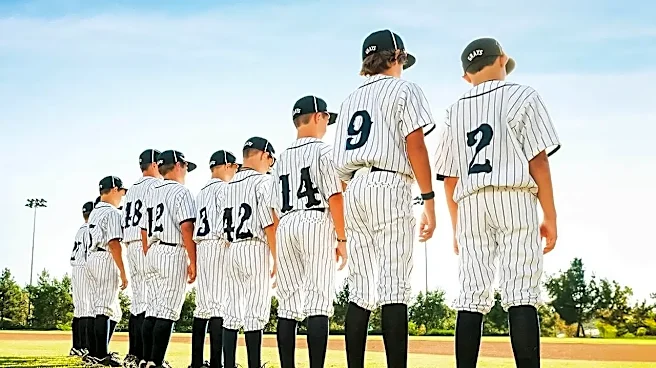
Despite the occasional controversy, the Little League World Series remains a cherished summer tradition. Its magic lies in the raw emotion of 11- and 12-year-olds playing for the love of the game on the biggest stage of their young lives. The tournament has continued to evolve, expanding to 20 teams in 2022 to provide more opportunities for kids from around the world. The complex in South Williamsport now features multiple stadiums, and the event draws massive crowds, with a single-game attendance record of over 45,000 fans. It has produced future MLB stars like Todd Frazier and Cody Bellinger, but its true legacy is in the millions of children who have simply had the chance to play ball.