



Explosive, All-Court Aggression
The US Open's medium-fast hard courts are famously democratic, rewarding multiple styles of play. Unlike the slow clay of the French Open or the slick grass of Wimbledon, the Laykold surface provides a consistent and true bounce. This allows aggressive
baseliners to trust their groundstrokes and all-court players to transition effectively. Success requires what coaches call “controlled aggression”: the ability to dictate play from the baseline by taking the ball early, robbing opponents of precious time, and having the confidence to move forward and finish points at the net when the opportunity arises. It’s not just about hitting hard; it’s about hitting with purpose and maintaining relentless pressure.
Elite Physicality and Endurance
Beneath the surface of thrilling rallies lies a brutal physical test. Hard courts are notoriously punishing on the body, with ground reaction forces significantly higher than on clay or grass. A single five-set match can involve hundreds of explosive directional changes and sprints, placing immense strain on players' lower bodies and core. Add in the typically hot and humid conditions of a New York summer, and endurance becomes a non-negotiable weapon. The players who triumph are often the ones who have trained to withstand not just the intensity of a single point, but the accumulated fatigue over two grueling weeks. Data from previous tournaments shows players covering astonishing distances and performing hundreds of explosive movements per match.
A Weaponized Serve and Return
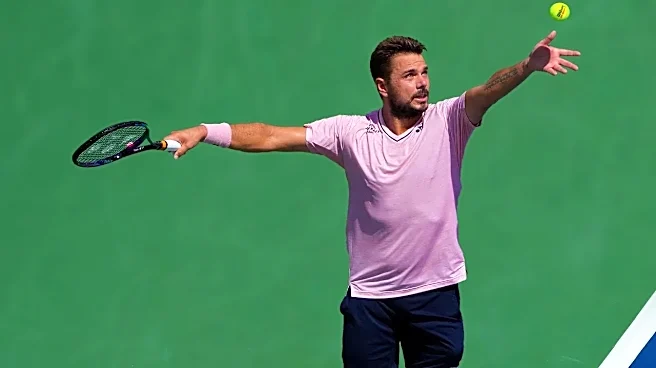
On a surface that rewards pace, the serve is a foundational weapon. A high first-serve percentage can provide free points and allow a player to start the rally on offense. But in the modern game, that's only half the battle. The return of serve has evolved into a critical offensive tool. An aggressive, deep return can immediately neutralize a big server and flip the dynamic of the point. At the US Open, where so many players possess powerful serves, the ability to consistently get serves back in play with purpose is what separates the top contenders from the rest of the field. It’s a constant tug-of-war between overwhelming power and immediate, strategic defense.
The New York State of Mind
The US Open is unlike any other Grand Slam tournament because of its atmosphere. The crowds are famously large, loud, and boisterous, a stark contrast to the reverent silence of Wimbledon. Players have to contend with music during changeovers, the constant roar of the crowd, and the general chaotic energy of Flushing Meadows. Some players, like Frances Tiafoe and Ben Shelton, feed off this energy, using it to fuel their performance. Others find the noise and distractions overwhelming. Surviving—and thriving—at the US Open requires a unique mental fortitude. It’s the ability to either block out the chaos or channel it, to stay poised under pressure while an entire stadium buzzes with an electric, and sometimes disruptive, energy.
Precision Footwork and Movement
Movement on a hard court is a science of its own. It’s not about the graceful slides of clay or the cautious steps on grass. Winning on the US Open’s surface demands explosive first steps, powerful lateral movement, and the ability to stop and change direction in an instant. Players must have the footwork to stay close to the baseline, taking time away from their opponents, and the agility to defend corner to corner. Every shot requires a series of split-second decisions and adjustments, and it’s the players with the most precise and efficient movement who can consistently put themselves in the right position to execute their aggressive game plans.