



The Metronome of Excellence
Talk to anyone in the IndyCar paddock, and they’ll mention Scott Dixon's relentless consistency. Since joining the series, he has been a perennial championship contender. He won the title in his first full season with Chip Ganassi Racing in 2003 and his most
recent in 2020. This two-decade span of competitiveness is almost unheard of in a sport where technology, regulations, and rivals change constantly. Dixon has won championships across multiple generations of cars, against different waves of talent. His career is not defined by a single peak but by an incredibly high plateau. This sustained excellence makes him the ultimate benchmark; for a new driver to prove their mettle in IndyCar, the first question is always, "How do they stack up against Dixon?"
The Fuel-Saving Sorcerer
If Dixon has a superpower, it's his almost mystical ability to save fuel without sacrificing speed. It's a skill born from necessity during leaner years for his team but honed into a strategic weapon that has left rivals bewildered for years. While other drivers are forced to pit, Dixon can stretch a tank of ethanol for laps longer than seems possible, often turning a midfield car into a race winner. He does it through a unique driving style, carrying speed through corners with minimal brake and throttle input, a technique that is incredibly difficult to master. This forces other teams and drivers to recalculate their own strategies, knowing that a 'Dixon number' for a fuel stint is different from anyone else's. His mastery has fundamentally altered how races are run, proving that raw pace is only one part of the equation.
The Quiet Professional
For 25 seasons, the No. 9 Chip Ganassi Racing car has been synonymous with Dixon. That kind of long-term partnership is rare and speaks volumes about his value beyond the cockpit. Engineers praise his precise, unemotional feedback, which helps the team dial in the car perfectly. He's not a driver who screams on the radio or points fingers; he is a collaborator. This professionalism extends to his on-track conduct. Fellow drivers often cite him as the person they trust most when racing wheel-to-wheel at over 200 mph. Pato O'Ward, his future teammate at Arrow McLaren, has publicly defended Dixon's reputation, stating that a driver of his caliber deserves immense respect. This combination of technical acumen and peer respect shows he elevates not just his own car, but the entire organization around him.
The Enduring Benchmark
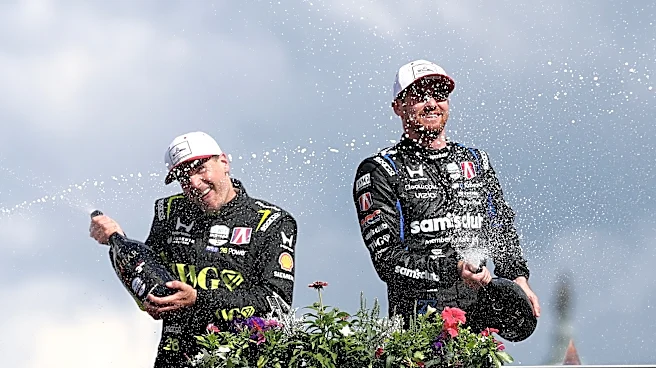
With 59 career victories, Dixon sits second on the all-time IndyCar wins list, behind only the legendary A.J. Foyt. He has won the Indianapolis 500, multiple 24 Hours of Daytona endurance races, and has been knighted for his services to motorsport. But his true impact is seen in the actions of his competitors. Young drivers study his techniques, veteran rivals adapt their strategies to counter his, and team owners see him as the model professional. His upcoming move to Arrow McLaren in 2027, after more than two decades with a single team, is a seismic shift in the IndyCar landscape, proving his value even as he enters the later stages of his career. He is a living legend, and his influence is not just written in the record books—it is actively shaping the sport on every lap of every race.