



1975: Hunt's Giant-Killing First Victory
Every great rivalry needs a flashpoint, and the 1975 Dutch Grand Prix provided a spectacular one for James Hunt and Niki Lauda. On a day that started wet and ended dry, strategy was everything. While the dominant Ferraris of Lauda and Clay Regazzoni started on the front
row, it was the playboy swagger of Hunt in his privateer Hesketh that stole the show. Hunt made a gutsy early call to switch from wet tires to slicks as the track dried, snatching the lead. What followed was a masterclass in defensive driving. For the final stretch of the race, Lauda’s much faster Ferrari was glued to Hunt's gearbox, but the Brit held his nerve. He masterfully used lapped traffic and the track's fast sections to keep the charging Austrian at bay, crossing the line just one second ahead to claim his very first Grand Prix win. It was a stunning underdog victory for the small Hesketh team and a defining moment that proved Hunt was more than just a charismatic personality; he was a world-class contender.
1979: Villeneuve’s Unforgettable Three-Wheeled Lap
Some moments in F1 aren't about winning; they're about an unbreakable will to compete. Gilles Villeneuve’s 1979 performance is the stuff of legend. After a brilliant pass on Alan Jones to take the lead, Villeneuve suffered a slow puncture. He spun but recovered, only for the tire to explode laps later, sending him pirouetting onto the grass. For any other driver, the race was over. Not for Gilles. In a display of almost insane determination, he engaged reverse, got back on track, and proceeded to drive a full lap back to the pits on just three wheels, the wrecked left-rear suspension and tire flailing wildly behind him. The car was destroyed, but the image of Villeneuve wrestling his broken Ferrari around the circuit, refusing to give up, is etched into F1 folklore. When he finally returned to the pits, his mechanics reportedly applauded him as if he'd won the race—a testament to the pure, uncompromising spirit that made him a hero.
1985: Lauda’s Tactical Farewell Win
Niki Lauda's final Grand Prix victory was a perfect encapsulation of his legendary career: a triumph of intelligence, racecraft, and sheer willpower over raw pace. Starting from a lowly 10th on the grid, the Austrian veteran scythed his way through the field. The main event became a tense, strategic duel with his younger, faster McLaren teammate, Alain Prost. After a botched pit stop for Prost, Lauda found himself in the lead but with the Frenchman hunting him down in the closing stages. For the final 12 laps, Prost was relentlessly on his tail, but Lauda used every bit of his experience, placing his car perfectly into corners to defend his position. He held on to win by a mere 0.232 seconds, securing his 25th and final victory in the sport. The podium was a glimpse into F1's past, present, and future, featuring Lauda, Prost, and a young Ayrton Senna in third—three drivers who would collectively win 10 world titles.
2021: The Triumphant Return of a King
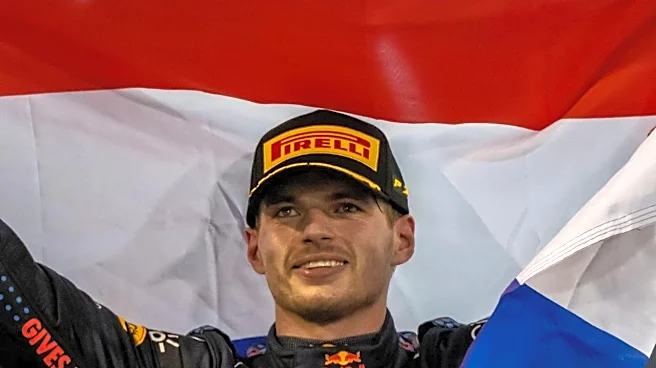
After a 36-year absence, the Dutch Grand Prix returned to the F1 calendar, and the script couldn't have been written any better. The entire weekend was a festival for Max Verstappen, with a sea of orange-clad fans creating an electric atmosphere. With the weight of a nation's expectations on his shoulders, Verstappen delivered a flawless performance. He secured pole position and masterfully controlled the race from the front, fending off every strategic attempt from his title rival, Lewis Hamilton, and the Mercedes team. The victory was not just a race win; it was a cultural event. It marked the first time a Dutch driver had ever won their home Grand Prix, and the jubilant celebrations showed just how much it meant. Verstappen’s victory not only sent his home crowd into a frenzy but also allowed him to retake the lead in a ferociously tight championship battle, making it one of the most emotionally charged and significant moments in modern F1 history.