




The Birthplace of a Backyard Dream
The story begins not in a boardroom, but in a backyard. In 1938, a Williamsport oil clerk named Carl Stotz was playing ball with his young nephews when he stumbled over a lilac bush. That moment sparked an idea: a real, organized baseball league for boys
who were too young for other programs. Stotz spent a summer experimenting with field dimensions, creating a kid-sized version of a big-league diamond with 60-foot basepaths. In 1939, after being turned down by dozens of businesses, he secured $30 sponsorships from a lumber company, a dairy, and a pretzel maker to fund the first three teams. On June 6, 1939, the very first Little League game was played in Williamsport. It was a purely local affair, born from a simple desire to give kids a chance to play an organized game with real uniforms and equipment.
From Local Game to Global Phenomenon
That humble three-team league quickly captured the imagination of other communities. The concept spread, first across Pennsylvania and New Jersey, and then, within a few years, to nearly every state. In 1947, the organization hosted the first-ever National Tournament, which would soon be renamed the Little League World Series. Fittingly, it was held in Williamsport and won by a local team. As the league expanded internationally to places like Panama and Canada in 1950, its championship tournament remained firmly planted in its hometown. In 1959, the series moved to its current, iconic home: a dedicated complex that would eventually feature Howard J. Lamade Stadium, a venue built specifically for the event and largely funded by community support. The location was never a question; Williamsport wasn't just the host, it was the source.
The Volunteer Spirit
If Carl Stotz's idea is the historical anchor, the town's volunteer spirit is the living, beating heart. The Little League World Series is a massive logistical undertaking, but it runs on the power of hundreds of local volunteers. These are not paid event staff; they are residents who serve as ushers, concession workers, groundskeepers, and hosts. The grounds crew, composed of volunteers from over 20 states, treats maintaining the fields as a source of immense pride, ensuring the playing surfaces are immaculate for a global audience. Perhaps most famously, each team is assigned local volunteers who act as "uncles" and "aunts," serving as hosts and mentors who help the young players navigate the excitement and pressure of the tournament. This tradition fosters a sense of family and protects the event's non-commercial, community-focused atmosphere, a stark contrast to the world of professional sports.
A Stadium Built on Community
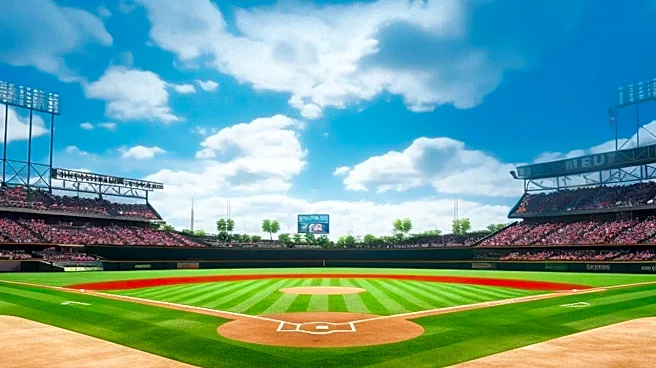
You can’t talk about the LLWS without picturing the massive green hill beyond the outfield fence at Lamade Stadium, packed with families on cardboard sleds. That scene is the perfect metaphor for what makes Williamsport special. Admission to the games is famously free, reinforcing that this is a community event, not a corporate one. The stadium itself, which can hold over 40,000 spectators including the surrounding berms, was born from local roots. It is named for Howard J. Lamade, a local newspaper executive whose family and company provided donations for the land. Unlike a modern sports palace built to maximize revenue, Lamade Stadium was built to celebrate the game itself. It remains a place where the focus is squarely on the kids on the field and the pure joy of baseball, a principle that traces directly back to the league's founding.