


An Unthinkable Alliance
Before 1994, the only major race held annually at the Indianapolis Motor Speedway was the Indianapolis 500. The idea of stock cars on the hallowed 2.5-mile rectangle was almost sacrilege to IndyCar purists. But on August 6, 1994, it happened. The inaugural
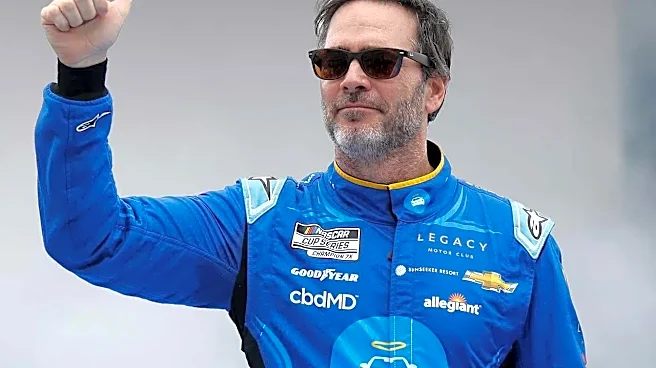
Brickyard 400 wasn't just another race; it was a cultural event that merged two distinct American motorsports tribes. With an estimated 250,000 fans, it became the largest-attended event in NASCAR history, instantly creating one of the sport's new crown jewels. The winner, a young Indiana-raised driver named Jeff Gordon, was rocketed to superstardom, his victory cementing the race’s immediate prestige.
The Honeymoon and The Kiss
Winning at Indy became a career-defining achievement. Jeff Gordon would go on to win a record five times, but other legends like Dale Earnhardt and Tony Stewart also claimed victories here. In 1996, Dale Jarrett and his crew spontaneously began the tradition of kissing the one-yard strip of original bricks at the start-finish line, a practice that became one of the most iconic victory celebrations in all of sports. For over a decade, the Brickyard 400 was a monumental event, packing the grandstands and paying one of the largest purses in NASCAR. It was a must-win race and a must-see spectacle for fans who wanted to witness history at the world’s most famous speedway.
The Tire Debacle and Fading Luster
The magic began to fade in the late 2000s. The defining moment was the disastrous 2008 Brickyard 400. Goodyear tires couldn't handle the abrasive track surface and the physics of the new “Car of Tomorrow,” forcing NASCAR to throw competition cautions every 10-12 laps to prevent catastrophic failures. The race became a chaotic, borderline unwatchable parade of yellow flags. Fans and drivers were deeply disappointed, and the event's reputation took a major hit. Combined with lackluster racing in subsequent years due to the track's flat, narrow layout being ill-suited for heavy stock cars, attendance began to dwindle significantly from its once-record highs.
A Road Course Revolution
Facing declining interest, NASCAR and IMS made a radical decision. In 2021, the premier Cup Series race moved off the legendary oval and onto the track's 2.439-mile, 14-turn road course. The goal was to create more exciting, action-packed racing. The move was controversial; many drivers and fans felt it stripped the event of its “crown jewel” status, arguing that the prestige of Indy was tied directly to the oval. Kyle Busch famously stated, "I don't view this track as Indianapolis, no. Indianapolis is the oval." Despite the nostalgia for the original configuration, the road course delivered closer competition and a different kind of on-track drama, breathing new life into the race weekend.
Redefining the Bucket List Trip
After a three-year experiment on the road course, NASCAR returned the Brickyard 400 to the oval in 2024, an admission that the history and prestige of the original layout were too powerful to ignore. Drivers overwhelmingly celebrated the return, reaffirming the oval as a true “crown jewel.” The journey of NASCAR at Indy encapsulates its evolution. It began as a bold, blockbuster event, weathered a difficult slump, and reinvented itself before coming full circle. Today, a trip to the Brickyard is about more than just one race or one layout. It’s a pilgrimage to a place steeped in over a century of speed, where fans can feel the weight of history whether cars are turning left four times or fourteen. That rich, complex story is precisely what keeps it on every serious race fan's bucket list.