








1. Watching Only the Highlights
Highlight reels are the empty calories of player evaluation. They show the spectacular touchdown or the acrobatic catch, but they conveniently omit the three dropped passes, the poorly run routes, or the missed blocking assignments that came before it.
Relying on highlights is like judging a restaurant by its single best-selling dessert; you get a distorted, overly positive view. True evaluation comes from watching a player's every snap in a game, including the mundane, ineffective plays. This is where you see a receiver’s inability to get separation or a running back who hesitates at the line. The box score might look good, but the full tape reveals the unsustainable reality.
2. Focusing Only on the Player with the Ball
The football is a magnet for our eyes, but the most revealing action often happens away from it. When evaluating a wide receiver, don't just watch them on plays where they're targeted. Watch their route running when they're the decoy. Do they jog, or do they sell it to draw coverage? For a running back, how is their pass protection on a third-and-long? Does a quarterback stare down his primary read, or does he progress through his options? These off-ball skills directly impact a player’s snap count and, consequently, their fantasy opportunities. A receiver who blocks with enthusiasm or a running back who can pick up a blitzer is more valuable to his NFL team and, therefore, more likely to be on the field to score points for yours.
3. Ignoring the Supporting Cast and Opposition
No player performs in a vacuum. A running back averaging five yards per carry looks a lot less impressive when you see his elite offensive line creating massive holes. Conversely, a talented back might struggle behind a porous line. The same is true for the quality of the opponent. Did that quarterback throw for 350 yards and three touchdowns against the league's worst pass defense, or did he do it against a top-tier secondary? Context is everything. A dominant performance against a backup cornerback is less predictive of future success than a solid-but-unspectacular outing against an All-Pro. Always ask: Is this player truly great, or is his situation making him look great?
4. Falling for the 'Wow' Play Bias
Our brains are wired to remember vivid, exciting moments. Psychologists refer to this as the availability heuristic, where easily recalled events seem more important. A one-handed, circus catch in double coverage is a 'wow' play that sticks in your memory. However, it might be the only catch the player made all game, on one of ten targets. Fantasy championships are won on volume and consistency, not on sporadic moments of brilliance. Overvaluing a spectacular but low-probability play is a classic mistake. The receiver who consistently gets open on short routes for six catches and 70 yards every week is often a more valuable fantasy asset than the boom-or-bust deep threat who delivers one big play every three games.
5. Confusing Raw Athleticism with Football Skill
The NFL Combine produces athletic marvels every year, but a blazing 40-yard dash time doesn't always translate to on-field production. Speed is useless if a receiver can't run crisp routes or track a ball over their shoulder. Leaping ability means little if a running back lacks the vision to find the right hole. These are the differences between raw athleticism and refined football skill. The film reveals these nuances. Look for a running back’s footwork and balance through contact, not just his breakaway speed. Watch a wide receiver's hands and body control. A superior athlete might have a higher ceiling, but a superior football player has a higher floor.
6. Letting Confirmation Bias Cloud Your Judgment
Confirmation bias is the tendency to seek out and favor information that confirms what you already believe. If you drafted a player in the third round, you're naturally inclined to notice his good plays and forgive his mistakes because you want your decision to be correct. This is a dangerous trap. When watching film, you must be ruthlessly objective. If you're scouting a player you love, actively look for his flaws. If you're evaluating a player you've written off, force yourself to find his strengths. The goal isn't to be right; it's to get the right players. This requires challenging your own assumptions and being willing to admit you were wrong.
7. Watching Film Without a Specific Goal
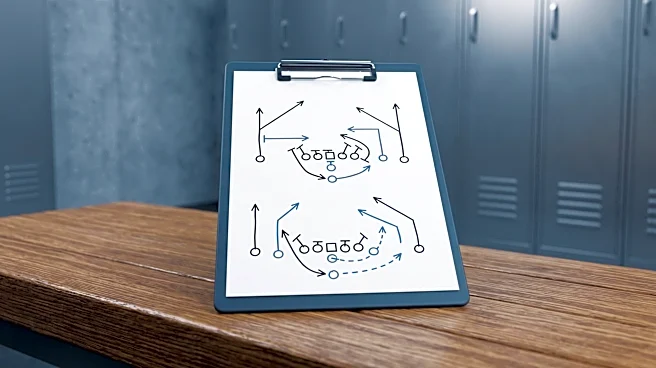
Sitting down to just 'watch a game' is passive entertainment. True film study is active and purposeful. Before you press play, define your mission. Are you trying to determine if a rookie running back has the vision to succeed? Then focus solely on his decisions at the line of scrimmage. Are you curious about a quarterback's poise under pressure? Pay attention only to plays where the pocket collapses. By narrowing your focus, you can gather specific, actionable evidence instead of just forming a vague, general impression. Watching one player for an entire game with a specific question in mind is far more valuable than casually watching four games at once.