


The Promise of a True No. 1
It’s easy to forget why fantasy managers were so excited about McConkey just a few months ago. After a stellar rookie campaign in 2024 where he posted 82 catches for 1,149 yards and seven touchdowns, he was pegged as a surefire WR1 in the making. Even
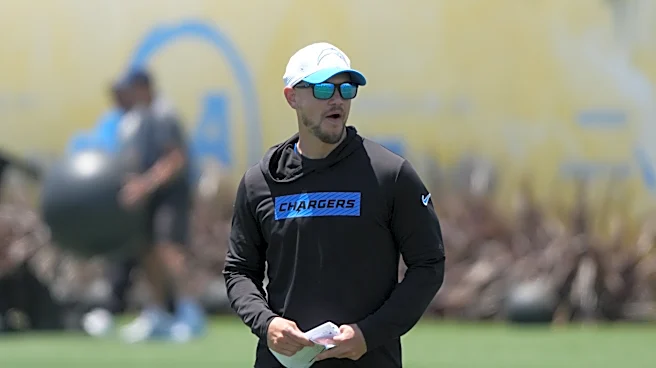
after a step back in 2025, the narrative for 2026 was overwhelmingly positive. With Keenan Allen gone, McConkey was the undisputed top receiver for a team quarterbacked by Justin Herbert and now schemed by offensive guru Mike McDaniel. He was being drafted as a high-end WR2 with clear top-12 upside, the kind of player you build a receiving corps around. The logic was sound: an elite talent with a locked-in target share on a potentially high-powered offense. What could go wrong?
A Season of Frustration
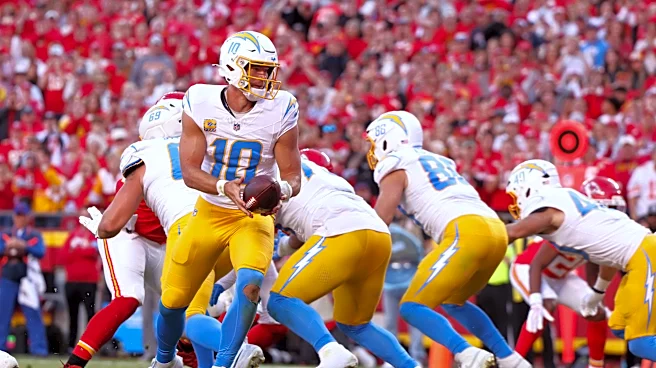
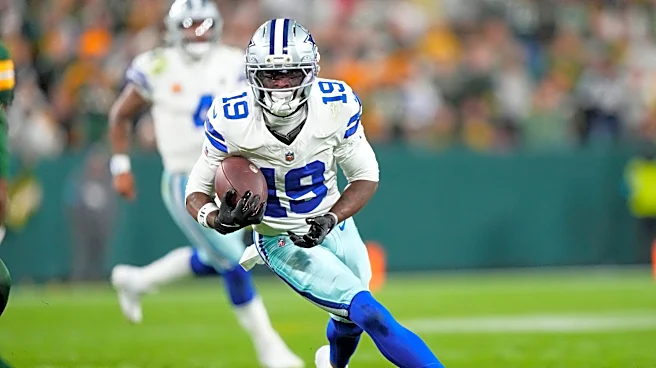
Unfortunately, nearly everything has gone wrong. Through seven weeks of the 2026 season, the Chargers' offense has been, to put it mildly, a mess. McConkey himself has been battling injuries, including a chest issue, a lingering foot problem, and most recently, a concussion suffered in Week 6. He's played in five games, totaling just 13 catches on 18 targets for 200 yards and a single touchdown. His season started with a bang, a 19.2-point fantasy performance in Week 1, but has been a disaster since, with weekly finishes of WR60, WR42, WR136 (a game he missed with injury), and WR83. His snap counts have been inconsistent, and his target share, once thought to be a major strength, has been concerningly low, dipping to just 6% and 3% in Weeks 4 and 6, respectively. This isn't the profile of a team's top option; it's the profile of a player whose managers are hitting the panic button.
The Bull Case: Talent and Opportunity Still Exist
So, why even consider buying? Because the original thesis, while battered, isn't entirely broken. The primary argument is talent. McConkey showed in 2024 that he can be a dominant NFL receiver. He has excellent route-running skills and the ability to command targets. The second argument is opportunity. The Chargers' receiving corps has not seen a clear challenger emerge. Quentin Johnston and Tre' Harris have been inconsistent, and neither has seized control of the offense. This leaves the door wide open for McConkey to re-establish himself as Herbert’s go-to guy once he's fully healthy. His snap rate did jump to over 84% in Week 3, a sign that the team wants him on the field as a full-time player when he's able. If the offense finds its rhythm and McConkey can finally shake the injury bug, the manager who acquires him now could be getting a league-winner for a fraction of his draft-day cost.
The Bear Case: Too Many Red Flags
Caution is more than warranted, however. The biggest concern is health. McConkey has been described as 'brittle' and seems to pick up a new ailment every week. An injury-plagued season can easily derail a player's trajectory, and this is starting to look like a trend, not a fluke. Beyond that, the Chargers' offense looks fundamentally broken. Through the first several weeks, Justin Herbert's efficiency was near the bottom of the league, and the entire passing game has been described as a 'confounding mess'. There's no guarantee Mike McDaniel can fix it this season. Buying McConkey isn't just a bet on his talent; it's a bet on his body holding up and the entire Chargers offense executing a dramatic mid-season turnaround. That's a lot to ask, and it could mean you're trading for a player who continues to occupy a spot on your bench.
The Verdict: A Calculated Risk for the Right Price
So, should you send the trade offer? The answer depends on your team's situation and your tolerance for risk. If you are a contending team that needs reliable weekly production, stay away. McConkey's floor is currently non-existent, and you can't afford to roster a player who might give you zero points. However, if you are sitting comfortably in a playoff spot or are in a rebuilding phase in a dynasty league, McConkey is an ideal buy-low target. His value has likely hit rock bottom. The current manager is probably fed up with the injuries and lack of production. You might be able to acquire a player with legitimate top-15 potential for a flex-level player or a mid-round draft pick. Start by offering a solid but unspectacular veteran receiver or a running back on the wrong side of their prime. Don't overpay, but float an offer. The upside is a championship-winning asset; the downside is a roster spot that you were likely already churning.