




The Four-Year War for a Title
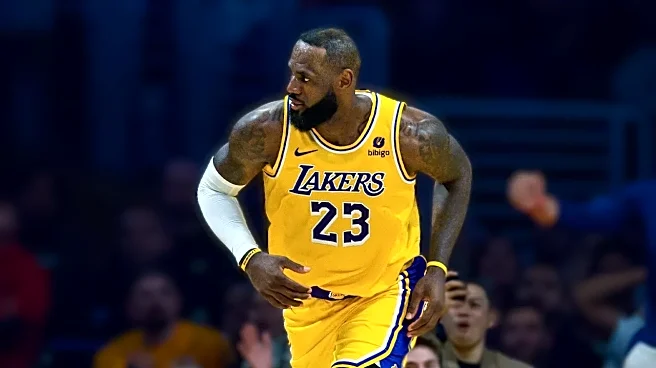
From 2015 to 2018, the NBA Finals became an annual appointment between LeBron James’s Cleveland Cavaliers and Stephen Curry’s Golden State Warriors. It was an unprecedented clash of titans, a stretch of dominance by two teams that captivated the league.
But beyond the box scores and the 3-1 series lead the Warriors famously secured, this period was an incubator for radical change. It was a battle between two different basketball ideologies, two different definitions of greatness, and the outcome would set the strategic agenda for every other team in the NBA for the next decade.
A Clash of Basketball Philosophies
At its heart, the rivalry pitted two opposing forces against each other. LeBron James represented the apex of physical and strategic dominance. His game was a battering ram of intelligence and force, predicated on overwhelming opponents with his size, speed, and peerless court vision. His teams were often built around his heliocentric genius, where every action orbited his decisions. On the other side was Stephen Curry, the catalyst for a revolution. Curry’s game wasn't about physical imposition but about gravitational pull. His unprecedented shooting range warped the very geometry of the court. He forced defenses to stretch to their breaking point, creating a 'pace-and-space' offense that prioritized ball movement and the three-point shot over traditional post play. It was brute force versus fluid artistry, and the league was watching closely.
The Three-Point Arms Race
Before Curry’s Warriors, the three-point shot was often seen as a secondary option, a tool for specialists or a desperate measure. But Golden State, under coach Steve Kerr, weaponized it. Curry, alongside Klay Thompson, made long-distance shooting the central pillar of their offense. This forced a league-wide reckoning. To compete with the Warriors’ offensive firepower, teams had to adapt or be left behind. Suddenly, every front office was searching for floor-spacing big men and guards who could shoot from deep. Even LeBron’s Cavaliers had to retool their roster to keep pace, surrounding him with shooters to counter the Warriors' barrage. The numbers tell the story: the three-pointer, once a gimmick, became a cornerstone of modern offense, with teams across the league dramatically increasing their attempts year after year.
Redefining the Superteam
LeBron James had already shifted the league's power dynamics by forming 'superteams' in Miami and upon his return to Cleveland. However, the sustained excellence of the Warriors' homegrown core of Curry, Thompson, and Draymond Green presented a new kind of challenge. After Cleveland’s historic comeback in the 2016 Finals, the rivalry escalated the team-building arms race to an entirely new level. The Warriors responded by signing Kevin Durant, creating a juggernaut that some argued was the most talented team ever assembled. This move fundamentally altered the competitive balance of the league, accelerating the trend of player-driven movement and forcing franchises to rethink how to construct a championship contender in an era of concentrated superstar talent.
The Legacy of Positionless Basketball
The tactical chess match between the Cavaliers and Warriors had another profound effect: it killed traditional NBA positions. To counter LeBron's size and playmaking, the Warriors perfected their small-ball 'Death Lineup.' To counter Curry's shooting and the Warriors' spacing, the Cavaliers had to deploy more versatile, switchable defenders. The result was a move toward 'positionless' basketball, where a player’s skills mattered more than their listed position. Centers needed to be able to defend on the perimeter, and forwards were expected to handle the ball and shoot threes. This emphasis on versatility and multi-dimensional skill sets, born from the necessity of their Finals battles, has since become the dominant player development philosophy across the sport.