




Why the Headset Matters Most
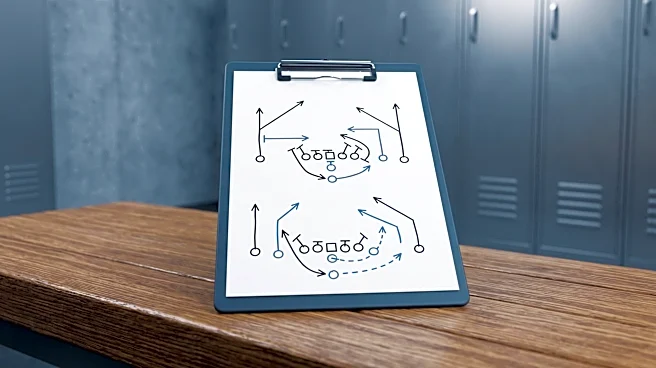
While head coaches set the team's overall culture, the offensive coordinator (OC) designs the engine of fantasy production. They call the plays, determine the run/pass balance, and create the schemes that dictate which players get the ball. A new coordinator is
one of the most significant variables in fantasy football, capable of flipping depth charts and creating league-winners out of overlooked assets. Think of it this way: a superstar wide receiver is only as good as the number of targets he's schemed, and a powerful running back's value plummets if his new OC is a pass-happy evangelist. Ignoring the impact of a coordinator change is like drafting a player without knowing what team he’s on. The context they provide is everything. Historical data shows that coordinator changes can lead to massive swings in fantasy points per game for established veterans and rookies alike.
Decoding the New Play-Caller's DNA
To get an edge, you have to become a student of coaching tendencies. The first question to ask about a new OC is simple: do they prefer to run or pass? Some coordinators, often from the Shanahan or Kubiak coaching trees, build their entire system around a wide-zone running scheme, which elevates the value of their primary running back. Others, like those from the Andy Reid school, favor complex passing concepts that can support multiple fantasy-relevant receivers and tight ends. Look at their history. What were the run/pass splits on their previous teams? Did their offenses operate at a fast pace, leading to more overall plays and more fantasy opportunities? For example, some teams consistently run more plays per game, which provides a higher ceiling for all offensive skill players. These foundational tendencies are the first clues to identifying which players will see a boost in volume.
Volume, Targets, and Personnel Groupings
Beyond the basic run/pass ratio, dig deeper into target distribution. Some schemes heavily feature the tight end, while others funnel targets to a primary slot receiver. An OC's history can tell you if the WR1 on their former team saw an elite target share or if the work was spread more evenly. For instance, an OC who historically gives running backs a 20% target share is a huge green flag for a pass-catching back. Another key is personnel. Does the new coordinator favor three-receiver sets (11 personnel), or do they use two-tight end formations frequently? A coach who loves using multiple tight ends might limit the ceiling of a team's third wide receiver but could turn a forgotten TE2 into a valuable fantasy asset. These nuances separate the good fantasy managers from the great ones.
A 2026 Case Study: The Chargers' New Look
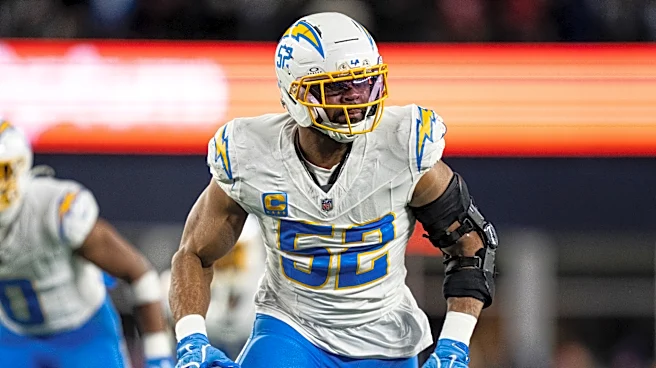
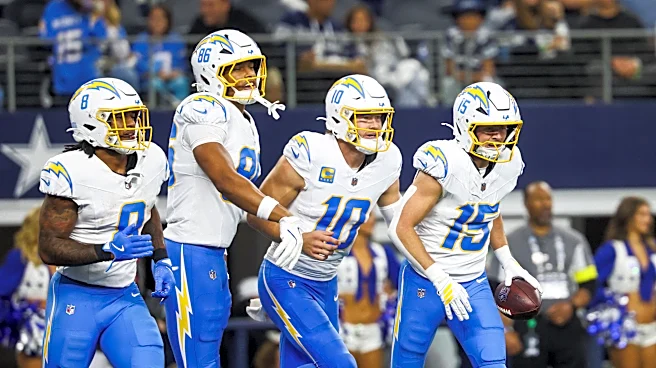
Look at the Los Angeles Chargers, who brought in Mike McDaniel as their offensive coordinator for the 2026 season. McDaniel is famous for his innovative, motion-heavy, wide-zone running scheme that propelled Miami's offense in previous years. This move signals a seismic shift from the team's previous offensive philosophy. The immediate fantasy implication is a significant boost for the running game. A back like Omarion Hampton, a powerful runner, is a perfect fit for a system designed to create clear running lanes and feed its primary back. Conversely, while a quarterback as talented as Justin Herbert will always be valuable, McDaniel's system often relies on schemed-up, quick passes to generate yards after the catch rather than hero-ball deep shots. This could mean a higher completion percentage for Herbert but potentially a lower average depth of target, which could benefit a shifty receiver like Ladd McConkey more than a traditional deep threat.
Don't Forget the Defensive Side
While offensive coordinators get the most attention, a new defensive coordinator (DC) also has a fantasy impact. A new DC known for aggressive, blitz-heavy schemes can elevate a team's D/ST unit by generating more sacks and turnovers. On the flip side, understanding a DC's scheme can help you exploit matchups. A coordinator who runs a lot of zone coverage might be vulnerable to tight ends working the seams, while a man-coverage-heavy scheme can be beaten by elite route-running wide receivers. Paying attention to these changes can help you make smarter weekly streaming decisions for both your D/ST and your offensive players facing that defense.