




The Age of the All-or-Nothing Slugger
Before the 1990s, the blueprint for a power hitter was often one-dimensional. Guys like Dave Kingman and Harmon Killebrew were feared for their ability to launch baseballs into orbit, but it came at a cost. Their profiles were characterized by prodigious
home run totals, but also low batting averages and high strikeout numbers. They were specialists. The job was to drive the ball over the fence, and if that meant swinging and missing frequently, it was simply the cost of doing business. The prevailing logic was a trade-off: you could have power, or you could have a high average, but you rarely got both in the same gargantuan package. This created a clear archetype that front offices understood and fans came to expect.
A New Kind of Giant
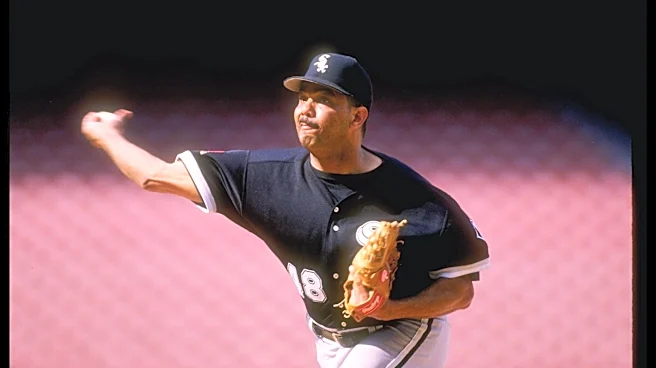
Then came Frank Thomas. At 6-foot-5 and a playing weight that hovered around 275 pounds, "The Big Hurt" certainly looked the part of a traditional slugger. But from the moment he debuted with the Chicago White Sox in 1990, it was clear he was a different breed. Thomas didn't just possess raw power; he had an exceptionally advanced understanding of the strike zone. This combination of brute force and surgical plate discipline was revolutionary. His back-to-back American League MVP awards in 1993 and 1994, the first AL player to do so since the 1960s, were a testament to his unique and total dominance. He wasn't just hitting home runs; he was dismantling opposing pitchers with a complete offensive arsenal.
Patience, Power, and a .300 Average
What truly set Thomas apart was his holy trinity of stats: power, average, and patience. He is the only player in MLB history to record seven consecutive seasons (1991-1997) with a .300 batting average, 20 home runs, 100 RBIs, 100 runs scored, and 100 walks. Not Babe Ruth, not Ted Williams, not Lou Gehrig. Only Thomas. His elite on-base percentage (OBP), which he led the league in four times, showed he was just as happy to take a walk as he was to hit a double. While his contemporaries in the home run chases of the late '90s, Mark McGwire and Sammy Sosa, were selling out for power, Thomas maintained his disciplined approach. He refused to expand his strike zone, forcing pitchers to challenge him. The result was a career .301 batting average and 1,667 walks to go with his 521 home runs.
The Thinking Man's Hitter
Thomas’s approach was, in many ways, a precursor to the analytical revolution that would sweep baseball years later. While the late '90s became fixated on the home run numbers posted by McGwire and Sosa, Thomas’s value was deeper. He was an offensive engine, a run-producing machine who created value in multiple ways. His career WAR (Wins Above Replacement) of 73.8 is significantly higher than both McGwire's and Sosa's, a reflection of his all-around offensive contribution beyond just home runs. He was a vocal opponent of steroids during an era when many stars were suspected of using them, and his first-ballot Hall of Fame induction in 2014 serves as a validation of his clean and consistent greatness. He wasn't just bigger and stronger; he was smarter at the plate.
The Blueprint for Today's Stars
Today, a player with Thomas's statistical profile would be the toast of every front office. The modern game, driven by analytics, covets players who combine power with on-base skills. High-walk, high-power hitters like Bryce Harper and Juan Soto are seen as offensive cornerstones, embodying the very principles that made Thomas a legend. They don't just hit for power; they control at-bats, draw walks, and avoid making unproductive outs, just as The Big Hurt did three decades ago. Thomas provided the blueprint, demonstrating that a power hitter could be more than a one-dimensional slugger. He showed that a player's mind and discipline were as crucial as their muscle, creating a new, more complete definition of what a truly elite hitter could be.