

Resist the Panic Trade
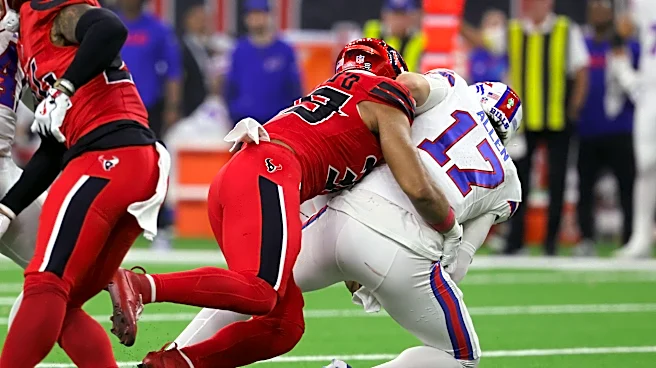
The immediate aftermath of a star player's injury is a vulnerable time. Your league rivals know it, and they might start circling like sharks, offering lowball trades for your healthy studs. Your first job is to ignore them. Do not accept or propose any
trades for at least 24 hours. Emotion-driven decisions are almost always poor ones in fantasy football. Trading a star for depth is a common suggestion, but it often leads to a collection of mediocre players that can't match the weekly upside you just lost. Your goal is not to get worse at multiple positions to plug one hole; it's to find a strategic advantage elsewhere.
Assess the Actual Damage
Not all injuries are created equal. The first step is to get a clear diagnosis and timeline. A multi-week injury is vastly different from a season-ending one like a torn Achilles. If your league has an Injured Reserve (IR) spot, use it immediately. This frees up a roster spot without forcing you to drop your injured star. If the player is expected back in a few weeks, your strategy shifts to short-term survival. If it’s a season-ending injury, you're moving into a full-scale pivot. Understanding the severity prevents you from overreacting to a minor issue or under-reacting to a catastrophic one. Check reports from reliable sources and listen to coach-speak about potential snap counts upon return.
Master the Waiver Wire
Your first and best line of defense is the waiver wire. This is where savvy managers win championships. Don't just look for the injured player's direct backup, who might be a low-talent player on a bad offense. Instead, hunt for upside. Look for players who are seeing a growing target share, even on losing teams. Identify running backs who may be in a committee but are getting valuable goal-line work. Recent news from the first week of the 2026 season already shows opportunities emerging from injuries and shifting depth charts. Be aggressive with your Free Agent Acquisition Budget (FAAB) for players with a clear path to volume. A high-upside waiver add can often provide 80% of the production you lost for a fraction of the cost of a trade.
Identify Your Real Trade Assets
The headline says not to trade your best asset, and that holds true. But that doesn't mean you can't trade at all. The key is to trade from a position of strength. Do you have a surplus of solid WR2s but are now thin at running back? That's your starting point. Look for players on your roster who have high name value but might be over-performing. Selling high on a player who just had a multi-touchdown game can net you a king's ransom. Conversely, now is the time to 'buy low' on another manager's star who had a slow start. Package one of your consistent bench players with a waiver-wire find to propose a 2-for-1 trade that addresses a need for both teams. The best trades are about mutual benefit, not panic.
Re-evaluate Your Team's Identity
Losing a cornerstone player forces you to adapt. Your team's identity might have been built around a workhorse running back. Now, you may need to pivot to a team that wins through wide receiver depth and a streaming quarterback. This isn't a failure; it's a strategic shift. Look at your remaining roster and build around its new strengths. Maybe you now have three top-15 wide receivers. Lean into that. Focus on matchups and play the percentages. An injury can feel like a death sentence for your season, but it's often just a test of your management skills. The best managers don't just draft well; they adapt better than anyone else in the league.