
The Shark on the Course
You can't discuss Greg Norman without acknowledging the player. The broad-shouldered Australian with a mane of blonde hair and an aggressive, powerful swing was a force of nature. He won more than 90 tournaments worldwide and held the top spot in the world rankings
for over six years. He was a superstar who brought an exhilarating, almost rock-and-roll energy to a buttoned-up sport. Yet, for all his dominance, his career is often framed by what he didn't win—most famously, the 1996 Masters, where he blew a six-shot lead in the final round. His eight runner-up finishes in major championships became a defining, if painful, part of his public identity. This narrative of dazzling talent and tragic near-misses made him a compelling, almost Shakespearean figure, but it also obscured the foundation he was laying for his second act.
The Birth of a Global Brand
While other athletes were content with endorsements, Norman was building an empire. In 1984, he incorporated Great White Shark Enterprises, a holding company for a portfolio that would grow to include over a dozen distinct businesses. It started with golf course design—a natural extension for a player—but quickly expanded. Soon, there was Greg Norman wine, beef, apparel, and real estate. He turned his iconic shark logo into a globally recognized brand, becoming one of the first athletes to prove that a player's influence could be leveraged into a diversified, multinational corporation. This wasn't just about cashing in; it was a fundamental shift in how athletes viewed their own economic power, a blueprint that many would follow in the decades to come.
The First Rebellion
Long before LIV Golf was a household name, Greg Norman tried to break the mold of professional golf. In 1994, at the height of his powers, he unveiled a plan for a World Golf Tour. The concept was simple: an elite, eight-event series featuring the world's top 30 players competing for huge purses. Norman, a global player himself, saw that the PGA Tour's structure was too U.S.-centric and believed a world tour was the future. The establishment, however, did not agree. The PGA Tour, under its new commissioner Tim Finchem, saw the proposal as a direct threat and effectively quashed it, threatening players who might join. The idea died, but the grudge didn't. Norman felt the tour system was stifling player earning potential and global growth—a conviction that would simmer for nearly 30 years.
The Culmination: LIV Golf
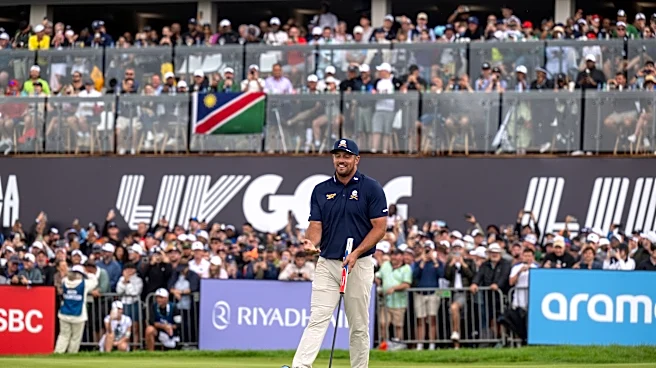
In 2021, Norman’s 1994 vision was reborn, supercharged by billions from Saudi Arabia’s Public Investment Fund. As the CEO and public face of LIV Golf, Norman finally got to be the disruptor he always believed he was. He became a lightning rod, weathering intense criticism while poaching some of golf’s biggest stars with guaranteed money contracts that shattered previous earning records. The move tore professional golf apart, creating a bitter civil war with the PGA Tour. Norman’s aggressive, often antagonistic style fueled the conflict, making compromise seem impossible. But in his view, he was simply correcting a market inefficiency and giving players the freedom and financial power the establishment had long denied them. He forced a conversation about player rights, global expansion, and the very business model of the sport.
An Unsettled and Complicated Legacy
After his departure as LIV's CEO in early 2025 and eventual complete split from the league, Norman's legacy remains one of golf's most debated topics. To his supporters, he is a visionary who courageously took on a monopoly and modernized the sport, forcing the PGA Tour to increase its own prize money and innovate. To his detractors, he is a divisive figure whose actions fractured the game, tarnishing his reputation in the process. What's undeniable is that he succeeded in his ultimate goal: to fundamentally change professional golf. He moved the game from the sports page to the business section, introducing private equity and the concept of players as free agents in a way golf had never seen. The trophy count tells you he was a great golfer, but the state of the game in 2026 tells you he was one of its most impactful figures ever.