





The Illusion of Simplicity
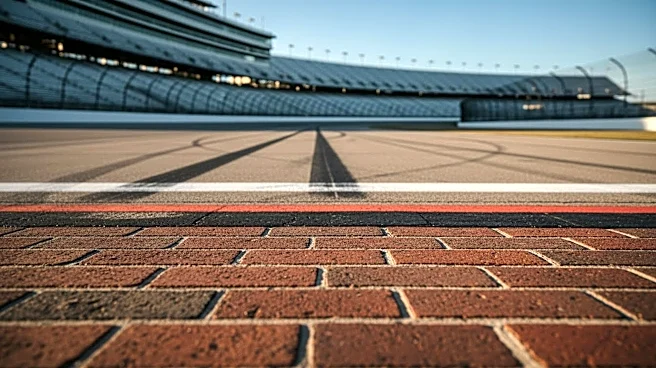
At a glance, the Indianapolis Motor Speedway looks easy. It’s a 2.5-mile rectangular oval with four nearly identical 90-degree turns. There are no complex chicanes or hairpin bends. But this uniformity is a trap. Because the corners are geometrically
the same, drivers are expected to be perfect on every single one, for 200 laps. The banking is also relatively flat compared to other famous ovals, at just over 9 degrees. This means the car relies more on mechanical grip and aerodynamic downforce than on the track's shape to stay planted, placing the responsibility squarely on the driver to find the absolute limit of adhesion without exceeding it. The margin for error is nonexistent.
Four Corners, Four Personalities
Drivers will tell you that despite being built the same, no two corners at Indy feel alike. The experience of entering Turn 1 after rocketing down the front straight at over 230 mph is vastly different from entering Turn 3 off the shorter back straight. Even subtle shifts in wind direction can completely change a car's handling from one end of the track to the other. A headwind might provide extra front-end grip in one corner, while a tailwind in another could make the car feel dangerously loose. The grandstands also play a role, creating unique aerodynamic effects; Turn 1 is surrounded by stands, while Turn 2 is more exposed, making cars susceptible to crosswinds. A truly great driver at IMS is one who can feel these minute changes and adapt their inputs lap after lap.
The High-Speed Game of Precision
The sheer speeds at Indianapolis are mind-bending. In modern IndyCar qualifying, drivers approach Turn 1 at nearly 240 mph, and they must execute the turn with flawless precision. Being just an inch off the ideal line can have catastrophic consequences. A wheel dropped below the white line at the apex might cause a spin, while running slightly wide on exit will scrub off speed or, worse, send the car into the unforgiving SAFER barrier. It's a high-commitment corner that demands immense trust in the car and a healthy dose of courage. This isn't just about being brave; it's about being perfect while being brave, lap after agonizing lap.
The Mental and Physical Marathon
The Indianapolis 500 isn’t just a race; it's a 500-mile test of endurance and concentration. For roughly three hours, a driver must maintain absolute focus while navigating traffic, managing tire wear, and communicating crucial feedback to their pit crew. The physical toll is immense, but the mental challenge is arguably greater. Every restart, every pass, and every pit stop is a chance for things to go wrong. A moment's lapse in judgment can end a driver's day and erase a year's worth of preparation. The winners are often not just the fastest, but the smartest and most mentally resilient drivers on the grid.
The Driver as the Final Setup Tool
While engineers work to find the perfect balance of low-drag aerodynamics for the straights and high downforce for the corners, the car is never perfect for all four turns at once. The driver’s feedback is essential to get the car into its optimal performance window. More importantly, it's the driver's ability to 'drive around' the car's imperfections that makes the difference. They must constantly adjust their steering, throttle, and line to compensate for a car that might be pushing wide in one corner and snapping loose in another. This sensitivity and ability to adapt in real-time is what separates the legends from the rest of the field. At Indy, technology and engineering can get you 99% of the way there, but that final 1% is pure driver.