


Water, Water Everywhere
You can’t talk about TPC Southwind without mentioning the water. It comes into play on a staggering number of holes, but its genius lies in how it forces decisions. This isn't just about avoiding a splash; it's about angles. Architect Ron Prichard, with help
from pros Fuzzy Zoeller and Hubert Green, created a course where water dictates the ideal position off the tee. Take the daunting par-4 18th, where water guards the entire left side from tee to green. A player can bail out to the right, but that leaves a much longer and more difficult approach shot. The golfer who correctly calculates the risk and executes a precise tee shot gains a significant advantage. This theme repeats throughout the course, rewarding players who think two shots ahead.
The Zoysia Fairway Advantage
One of the most unique features of TPC Southwind is its Zoysia grass fairways. For the uninitiated, Zoysia causes the ball to sit up perfectly, almost as if it's on a short tee. This sounds like a dream, but it's a specific reward for finding the fairway. From the Zoysia, players can attack pins with more spin and control. From the surrounding Bermuda rough, however, it's a different story. Shots become unpredictable flyers, making it tough to control distance into the firm, smaller-than-average greens. This creates a massive premium on accuracy. Players who can consistently place their ball in the short grass are essentially playing a different, easier golf course than those who are constantly scrambling from the rough.
The Iconic Island Green
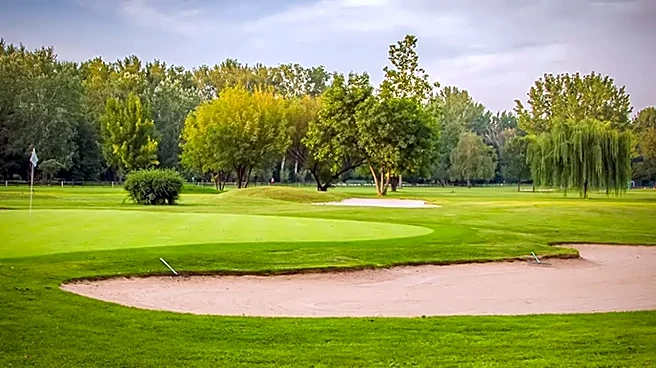
Much like its famous sibling at TPC Sawgrass, the par-3 11th at Southwind features an island green that lives in players' heads all week. While not excessively long, the green is a small target surrounded by water, with a pesky pot bunker guarding the front. It's a hole that demands complete commitment to a specific yardage and a precise strike with a short iron. What makes it a true test of course management is not just the shot itself, but the timing. Coming in the middle of the back nine, a misstep here can completely derail a round. The smart player picks a safe target in the middle of the green, ignores the pin location, and happily walks away with a par. The overly aggressive player risks a big number that can end their tournament hopes.
A Demanding Finishing Stretch
A great course often saves its toughest questions for last, and Southwind is no exception. While the short par-5 16th offers a clear birdie opportunity, the final two holes are brutes. The 17th is a long, straight par-4 with a kidney-shaped green, while the 18th brings water dramatically back into play. This closing stretch requires a combination of power, precision, and nerve. After a week of disciplined play, a golfer must execute flawlessly when the pressure is highest. This is where a well-managed round pays off; a player who has saved energy and stayed patient is better equipped to handle the mental and physical demands of these final, decisive shots that have often determined the champion.
Patience Over Power
TPC Southwind is a par 70 that measures just under 7,300 yards, which isn't especially long by modern PGA Tour standards. It's a course where you can’t simply overpower the challenges with a driver. All four of the course's par-3s historically play over par, and there are very few guaranteed birdie holes. Success here is about plotting your way around, accepting that pars are good scores, and capitalizing on the few genuine opportunities that arise. Past winners have often been elite ball-strikers who demonstrate incredible patience and iron control. It’s a layout that forces players to lay back on certain tees, prioritize fairway position over a few extra yards, and master approach shots from 125 to 200 yards—the most common distance at Southwind.