


A Track Unlike Any Other
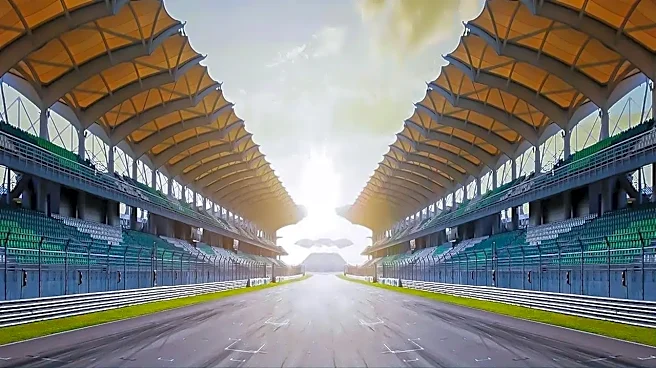
To understand the secret to winning the Brickyard 400, you first have to appreciate how brutally unique Indianapolis Motor Speedway is for a stock car. Unlike the high-banked ovals of Daytona or Talladega, Indy is stubbornly flat. Its four distinct corners
feature minimal banking, just over nine degrees, meaning drivers can't use gravity to sling their 3,400-pound machines through the turns. Instead, they have to brake hard, navigate the corner, and then rocket down another long straightaway. This constant acceleration and deceleration puts a premium on two things that are often in short supply: fuel and tires. Because it's so difficult to pass, with dirty air making it hard for cars to follow each other closely, track position is everything. And the smartest way to gain it isn't always with the steering wheel.
The Fuel Mileage Gamble
The single most decisive 'hidden' strategy at Indy is the fuel-mileage gamble. The track's long 2.5-mile layout often leads to extended periods of green-flag racing. This creates a nerve-wracking scenario for crew chiefs. A full tank of fuel only lasts for a specific number of laps, creating a 'pit window.' The simple play is to pit with everyone else inside that window. The race-winning move, however, can be to do the exact opposite. A crew chief might call their driver to pit a few laps early, a strategy called 'short-pitting.' This gets the driver fresh tires and a full tank of fuel, allowing them to run blistering laps while the leaders are still out on older tires. When the leaders finally pit, the short-pitter cycles to the front. The risk? You might not have enough fuel to make it to the end if the race stays green. Last year's winner, Bubba Wallace, masterfully saved fuel in double overtime to secure his victory, showing just how potent this strategy can be.
A Chess Match on the Pit Box
Conversely, a team might choose to stay out longer, 'stretching' their fuel window and hoping for a timely caution flag. If a yellow flag waves while other teams are on pit road, those teams can get trapped a lap down. The team that stayed out inherits the lead and gets to pit under the much slower caution-flag pace, saving a massive amount of time. It’s a high-stakes roll of the dice. A crew chief has to be a meteorologist, a mathematician, and a poker player all at once. They're constantly calculating fuel burn, tire wear, and the probability of a caution. One wrong move—pitting a lap too late, or staying out a lap too long—can send a winning car to the back of the pack. This strategic element is so crucial that a driver leading the most laps has won only three of the last ten Brickyard 400s.
What to Watch for This Sunday
As you watch this year's Brickyard 400, keep an eye on the pit cycles. When the leaders start peeling off to pit road under a green flag, notice if a few cars stay out. Those are the gamblers, praying for a yellow. When a car pits all by itself, that's a team trying to 'undercut' the field with an aggressive short-pit strategy. Pay attention to the announcers talking about fuel windows and how many laps a driver can go. Goodyear is even bringing a new right-side tire specifically for Indy this year, adding another variable for teams to solve. The action on the track is only half the story. The real race is often the strategic battle that unfolds on the timing stand, where a single, clever decision can be the key to kissing the most famous bricks in all of motorsports.