








The Power of the 5-Out Offense
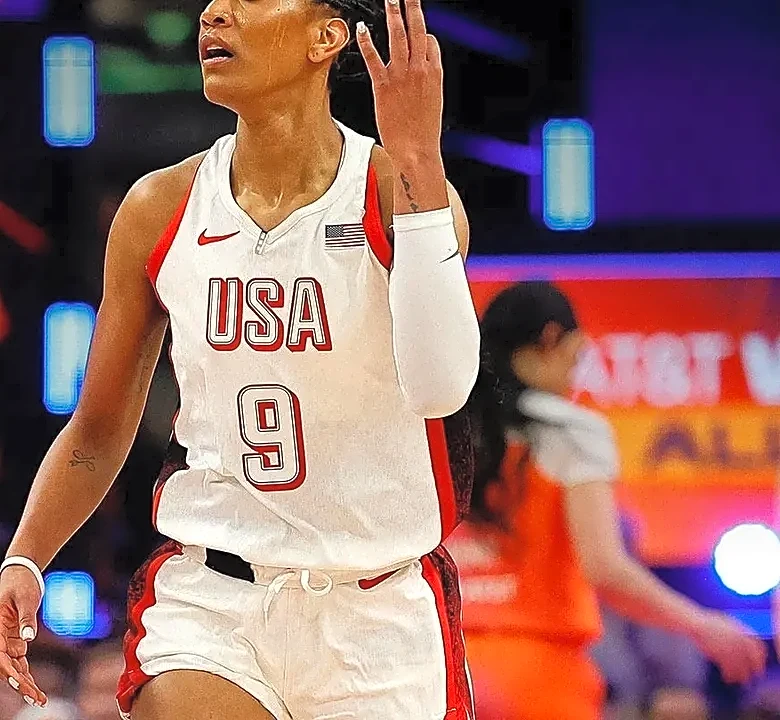
The All-Star Game itself was a testament to the power of the 5-out offense, a system where all five players operate on the perimeter. With shooters like Caitlin Clark, Paige Bueckers, and Sabrina Ionescu on the floor, defenses were stretched to their
absolute limit. In an exhibition setting without complex defensive schemes, the core principle was laid bare: when every player is a threat from deep, the floor opens up completely. This pulls shot-blockers away from the rim, turning the paint into a wide-open runway for drives. We saw players repeatedly attack closeouts, knowing help defense was a step further away than usual. The lesson is that spacing creates driving lanes, and the modern game is built on players who can both shoot from the outside and attack a defense that is forced to honor that shot.
Player 'Gravity' Is a Real Force
You don't have to touch the ball to impact the play, and the All-Star weekend was a perfect illustration of player "gravity." Superstars like Breanna Stewart and A'ja Wilson warp defenses just by being on the court. Defenders are so terrified of leaving them open that they stick to them like glue, even when they're 30 feet from the basket. This creates a numbers advantage for the other players on the floor. A simple ball screen or handoff becomes exponentially more effective when the screener's defender is hesitant to help. The threat of the shot is sometimes more powerful than the shot itself. Teams at all levels can utilize this by identifying their best shooter and using them in off-ball actions designed not just to get them open, but to occupy defenders and create opportunities for others.
Movement with a Purpose
All-Star games can sometimes devolve into static, one-on-one affairs. This year, however, was different. The ball didn't stick. Players were constantly engaged in purposeful movement away from the ball—flair screens, basket cuts, and quick exchanges. When a player like Kelsey Mitchell, known for her ability to score in a hurry, comes off a screen, the defense is forced to make a split-second decision that often leads to a breakdown somewhere else. The key takeaway is that movement shouldn't be random. Every cut should have a purpose: to get open, to clear a side of the floor for a teammate, or to set up the next action. This constant motion prevents the defense from ever getting comfortable and turning the game into a series of predictable isolations.
The 0.5-Second Decision
The speed of the game at the highest level is breathtaking, and it’s not just about physical quickness. The mental processing speed of the league's elite is what truly sets them apart. Players caught the ball and, within a half-second, made a decision: shoot, drive, or pass. There was no hesitation, no holding the ball and allowing the defense to recover. This quick decision-making is a direct product of great spacing. When players know where their teammates are and where the openings in the defense will be, they can play with instinct. For coaches, this emphasizes the importance of drills that force quick reads. The goal is to create an offensive environment where the ball moves faster than the defense can rotate, a principle that was on full display all weekend.