Nani’s latest cinematic outing, The Paradise, has officially crossed the ₹100 crore mark at the Indian box office. The action-packed drama, which hit theaters
last week, reached the milestone following its sixth day of release. While the film experienced a noticeable decline in daily collections during the work week, it has secured a significant achievement as the first project in the actor's 18-year career to surpass the century mark domestically. The film’s journey to this financial milestone began with a strong debut, bolstered by ₹11.60 crore from evening premieres. Its official opening day saw a collection of ₹34.65 crore, marking the highest opening figure of Nani’s career to date. Following the initial surge, the film saw fluctuations in its daily performance, with a dip to ₹14.90 crore on Friday, followed by a slight recovery to ₹15.25 crore on Saturday and ₹15.70 crore on Sunday. Monday saw a sharper decline to ₹5 crore, and by Tuesday, the film recorded its lowest single-day haul of ₹4.13 crore, bringing the total domestic collection to ₹101.23 crore.
Production and Narrative Context
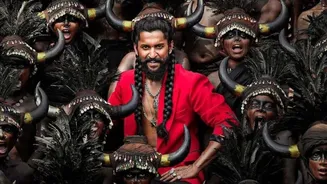
Directed by Srikanth Odela and produced by Sudhakar Cherukuri and Ishan Saksena under the banners of Sri Lakshmi Venkateshwara Cinemas and IVY Entertainment, The Paradise features a diverse ensemble cast. Alongside Nani, the film stars Mohan Babu, Kayadu Lohar, Sonali Kulkarni, and Raghav Juyal. The narrative is set in the 1980s and centers on the Savaari tribe’s struggle for legal citizenship. The plot follows Sammakka, played by Kulkarni, and her son Jadal, portrayed by Nani, as they navigate conflicts with a feudal overlord, Shikanja Malik, played by Mohan Babu, and his son, Vikram Malik, played by Juyal.
Reception and Industry Performance
The film has been released in Hindi, Tamil, and Telugu, with the majority of its revenue generated from the Telugu market. Despite receiving mixed reviews from critics and audiences, the project has maintained a notable presence in the industry. Addressing the polarized reactions on social media, Nani recently commented on the intensity of the feedback. He noted that in his 18-year career spanning 33 films, he had not previously encountered such a divided response. He suggested that the passionate, albeit sometimes critical, nature of the audience's engagement reflects a level of intensity that he views as a form of honest, albeit aggressive, feedback.









![Box Office Report [Sept 29]: Hanuman Ansh dominates, The Vvaan holds steady and more](https://g-mob.glance-cdn.com/public/fc/image/YpJvGsK9NPu0.webp)