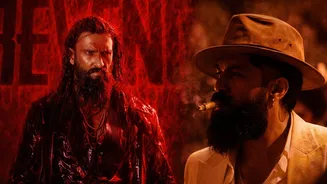


Ranveer Singh's Dhurandhar, directed by Aditya Dhar, seems to have resonated with the Indian public. However, this does not imply that the film is navigating
smooth waters in other regions. Dhurandhar's international journey has hit a wall, especially in the Middle East. The movie has been prohibited in six Gulf nations - Bahrain, Oman, Kuwait, Saudi Arabia, Qatar, and the UAE, as authorities reportedly took issue with its anti-Pakistan narrative. Yet, Dhurandhar is not the inaugural film to face bans in Gulf nations. Prior to the release of the Aditya Dhar film, a significant number of Indian films have encountered conflicts with the region's stringent censorship regulations. Over time, numerous high-profile films have been barred from theaters despite generating considerable global interest. From political dramas to popular entertainers, here’s an overview of Bollywood and South Indian films that have faced bans in the region long before Dhurandhar. Also Read: Ranveer Singh's Dhurandhar Banned In All Gulf Countries? Here's What We Know A 2025 release, John Abraham’s political thriller The Diplomat was banned from being released in several Gulf nations, including Saudi Arabia, Qatar, and Oman. Although the filmmakers did not provide an official explanation, reports suggested that the film’s geopolitical themes and portrayal of intelligence operations were not well-received by audiences in the region. The ban significantly impacted its international strategy, considering the Gulf market's importance for Bollywood. Siddharth Anand’s aerial spectacle Fighter, featuring Hrithik Roshan and Deepika Padukone in leading roles, encountered issues across most Gulf countries. While the UAE ultimately approved it, many neighboring nations refused to grant a release certificate. The film’s pro-military storyline and depiction of cross-border conflicts were reportedly the reasons for its failure to pass cultural scrutiny. Focusing on the revocation of Jammu & Kashmir’s special status, Yami Gautam’s Article 370 faced immediate resistance upon its release. Censorship boards in the Gulf reportedly flagged the film’s subject matter, particularly its political implications and real-world references. Also Read: Why Dhurandhar Actor Ranveer Singh's Debut Film Band Baaja Baaraat Remains Bollywood’s Most Authentic Work-Life-Romance Story Salman Khan also faced the scrutiny of Gulf censors. Tiger 3, a film crafted for a global audience, was banned in Kuwait, Qatar, and Oman. Although the reasons were not officially disclosed, they were believed to be related to the portrayal of certain Muslim characters and political nuances that local censors found objectionable. Vijay’s high-energy Tamil action film Beast encountered obstacles in the Gulf due to its plot involving terrorism, hostage crises, and geopolitical themes. Nations like Kuwait and Qatar blocked its release, citing concerns over the depiction of specific groups. The ban became a significant topic of discussion at the time.