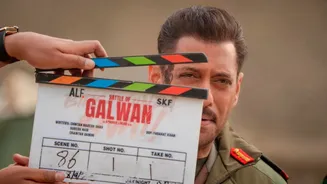










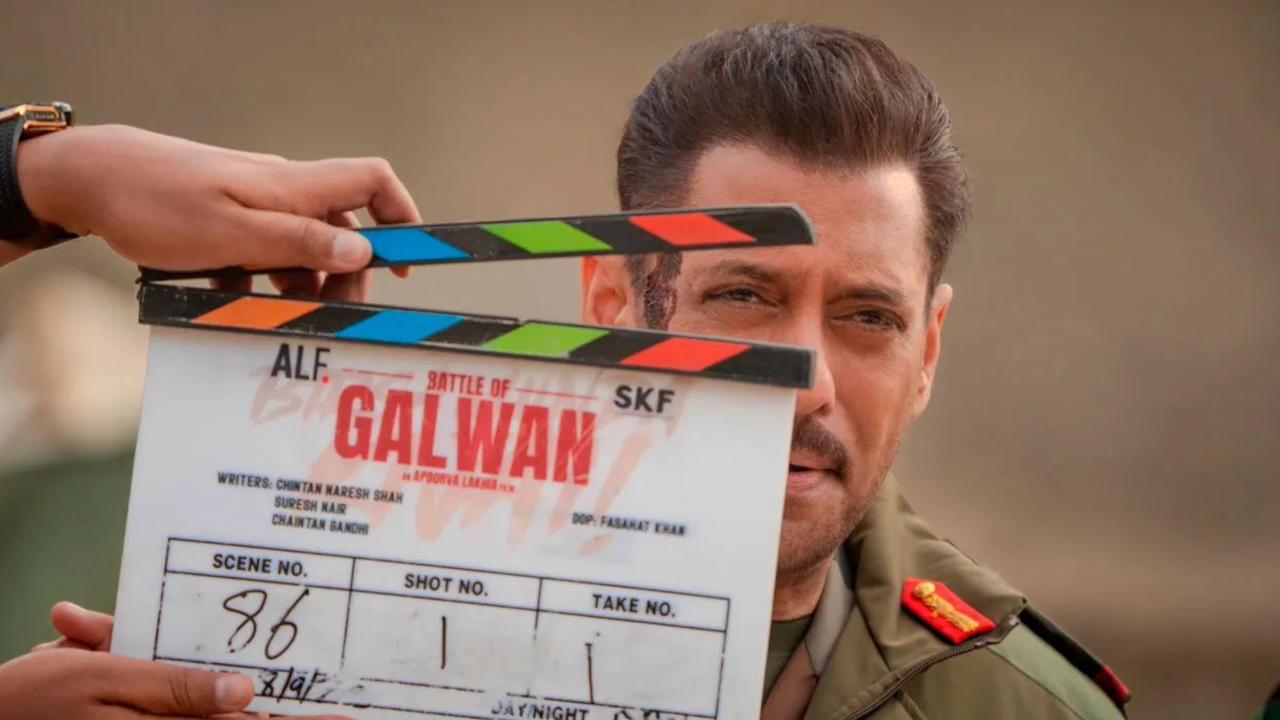
Salman Khan unveiled the initial teaser for Battle of Galwan on his birthday, December 27. The film reportedly centers around the 2020 confrontations between
Indian and Chinese forces in the Galwan area of Ladakh, India. While Salman has joined the ranks of contemporary war films, the teaser has garnered largely favorable responses from fans, who describe it as one of his most subdued and authoritative performances at the age of 60. As Salman's international fanbase eagerly anticipates the premiere on April 17, 2026, some fans from China express their disappointment. In fact, numerous individuals claim the film misrepresents historical facts and the true sequence of events that transpired on the battlefield. Salman, who gained significant popularity in China following Bajrangi Bhaijaan (2015), appears to have left his fans questioning after the release of the Battle of Galwan teaser. Many have taken to social media, particularly Weibo, to voice their dissatisfaction with the film's narrative.
What is Battle of Galwan about?
Battle of Galwan is reported to be inspired by the 2020 India-China confrontation in the Galwan Valley. The filmmakers state that it portrays the Indian Army's 16 Bihar Regiment, commanded by Colonel B. Santosh Babu, as they engaged in combat with Chinese troops, honoring the valor of Indian soldiers who lost their lives during the fierce military conflict. Directed by Apoorva Lakhia, the film features Salman Khan in the role of Colonel B. Santosh Babu.
Chinese fans are not happy with the 'narrative'
Numerous Chinese fans have responded to the teaser. As reported by Global Times, a Weibo user named 'Qingning Riyue v' criticized Battle of Galwan, claiming that the film misrepresents the facts. Another Weibo user, 'Situka 98', commented, "When history is lacking, Bollywood fills the gap."
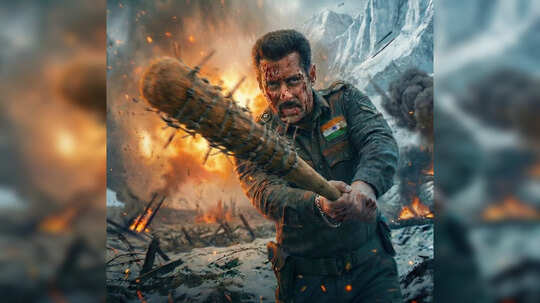
Quoting Chinese military analyst Song Zhongping, Global Times noted that "India's use of cinema, particularly Bollywood films, to incite nationalistic feelings is not surprising, reflecting a deeply ingrained cultural and political practice." An excerpt from Song's comments in the article states, "Regardless of how films dramatize or embellish events, they cannot alter the fundamental truths of the Galwan Valley incident: India was the first to breach the border, and the PLA acted to protect China's territory in accordance with the law." Song further remarked, "No matter how exaggerated a drama may be, a nation's sacred territory will remain unaffected by a film."
Battle of Galwan's timing inappropriate?
The article also highlighted the timing of Battle of Galwan. Lan Jianxue, head of the Department of Asia-Pacific Studies at the China Institute of International Studies, criticized its "one-sided Indian perspective," asserting that it "fuels hostile sentiments" at a moment when relations between the two countries appear to be improving.