









A remote village in Assam’s Barpeta district has emerged as an unlikely hub for high-end cinematic craftsmanship. Fifteen local artisans from Jania Banglipara
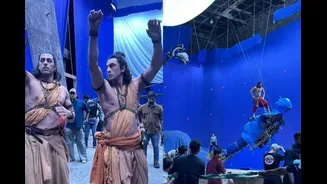
recently revealed their role in creating the intricate armour featured in the mythological epic Ramayana, which stars Ranbir Kapoor as Lord Rama and Ravie Dubey as Lakshman. The team spent over three years developing the specialized gear, operating under strict confidentiality agreements that kept the nature of the project hidden from them until the film's release. The project was spearheaded by master artisan Jaynal Abdin, who coordinated the production of 30 to 35 custom-made armour pieces. The collaboration began roughly three-and-a-half years ago, initiated through a local organization called Gram Unnayan. Rather than working directly with the production house, Abdin and his team received design specifications and drawings through intermediaries, marking the start of a long-term, intermittent production cycle that required them to meet urgent, high-pressure deadlines.
Engineering Wearable Armour from Traditional Cane
The process of creating the armour presented significant technical challenges, primarily due to the inherent rigidity of cane. Abdin told ANI that the initial prototypes, crafted entirely from traditional cane, proved too stiff and uncomfortable for the actors during high-intensity filming sequences. After feedback regarding fitting issues around the neck and shoulders, the artisans had to pivot their approach to ensure the costumes were both visually authentic and functional for the performers.To solve the mobility issues, the team experimented with a hybrid design. After consulting with the film's costume designer, Ajay, they transitioned to a combination of cane and rubber. This adjustment allowed for the necessary flexibility while maintaining the aesthetic requirements of the production. Once the hybrid model was approved, the artisans worked in phases, often receiving sudden requests for fresh pieces to be shipped immediately to Mumbai. Finished items were frequently transported from Barpeta to Guwahati Airport, where they were handed off for rapid transit to the production set.
A Surprise Reveal for the Artisans
Throughout the multi-year collaboration, the artisans were kept in the dark regarding the specific film they were supporting. They were told only that the work was for a major motion picture and were promised that their efforts would eventually bring recognition to their craft. It was only upon the film's recent release that the team discovered their handiwork had been commissioned for the high-profile Ramayana production.Reflecting on the experience, Abdin expressed a sense of collective pride for his village and the Barpeta district. While he has yet to see the final film, he noted that he intends to watch it to see the results of his team's long-term dedication. The project has brought significant attention to the traditional skills of the Jania Banglipara artisans, highlighting the vital, often unseen role that regional craftsmanship plays in large-scale cinematic productions.