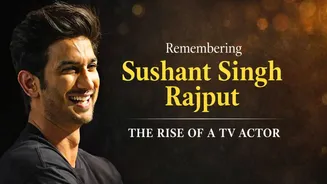

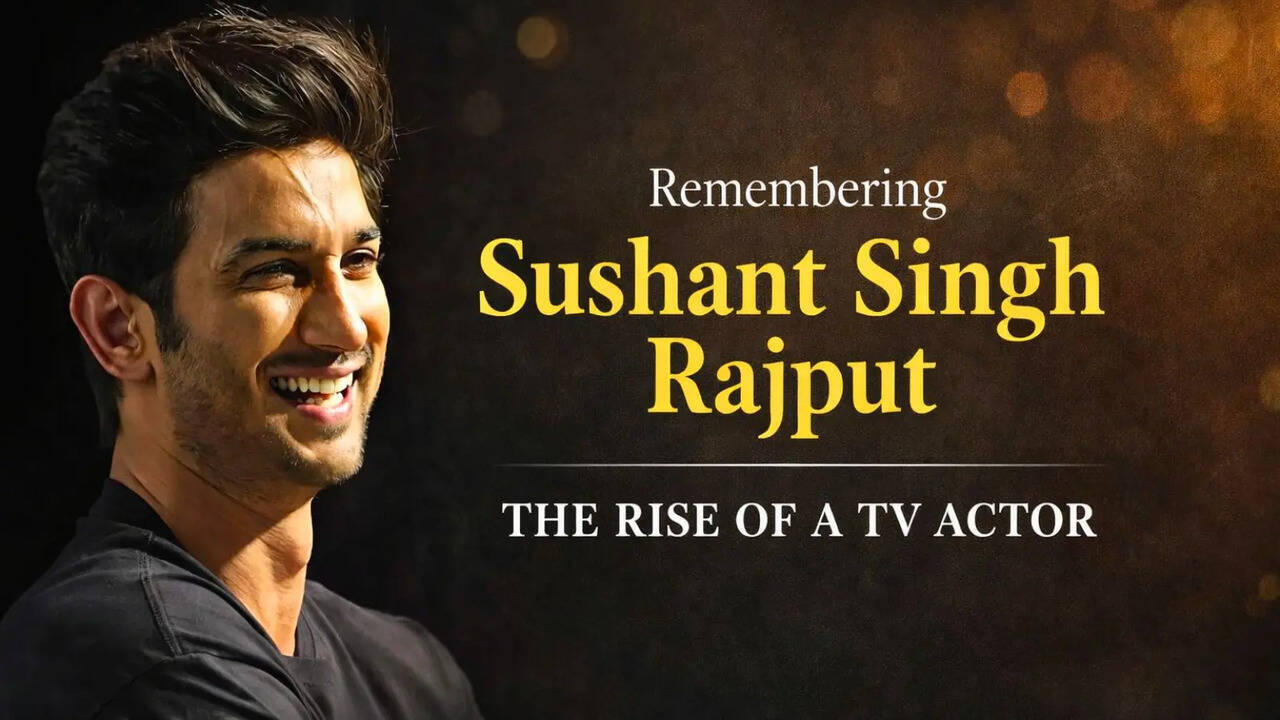
Sushant Singh Rajput died in 2020, and yet, he never died. Few actors have remained as vividly present in the public memory as the Pavitra Rishta star
who made a successful transition from television to film. In the dazzling realm of Bollywood, where many success stories seem preordained—stars born into fame, nurtured by heritage, and supported by privilege—Sushant's ascent is remarkable not only because he was a complete outsider but also due to his origins in television, a medium that Hindi cinema has traditionally dismissed. Emerging from the world of daily soap operas, Sushant's path led him to the silver screen—a journey that quietly challenged established norms. This very aspect may explain why Sushant Singh Rajput’s rise will always be special.
Television was the beginning, not the end
In contrast to popular belief, Ektaa Kapoor actually gave Sushant his first break in Kis Desh Mein Hai Meraa Dil. Sushant's portrayal of Manav in the 2009 Pavitra Rishta solidified his place in the hearts of millions, perhaps for eternity—a role that might never have been his. When Sushant entered the world of Indian television in the mid-2000s, the medium was booming, yet there was a distinct divide between television and film. TV actors had gained immense popularity, earning loyalty from viewers across households. However, they were seldom regarded seriously by the film industry. There was an unspoken understanding—television fame was loud but limited. A ‘TV star’ was destined to be just that – crossing over to films – especially as a leading man – was unheard of.

Sushant's transformation into Manav did not lead to instant stardom. However, the seeds of a rebellion had been planted, fostering a gradual, organic bond of trust between the actor and his audience. What resonated with viewers about Manav, and by extension Sushant, was the character's authenticity. Unlike the extravagant narratives of contemporary prime-time dramas that explored the lives of wealthy families and their intricate dynamics, Manav was sincere, grounded, and emotionally relatable. He was a mechanic whose principles outweighed grand gestures. Sushant's portrayal struck a chord with middle-class viewers who saw in him a reflection of everyday decency and the struggles of life, love, and existence. Within months Sushant had become one of the most loved faces on Indian television.
Sushant’s rise was marked by ambition
What made Sushant so different from contemporary successful television actors was his relentless pursuit of success. The show Pavitra Rishta could have offered a comfortable, long-term role—financially stable, emotionally familiar, and widely popular—and for many, it might have represented the ultimate goal. Yet for Sushant, it was merely a stepping stone.

Even while thriving as Manav on television, Sushant was acutely aware of his aspirations. He consistently expressed his desire to transition to film, viewing cinema as the ultimate dream he was pursuing. His objectives were clear, but that clarity came with sacrifices. Departing from a successful TV show meant jeopardizing his relevance, income, and fan support. It also required entering a film industry that was often unwelcoming to television actors.
In hindsight, it is perhaps not surprising that Sushant chose uncertainty over stagnation. When he left Pavitra Rishta in 2011, his decision was met with skepticism and backlash. Many thought he was abandoning guaranteed success for an elusive dream. This choice would ultimately define the bravery behind his ascent.
The mindset of an actor: Sushant Singh Rajput
Sushant Singh Rajput never treated television as a shortcut to fame. Sushant regarded acting as a craft. His theatre background—training under Barry John—provided him with a solid foundation in performance, discipline, and character development. This foundation was evident even in his television roles, where his body language and emotional nuance stood out in a genre often dominated by melodrama. In retrospect, for Sushant, television was not a shortcut; it was a means of preparation.

That mind-set would become crucial when he made the leap to cinema.
Shattering the ‘TV actor’ barrier
When Sushant Singh Rajput finally debuted in Bollywood with the 2013 Kai Po Che! it was significant not just for him, but for the perception of television actors at large. An adaptation of Chetan Bhagat’s novel, the film cleverly refrained from casting him as a typical hero. Instead, it allowed Sushant to portray vulnerability, volatility, and flaws. Critics took notice.
The audience responded positively. Most importantly, the industry began to view him in a new light. He was no longer “a TV actor attempting films.” He had established himself as a confident actor.

However, this transformation did not occur overnight. Sushant had to continuously demonstrate his talent. Each subsequent project—Shuddh Desi Romance, Detective Byomkesh Bakshy!, Sonchiriya—felt like a deliberate effort to dismantle preconceived notions about him, piece by piece.
Shouldering the burden of representation
For aspiring television actors,Sushant’s journey has become symbolic. He symbolized hope and the potential to be taken seriously, to break free from typecasting, and to secure leading roles without a cinematic lineage. Sushant Singh Rajput’s success was not just personal, it was collective.

However, this symbolic significance also brought pressure. Each underperforming film was perceived as validation of industry bias against outsiders, particularly those transitioning from television. His ascent—never smooth—was subjected to constant scrutiny, questioning, and tangible evaluations. Yet, Sushant Singh Rajput persevered.
Sushant’s validation through MS Dhoni
If Kai Po Che! marked the entry of a TV actor into cinema, MS Dhoni: The Untold Story (2016) cemented Sushant’s legitimacy. Portraying one of India’s most celebrated sports figures was a significant responsibility, and Sushant approached it with his characteristic discipline. The film’s success was transformative. For the first time, a former television actor had achieved a major Bollywood blockbuster as a solo lead. This symbolism proved to be immensely powerful. Much like Dhoni himself, Sushant’s journey—from humble beginnings to national acclaim—felt earned, grounded, and inspiring. MS Dhoni shattered long-held industry biases.

Sushant Singh Rajput’s ascent was rooted in authenticity
In hindsight, what made Sushant Singh Rajput’s rise truly special was its authenticity. His persona was not a meticulously crafted image; there was no artificial mystique. Sushant’s authenticity stemmed from his willingness to discuss failure, ambition, mental health, and curiosity. He engaged in conversations about science and philosophy with equal ease, challenging conventional definitions of stardom. His social media presence reflected this sincerity—innocent, engaging, thoughtful, and often vulnerable. Fans admired him, but more importantly, they connected with him—seeing in him a reflection of their own struggles mirrored in his journey from television to film.

Yet Sushant’s journey remained unfinished
French philosopher Jacques Derrida, in his theory of deconstruction, often spoke of 'iterability,' suggesting that a work can live on beyond its initial creation, independent of its author. In many ways, Sushant’s life remains that tome which continues to create conversations. Sushant Singh Rajput’s untimely passing in 2020 cast a long shadow over his career, but it also highlighted what he had accomplished in a brief period. Today, when TV actors dream of cinema, Sushant’s name comes up, not as an exception, but a benchmark.
The ascent of Sushant Singh Rajput will always hold a special place. The boy from Patna challenged authority, redefined ambition, and demonstrated that talent can flourish when given the right opportunities. From television to cinema, Sushant Singh Rajput’s did not just rise, but carved a path in stone. And in doing so, left behind a legacy that continues to inspire.