The
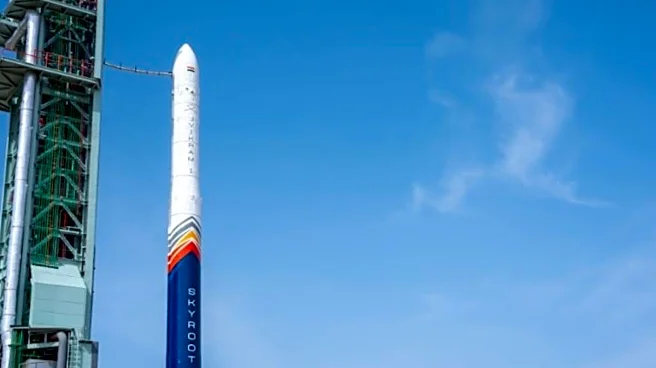
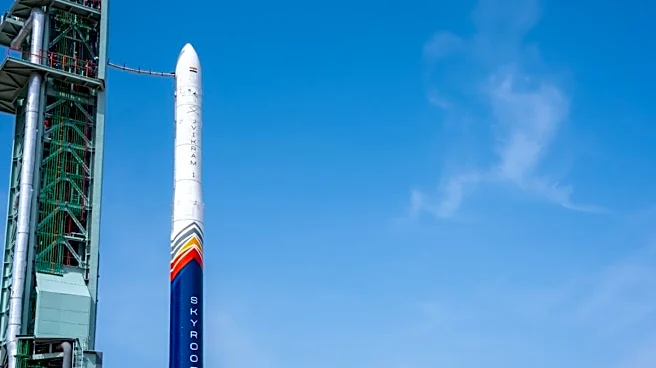
journey of India’s private space industry has added a new chapter this week as Skyroot Aerospace successfully launched Vikram-1, the nation’s first privately developed orbital rocket. While the historic mission marks an achievement, the bigger story is what comes next. From more frequent launches to a more powerful rocket, Skyroot is planning to grow as a player in the global satellite launch market.
Vikram-1 Completes Successful Maiden Orbital Mission
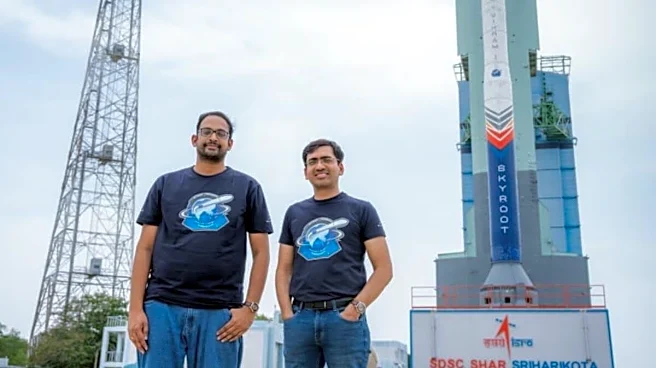
Skyroot Aerospace launched Vikram-1 from the Satish Dhawan Space Centre at Sriharikota on its first orbital mission,
Mission Aagaman. The rocket successfully carried various customer payloads and in-orbit experiments into a 450km orbit nearly 15 minutes after take-off.The mission was designed to test the rocket’s propulsion, avionics, telemetry, guidance, navigation and control systems under real flight conditions. The space startup will use this data collected during the mission to prepare the vehicle for future commercial operations.
Commercial Launches Expected To Begin
With Vikram-1 now successfully flight-tested, Skyroot is likely to move towards regular commercial launch services for customers in India and overseas. The space startup plans to serve the small satellite industry by offering both dedicated launches, where customers use the entire rocket and rideshare missions. These services are expected to support Earth observation satellites, communication spacecraft, scientific research missions and technology demonstration payloads.
Vikram-II Is Already In Development
Skyroot is working on its next-generation launch vehicle, Vikram-II, which is scheduled for launch in 2027. As per the company, Vikram-II will be capable of carrying up to 900 kg to Low Earth Orbit (LEO) and up to 600 kg to Sun Synchronous Orbit (SSO). That is more than double the Low Earth Orbit payload capacity of Vikram-1, allowing the rocket to take larger satellites and support more demanding commercial, scientific and government missions. One of the biggest upgrades planned for Vikram-II is its cryogenic engine, which is expected to deliver higher efficiency than the propulsion system used on Vikram-I. As the global demand for small satellite launches continues to rise, Skyroot hopes Vikram-II will help it compete for larger international contracts and more complex missions.
/images/ppid_a911dc6a-image-178444702888824360.webp)

/images/ppid_a911dc6a-image-178435142633390996.webp)




/images/ppid_a911dc6a-image-178436442770731108.webp)

/images/ppid_a911dc6a-image-178434202128892079.webp)
/images/ppid_a911dc6a-image-178435662734995827.webp)
/images/ppid_a911dc6a-image-178435926836661938.webp)
/images/ppid_a911dc6a-image-178435252389847553.webp)
/images/ppid_a911dc6a-image-178435255821837417.webp)