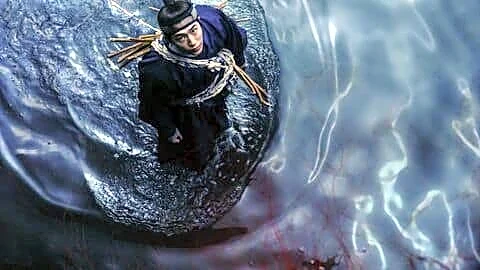
Ever since My Royal Nemesis marked its finale on June 20, fans have been debating about the subplots of the fantasy romance drama. The Netflix K-drama has left many wondering and a tad confused about the connection between Lim Ji-yeon's two characters, Shin Seo-ri and Kang Dan-shim. Are they the same person, centuries apart? Did Seo-ri go back in time? Or is it a reincarnation drama about a destined love that repeats itself through the generations? Even though the show, also starring Heo Nam-jun as Cha Se-gye and Grand Prince Cheongheon, gave viewers a happy ending with the highest ratings of its entire run, some questions continue to remain unanswered or unclear. The series first introduces Shin Seo-ri as a modern-day woman in the present,
while Kang Dan-shim is from the Joseon era. As the story unfolds, the similarities between the two women are undeniable, and fans start to question whether their connection is destiny, not chance.
Is Kang Dan-shim really Shin Seo-ri?
The most compelling theory is that Shin Seo-ri and Kang Dan-shim are connected via reincarnation, not the usual time-travel situation. Unlike classic time travel stories where a character physically travels from one time to another and changes events,
My Royal Nemesis is more about the emotional ties between past and present. Seo-ri carries Dan-shim's personality, emotions, and unfinished fate, implying that a soul can continue on to another life. Dan-shim's story never really ended, and so their connection seems to be there. Seo-ri’s journey is still affected by the pain, love and choices of her past life, creating a bridge between two timelines.
Is it a body-swapping story?
Another possibility viewers talked about is soul swapping, but the drama doesn't quite go that route. A soul-swap storyline typically involves the consciousness of one person entering another's body, retaining their memories and identity. But Seo-ri is not just becoming Dan-shim. She is still her, with her own experiences and personality. Instead, the drama uses Dan-shim's life as a reflection of Seo-ri's fate - two women connected through the same emotional journey, not the same body.
Time travel theory explained
The theory of time travel is based on how the drama connects past and present events. There are moments that feel like history is repeating itself, particularly when Seo-ri encounters situations that are a reflection of Dan-shim's life. But the show doesn't seem interested in changing the past as much as accepting destiny. You can't rewrite the past, but the characters get another chance to finish what was left unfinished. The timeline is circular, events from centuries ago influence the present, and the present resolves the emotions carried from the past.
Why does Grand Prince Cheongheon show up in Cha Se-gye's dreams?
Heo Nam-jun's Cha Se-gye adds an extra layer to the mystery with his dreams about Grand Prince Cheongheon. In these dreams, it seems that somehow, Cheongheon’s memories and emotions are reaching the present. They seem not to be random visions, but rather fragments of a previous life or inherited memories that are linked through fate.Cha Se-gye's dreams suggest the Joseon-era story isn’t entirely over. The emotions, conflicts and relationships from that period still exist beneath the surface, influencing the present-day characters. His connection to Grand Prince Cheongheon bolsters the reincarnation theory - that several characters may be harbouring parts of a past life.
Kang Dan-shim and Grand Prince Cheongheon's fate
My Royal Nemesis is inspired by the idea of some relationships being timeless. Tragedy and forces beyond their control bound Dan-shim and Cheongheon together. Seo-ri and the present-day characters are another chance to break old patterns and find happiness. The drama uses reincarnation not just as a fantasy but as a metaphor for unfinished emotions. Even when time goes on, love and regret and memories live on.
Time travel, reincarnation or fate - final theory
My Royal Nemesis has elements of what seems to be time travel. But the deeper explanation seems to be reincarnation. The characters are not travelling through centuries to fix history – they are living out new lives, carrying invisible connections to the past. The message of the drama is at the end about second chances. The past makes people who they are, but the present offers them a chance to choose a different ending.
/images/ppid_a911dc6a-image-178222456491284178.webp)


/images/ppid_a911dc6a-image-178204252611698949.webp)




/images/ppid_a911dc6a-image-178206352069257375.webp)


/images/ppid_a911dc6a-image-178197252356328532.webp)
/images/ppid_a911dc6a-image-178196902313164393.webp)
/images/ppid_a911dc6a-image-178202157546180840.webp)
/images/ppid_a911dc6a-image-178198305039262974.webp)
/images/ppid_a911dc6a-image-178197258022698812.webp)