When Amitabh Bachchan's voice echoed in the Raichand Mansion with "Keh Diya Na, Bas Keh Diya," he wasn't just being authoritative over wife Jaya Bachchan, he was also asserting elder son Shah Rukh Khan to abide by the parampara of not marrying a low-class girl in Kabhi Khushi Kabhie Gham. AB's parampara got two more additions in pratishtha and anushasan towards his daughter Aishwarya Rai in Mohabbatein (2000). But the story of the fathers of Hindi cinema doesn't restrict to the Bachchans. This is an industry where Prithviraj Kapoor ordered Anarkali to be bricked alive into the wall because she dared to fall in love with his son Salim. This is also the industry where Aamir Khan turned world champions out of his daughters, and Gunjan Saxena's
father became the wind beneath her wings.Bollywood fathers have for decades been the epitome of authority, discipline and family honour. They were frequently the final adjudicators in a household, characters whose approval made the difference for their children. A daughter's marriage, a son's career choice, or a family conflict, whatever it was, the father figure traditionally stood for social expectations, not emotional understanding.
But over the years, the portrayal of fathers has seen a massive transformation in Hindi cinema. The once unquestioned patriarch has become a more complex character, flawed at times, vulnerable at others, increasingly supportive. Today's Bollywood fathers are not merely the bearers of tradition but emotional anchors, friends and partners in their children's journeys.
Age Of Authority - Honour, Assertiveness (1960s - 1990s)
In earlier decades,
Bollywood fathers were often written as strict figures whose love came through control, not affection. What mattered most to them was appearances, being in the right social circles and making sure their kids did the "right" thing. Movies like
Deewaar (1975) and
Shakti (1982) showed the clash between fathers and sons, and the ideas of morality. In
Shakti, the relationship between police officer Ashwini Kumar (Dilip Kumar) and rebellious Vijay (Amitabh Bachchan) as father and son became a war between law and personal emotions. The father loved the son, but duty was more important than expressing emotion.
Fathers were also frequently obstacles to love stories in many romantic dramas of the 1980s and 1990s. They represented social restrictions, caste barriers, financial worries and family honour. Their usual role was to generate conflict, not to support the protagonist's choices. This era saw two milestone portrayals. Emperor Akbar by Prithviraj Kapoor in
Mughal-E-Azam (1960) is the ultimate prototype of this archetype. To Akbar, state and royal blood are more important than personal fatherly love. Akbar does not negotiate, he goes to war when his son Salim rebels for love.
Second, Amrish Puri's Baldev Singh in
Dilwale Dulhania Le Jayenge (1995). He is perhaps the most famous modern take on the uncompromising patriarch. He loves his daughters a great deal but the expression of his love is circumscribed by strict, conservative boundaries. The girls have to struggle until he utters "
Jaa Simran Jaa..." These two films show the range Bollywood went full throttle to write father roles. They were the narrative villain or the main obstacle during this time. The emotional arc of the character was one of trying to push through or get to acceptance of this unyielding wall of authority.
Emotionally Vulnerable (1990s - 2000s)
As the stories got more intimate, Bollywood started showing fathers who were still traditional but emotionally connected to their children. They were loving, but in a quiet manner. A major shift came when Alok Nath turned the tables with films like
Hum Aapke Hain Koun (1994). In
Kabhi Khushi Kabhie Gham (2001), Yashvardhan Raichand (
Amitabh Bachchan) is the powerful head of the house whose decisions influence the whole family. His strictness results in the main conflict. But the movie also charts his emotional vulnerability and the eventual realisation that love is impossible without acceptance.
Baghban (2003) saw a father who gives his all to his children, only to be emotionally abandoned by them in his old age. This film shifted the emotional graph entirely, framing the father not as the oppressor, but as the emotional victim. Here, the father was not an antagonist, he was a character with fears, insecurities and emotional shortcomings. While still in roles of authority, they formed more complex emotional relationships with their children.
Fathers Who Learn From Children (2000s - 2010s)
2000s, however, saw a radical change in the way fathers were written. These characters began to evolve because of their children, not just to guide them. They turned more real, a reflection of the patriarchs in our homes. In
Wake Up Sid (2009), Ram Mehra (Anupam Kher) is baffled by his son Sid's lack of ambition. Their relationship is a realistic gap between generations. This story is not about obedience, like older movies, but about understanding and communication.Similarly,
Paa (2009) explored a non-traditional father-son relationship with Amitabh Bachchan playing Auro, a child with a rare disease, and Abhishek Bachchan as his biological father Amol who learns about responsibility and emotional maturity. It's a subversion of the normal dynamic because the son is the wiser one in the movie.
Supportive Dad Makes Entry (Post 2010s)
Modern Bollywood has shifted away from the idea that fathers always have to have the answers. Today, they are depicted as people who walk alongside their children, not control their choices.Farhan's father in
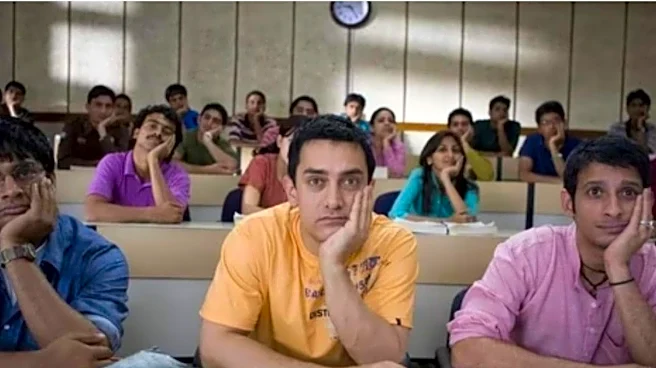
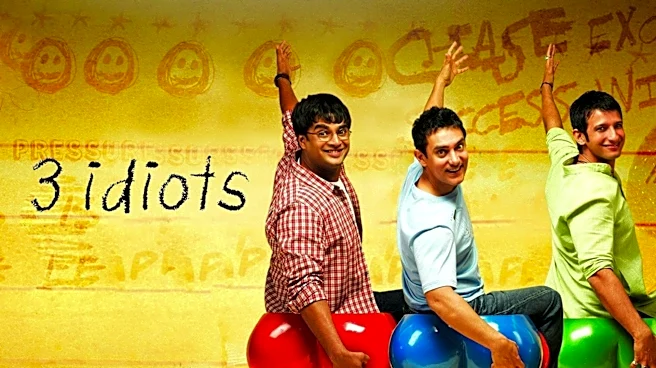
3 Idiots (2009) is a typical dictatorial parent who wants his son to become an engineer. But their emotional climax is a quiet, devastating conversation where the father (Parikshit Sahni) surrenders his dream to his son's. Mahavir Singh Phogat (Aamir Khan) in
Dangal (2016) also melts. He begins as a strict, demanding hanikarak bapu. At the beginning, his wish to make his daughters wrestlers seems to be a controlling obsession, but the story turns into one of seeing potential and supporting dreams. His relationship with Geeta and Babita is transferred from authority to partnership.
Farooq Sheikh's character as Kabir's (Ranbir Kapoor) father in
Yeh Jawaani Hai Deewani (2013) is still one of the most loved father figures in contemporary cinema. He does not force his son, who is driven by wanderlust, to stay at home in the name of tradition. Instead, he packs his bags, pours him a drink and says, 'Do wherever you want to go. Just don't forget. I'm always with you." Another emotional act came with
Angrezi Medium (2020). Champak Bansal (Irrfan Khan) is a deeply loving but flawed father who does everything to fulfil his daughter Tarika's dream of studying abroad. Older fathers protected children through restrictions. He protects her by removing barriers.
Safer Emotional Havens
Recent films have explored fathers who openly express their emotions. The notion of a dad crying, apologising, admitting he's made mistakes and talking about feelings is more acceptable now. Older male characters in
Jugjugg Jeeyo (2022) and
Sharmaji Namkeen (2022) are depicted as developing identities beyond fatherhood. They are not simply providers, but people with their own dreams, loneliness and struggles.Even films like
Badhaai Ho (2018) challenged the traditional family dynamics by showing parents as individuals who have a life beyond that of a mother and father.
Heroic Dads Who Changed Hero's Journey
In the past, fathers often defined the protagonist's conflict. The hero had to overcome the obstacle of their acceptance or rejection. Today, fathers are more likely to be involved in the growth of their children. They offer emotional support, learn with their offspring, or become the reason the protagonist finds their strength.From the intimidating father who said 'no' to the father who says 'I believe in you', Bollywood's father figure has come a long way.The modern Hindi film father is still protective but he is no longer the father of authority. He can be stern, emotional, muddled, loving, vulnerable, all at once - just like real parents. The change is indicative of a broader transformation in Indian society itself - from relationships based on obedience to those based on understanding.
/images/ppid_a911dc6a-image-178201111287233026.webp)

/images/ppid_a911dc6a-image-178178710364887678.webp)



/images/ppid_a911dc6a-image-178192707527871748.webp)
/images/ppid_a911dc6a-image-178199002465961775.webp)


/images/ppid_a911dc6a-image-178196558414526522.webp)
/images/ppid_a911dc6a-image-178178702747458006.webp)