Skyroot
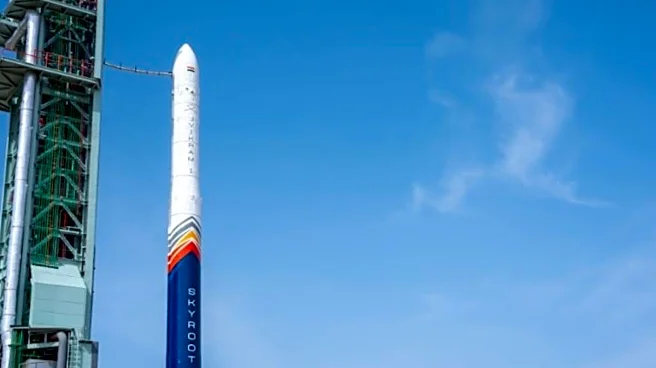
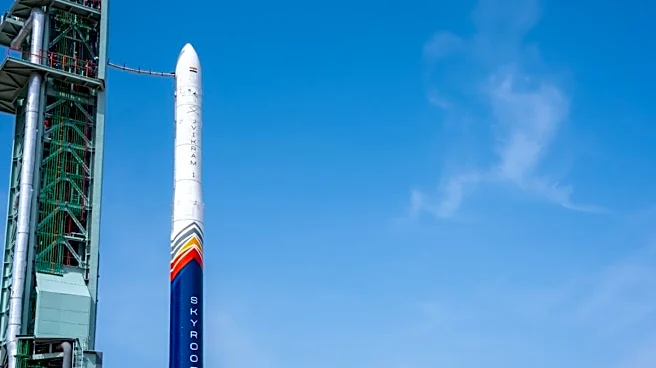
Aerospace is set to create history on Saturday as its Vikram-1 rocket lifts off from the Satish Dhawan Space Centre (SDSC-SHAR), Sriharikota, at 11:30 am. Named Mission Aagaman, it is India's first attempt by a private space startup to place an indigenously developed orbital rocket into space.If successful, the mission will mark a major milestone for India's growing private space industry and place the country among a select group of nations with privately developed orbital launch capabilities.Ahead of the launch, aviation and maritime authorities have issued restricted-zone notices along the rocket's planned flight path. Here are the 10 historic firsts that make Mission Aagaman one of India's most significant space missions.
1. India's First Privately Developed Orbital Rocket
Vikram-1 is India's first privately developed launch vehicle designed to carry satellites into orbit. The mission marks a major shift from government-led launches towards greater participation by private companies in India's space programme.
2. First Orbital Launch Attempt by an Indian Space Startup
Mission Aagaman is Skyroot Aerospace's maiden orbital mission. It is the first time an Indian private space startup will attempt to place its own rocket into orbit.
3. India's First All-Carbon Composite Orbital Launch Vehicle
According to Skyroot Aerospace, Vikram-1 is India's first orbital rocket built using an all-carbon composite structure. The lightweight material helps improve performance while reducing the rocket's overall weight.
4. India's First 100 Per Cent 3D-Printed Engine on an Orbital Rocket
The rocket's Orbital Adjustment Module is powered by a fully 3D-printed liquid engine. Skyroot says this is the first time such an engine is being used on an Indian orbital launch vehicle.
5. India's Longest Monolithic Carbon Composite Rocket Stage
The first stage of Vikram-1 is India's longest monolithic carbon composite rocket stage, showcasing the country's growing capabilities in advanced aerospace manufacturing.
6. First Ultra-Low-Shock Pneumatic Separation System
Vikram-1 uses an advanced pneumatic system to separate its rocket stages and payload fairings. According to the company, this technology is being used for the first time in an Indian launch vehicle.
7. First Private Indian Orbital Launch to Demonstrate Space Debris Removal Technology
One of the mission's payloads, EMBRACE, will test robotic arm technology that could be used in future missions to remove space debris from Earth's orbit.
8. First Indian Private Orbital Mission to Carry a Scientific Art Tribute
The mission will carry a miniature gold rocket containing micro sculptures of Dr Vikram Sarabhai, Sir C.V. Raman and Dr A.P.J. Abdul Kalam, paying tribute to three of India's most celebrated scientific icons.
9. First Indian Private Orbital Rocket to Carry a Lab-Grown Diamond
Vikram-1 will also carry Cosmic Bloom, a lab-grown diamond being sent into orbit as an artistic payload, combining science, innovation and creative expression.
10. First Orbital Mission to Carry the Prime Minister's Message to Space
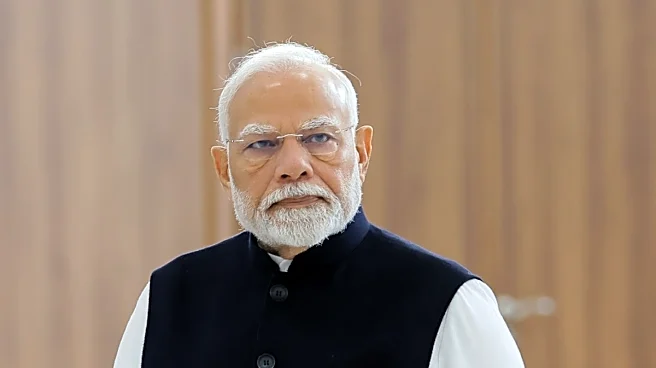
Mission Aagaman will carry a card containing Prime Minister Narendra Modi's message, "Vande Matram," along with hundreds of messages from supporters around the world, symbolising India's growing ambitions in space exploration.With Mission Aagaman, Skyroot Aerospace is attempting far more than a rocket launch. If successful, Vikram-1 will become a landmark achievement for India's private space industry, showcasing homegrown technology, advanced manufacturing and the country's ambition to become a major player in the global commercial space sector.
Skyroot's Journey
Speaking to Times Now Digital, just days ahead of Mission Aagaman launch, Skyroot Aerospace co-founder Pawan Chandana recalled the challenges the company faced in its early years."When we started off, we didn't know what... if you see, all the odds of success were very low, because there was no policy, there was no funding environment in India when we started the company in 2018. There was no talent in the private sector to build hard tech really, deep tech, hard tech. People think that rocket science is rocket science — so difficult that startups may not be able to do it. Maybe US billionaires will do it. That was the thought process.But we have launched India's first private rocket to space. We are just about to launch India's first private orbital rocket. It's already at the launch site, and it's going to take off in a few weeks now. I think really India has enabled us to do it — the ecosystem, the people, the government, the policies have opened up. A lot of things happened in the last seven years which enabled us to do our journey."Founded without a dedicated policy framework, a mature funding ecosystem or an established private-sector talent pipeline for deep-tech space ventures, Skyroot has gone on to become India's first space-tech unicorn, with a valuation exceeding $1 billion. The company is also the country's first deep-tech unicorn from the space sector, highlighting how India's startup ecosystem has evolved beyond software into advanced engineering and space technology.
https://www.youtube.com/watch?v=CdVCElWU6Fk&t=932s
/images/ppid_a911dc6a-image-178435255821837417.webp)

/images/ppid_a911dc6a-image-178444702888824360.webp)
/images/ppid_a911dc6a-image-178435926836661938.webp)




/images/ppid_a911dc6a-image-178435142633390996.webp)
/images/ppid_a911dc6a-image-178435252389847553.webp)

/images/ppid_a911dc6a-image-178436442770731108.webp)
/images/ppid_a911dc6a-image-178434202128892079.webp)
/images/ppid_a911dc6a-image-178428126055835139.webp)
/images/ppid_a911dc6a-image-178430355035262675.webp)