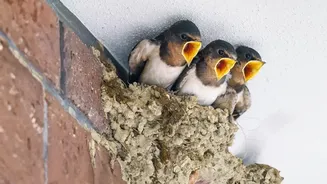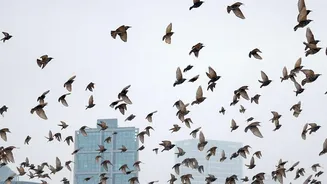




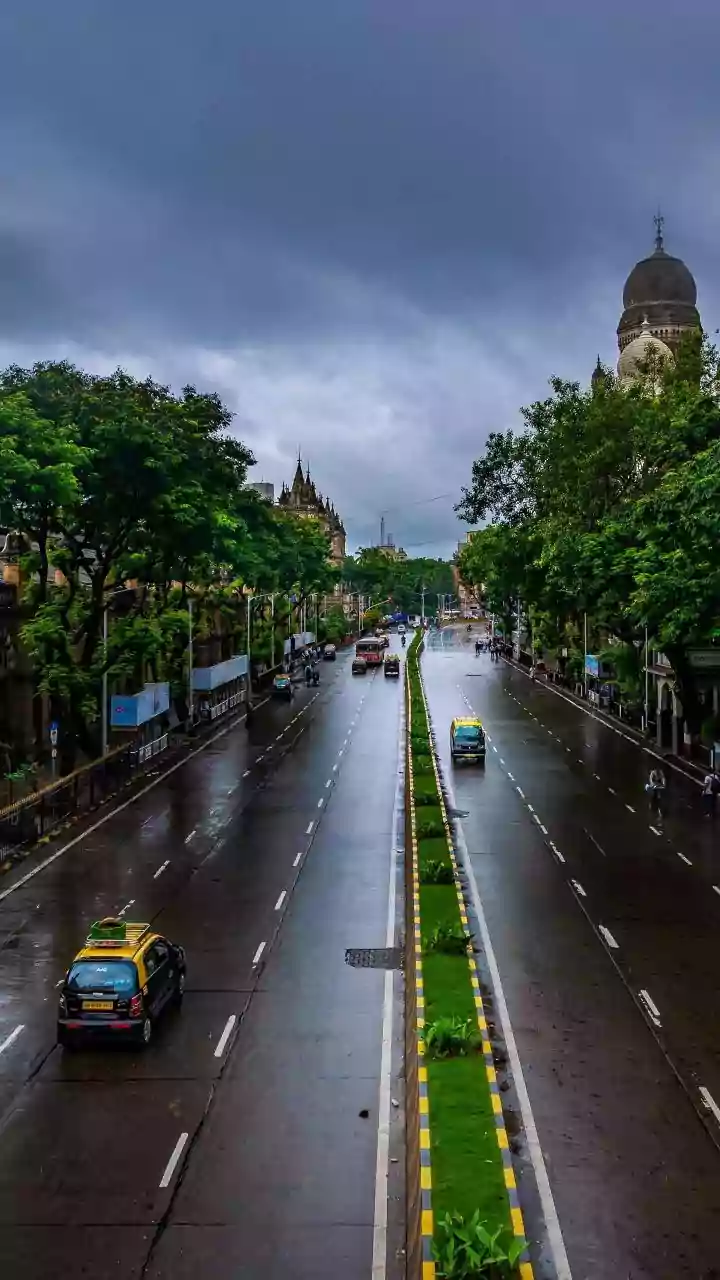
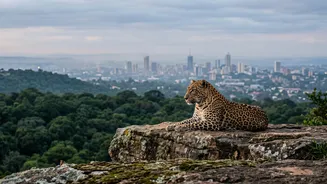
From pigeons on power lines to monkeys navigating traffic, our cities are teeming with wildlife. These animals aren't just visitors; they are residents, actively learning and evolving to turn the concrete jungle into a liveable habitat.
The New Rules of the Urban Jungle
Cities represent
a dramatic and completely new type of ecosystem on the planet. For wildlife, these environments are a maze of challenges: fragmented habitats, constant noise, artificial light, and unfamiliar food sources. Yet for a select group of animals known as 'synanthropes', cities are full of opportunity. These are species that have learned to live near humans and benefit from our activities. Success in this new world depends on flexibility. Animals that come from naturally dynamic habitats, like the edges of forests, are often pre-adapted for the constant change of city life. They possess a key trait: the ability to adjust their behaviour to solve new problems and exploit new resources, a quality that is crucial for survival.
Getting Smarter to Survive
One of the most fascinating adaptations is cognitive. Urban animals are demonstrably becoming better problem-solvers. Raccoons, for instance, are famous for their ability to open complex garbage bins, a skill that requires dexterity and learning. In fact, our attempts to create 'raccoon-proof' bins may actually be driving their intelligence, presenting them with ever-harder puzzles to solve. Similarly, members of the corvid family, like crows and ravens, exhibit remarkable intelligence. Crows have been observed using cars to crack nuts and have been shown to remember human faces, even holding grudges against individuals they perceive as threats. This ability to learn, remember, and even innovate is a powerful tool for navigating the complexities of urban life.
A Change in Diet and Daily Schedules
To avoid conflict with their most dominant neighbours—humans—many urban animals have become masters of time management. Species like foxes and coyotes are increasingly nocturnal in cities, using the cover of darkness to hunt and forage when human activity is at a minimum. This shift allows them to take advantage of urban resources while staying out of sight. Their diets have also changed dramatically. The endless supply of human food waste provides a reliable, high-calorie buffet. While this 'junk food' diet can lead to larger animals, it also shows their incredible adaptability in exploiting whatever food is available, from discarded snacks to the contents of a compost bin.
Adapting to a World of Noise and Light
Cities are relentlessly noisy and bright, creating sensory challenges that rural animals never face. Many bird species have adapted by changing their songs. Urban blackbirds, for example, have been found to sing at a higher pitch to be heard above the low-frequency rumble of traffic. They also sing earlier in the day. Artificial light at night also disrupts natural rhythms. While it can disorient some species, others have learned to use it to their advantage. Some sparrows have become night owls, using bright city lights to hunt insects that are drawn to the glow. However, studies also show that many nocturnal animals are less active in brightly lit areas, which can shrink their usable habitat.
Evolution on Fast-Forward
The changes aren't just behavioural; they are becoming hardwired into the genetics of urban animals. Scientists call this 'human-induced rapid evolutionary change'. In Puerto Rico, crested anole lizards living in cities have evolved longer limbs and larger, stickier toe pads, which help them grip smooth surfaces like glass and painted concrete. In Europe, some snails have evolved lighter-coloured shells in urban areas, possibly to absorb less heat in warmer city environments. These are not slow, gradual shifts taking place over millennia. Cities act as intense pressure cookers for evolution, favouring traits that help animals survive in these unique habitats and leading to measurable genetic changes within just a few generations.