




What Are Eccentric Exercises?
Most strength training focuses on the concentric, or lifting, phase of a movement, where the muscle shortens. An eccentric contraction is the opposite: it's when a muscle lengthens under tension. [16] Think about the feeling of slowly lowering a heavy
object instead of just dropping it. That controlled lowering is an eccentric movement. [1] In the context of leg exercises, this is the phase where you are going down into a squat or controlling the descent on a leg press. [1] This lengthening phase is crucial because it generates more force with less energy and can be a powerful stimulus for muscle growth and tendon repair. [10, 13] Unlike concentric movements (shortening the muscle) or isometric movements (holding a static position), eccentrics place a unique load on your muscles and tendons that is key for building resilience. [3, 21]
Why 'Slow Negatives' Are a Game-Changer for Knees
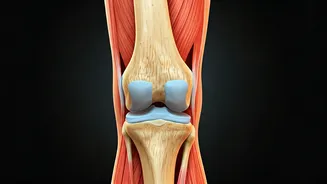
The magic of slow eccentric training for knee health lies in how it affects your tendons. Conditions like patellar tendinopathy, often called "runner's knee" or "jumper's knee," are common overuse injuries that cause pain in the front of the knee. [1] Eccentric exercises are a cornerstone of rehabilitation for these issues. [6] The slow, controlled lengthening of the muscle under load helps to stimulate collagen production and remodel the tendon, making it stronger and more resilient. [16, 21] This process can improve blood flow and nutrient delivery to the tendon, creating an environment that promotes healing. [1] Research shows that this type of training can lead to significant improvements in pain and function for people with knee tendinopathy. [5] It also helps retrain the neural pathways that control muscle activation, which is vital for recovering from an injury and preventing future problems. [9, 18]
Key Eccentric Exercises for Knee Health
You can add an eccentric focus to many standard leg exercises. The key is to perform the lowering phase of the movement slowly and with control, typically over 3 to 5 seconds. [8]
1. Eccentric Squats: These can be done on a flat surface or, for a more targeted approach on the patellar tendon, on a decline board or slant board. [6] Stand with your feet shoulder-width apart. Slowly lower yourself down into a squat over 3-5 seconds until your thighs are near parallel to the floor, or as far as you can go without sharp pain. To focus purely on the eccentric phase, you can then use your arms or your non-injured leg to help you stand back up, saving the stress for the controlled descent. [2]
2. Single-Leg Eccentric Step-Downs: Stand on a sturdy box or step. [4] With one leg, slowly bend your knee and lower your other heel toward the floor, taking 3-5 seconds to complete the movement. [15] Lightly tap your heel to the ground, then place your foot down and use both legs (or your stronger leg) to step back up to the starting position. This isolates one leg at a time and builds stability. [4]
3. Eccentric Leg Press: If you have access to a leg press machine, you can use the "2/1 technique." Position yourself and push the platform away with both legs (the concentric phase). Then, remove one leg and use only the single, target leg to slowly control the weight as it returns to the starting position over several seconds. [21] This allows you to safely overload the eccentric phase.
How to Incorporate Them Safely
When starting with eccentric training, it's important to begin with your body weight or very light resistance to allow your muscles and tendons to adapt. [8] Focus entirely on proper form and the slow, controlled tempo of the lowering phase. A little bit of muscle discomfort or aching, especially in the first couple of weeks, is normal and to be expected. [20] However, you should never push through sharp, stabbing, or significant pain. If an exercise causes more than mild discomfort, stop. [8] Consistency is crucial for seeing results, which can often take several weeks to a few months to become significant. [2] Aim to perform these exercises a few times per week. As you get stronger and the movements become easier, you can gradually increase the load by holding dumbbells, wearing a weighted backpack, or increasing the resistance on a machine. [20] This gradual progression is essential for continuing to challenge the tendons and promote further strengthening.