


A Priceless Window of Darkness
A total solar eclipse provides a natural laboratory that is impossible to replicate. Normally, the sun's brilliant surface, the photosphere, is so bright it completely washes out its much fainter outer atmosphere, the corona. During totality, the moon
acts as a perfect celestial shield, blocking the photosphere and allowing the ethereal, million-degree corona to become visible from Earth. This gives researchers a precious, albeit brief, window—lasting just over two minutes at its peak during this eclipse—to study the region where solar wind is born and explosive space weather originates. Each eclipse offers a unique snapshot, as the corona's structure is constantly changing with the sun's magnetic activity.
The Mystery of the Sizzling Corona
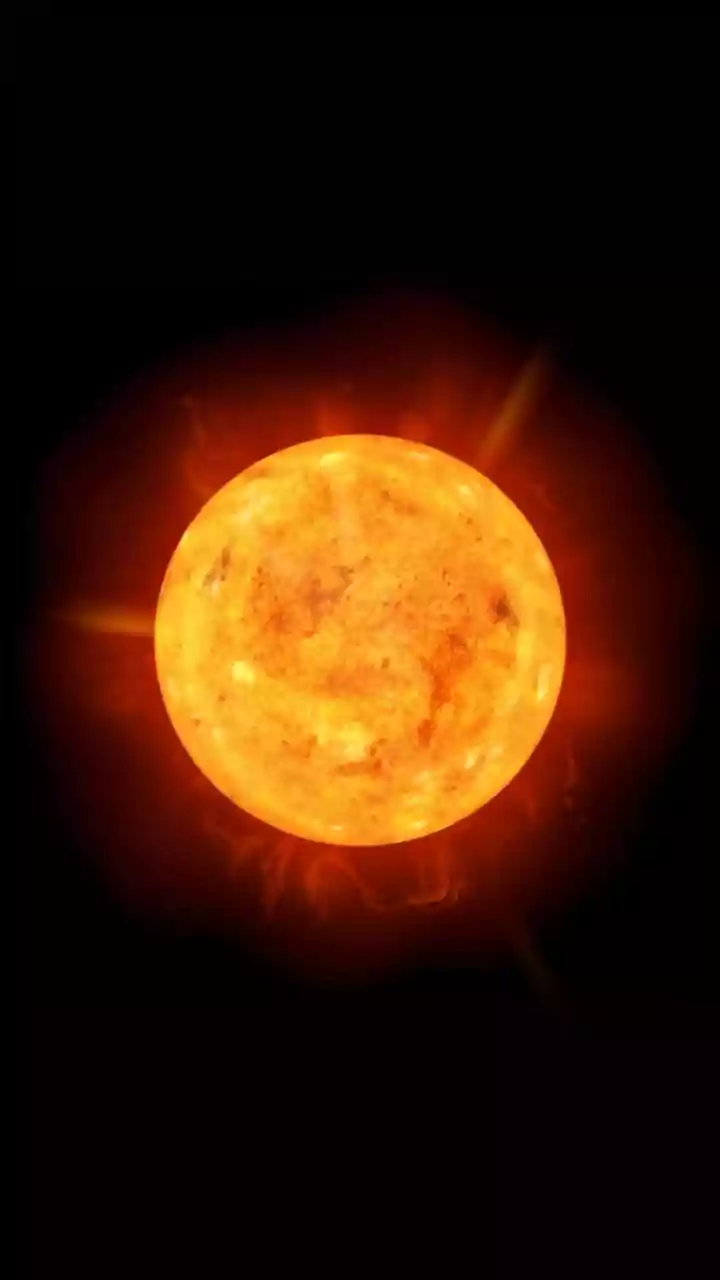
One of the biggest puzzles in solar physics is the coronal heating problem. The sun's surface is a relatively cool 6,000 degrees Celsius, but the corona, extending millions of kilometres into space, sizzles at over a million degrees. Understanding how this outer atmosphere gets superheated is a primary goal of eclipse science. By analysing the light from the corona, a technique known as spectroscopy, scientists can probe its temperature, density, and chemical composition. This data helps them test theories about what mechanisms are responsible for transporting and depositing such enormous amounts of energy into the tenuous solar atmosphere.
High-Tech Eyes in the Sky
To maximise their short observation time, scientific teams deployed a range of advanced instruments along the path of totality, which stretched from Greenland across Iceland and northern Spain. NASA flew one of its WB-57 high-altitude research aircraft along the eclipse path. Soaring at 50,000 feet, the jet carried a suite of specialised cameras to capture high-resolution images of the corona in multiple wavelengths, staying within the moon's shadow for longer than ground observers could. In Iceland, teams launched dozens of scientific balloons to study how the sudden drop in sunlight affected Earth's own atmosphere. Meanwhile, ground-based observatories in Spain deployed novel spectrometers, including an innovative Italian-designed instrument with a circular slit, hoping to capture the corona's full spectrum in a single shot.
Forecasting an Unruly Star
Beyond fundamental physics, this research has a deeply practical side. The corona is the source of the solar wind and violent eruptions called Coronal Mass Ejections (CMEs). When aimed at Earth, these eruptions of charged particles can disrupt satellites, damage power grids, and endanger astronauts. Studying the corona's structure and the base of these outflows during an eclipse provides crucial data for improving our space weather forecasting models. By combining eclipse observations with data from spacecraft like the Parker Solar Probe and Solar Orbiter, scientists can build a more complete picture of the magnetic processes that drive these powerful solar events.
A Treasure Trove of New Data
While the spectacle of the eclipse was over in minutes, the scientific work has only just begun. The terabytes of data captured by jets, balloons, and telescopes will be meticulously analysed over the coming months and years. Scientists will compare observations from different locations and instruments, hoping to build a three-dimensional model of the corona as it appeared on August 12. Early reports from the teams are optimistic, but the true discoveries will emerge slowly as researchers piece together this unprecedented view of our star. The insights gained will not only help solve long-standing solar mysteries but also enhance our ability to protect our technologically dependent world from the sun's powerful influence.