



The Headliners: Major Meteor Showers
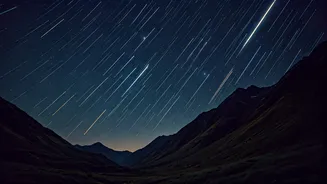
Think of these as the universe’s annual fireworks display. Throughout the year, Earth passes through trails of dusty debris left behind by comets and asteroids. When these tiny particles, often no bigger than a grain of sand, hit our atmosphere at high
speeds, they burn up and create brilliant streaks of light we call meteors, or “shooting stars.” Two of the best and most reliable shows for viewers in the U.S. are the Perseids in August and the Geminids in December. The Perseids, active from mid-July to late August, typically peak around August 12-13, producing up to 100 meteors per hour in a dark sky. The Geminids, peaking around December 13-14, are often even more spectacular, with a potential for 120 multicolored meteors per hour. **How to Watch:** Find a spot far from city lights. A park, a rural road, or even a suburban backyard with minimal light pollution will do. Lie on a blanket or recline in a chair, look up, and be patient. Your eyes need about 20-30 minutes to fully adapt to the dark. No telescope or binoculars needed; your naked eyes are the best tool for scanning the whole sky.
The Sci-Fi Flyover: The International Space Station
It’s not a star or a plane—it’s a football-field-sized laboratory orbiting Earth at 17,500 miles per hour. Seeing the International Space Station (ISS) glide silently across the night sky is a uniquely human spectacle. It appears as a very bright, steady point of light moving much faster than a typical airplane, without any blinking lights. Because it shines by reflecting sunlight, you can only see it during the windows around dawn and dusk.
Catching it requires a bit of timing, but it’s incredibly easy to plan. NASA's “Spot the Station” website and various third-party apps (like ISS Detector or Heavens-Above) will tell you the exact time, duration, and path of the next visible pass over your specific location. You’ll get alerts for when to run outside and watch humanity’s foothold in space soar overhead. It’s a five-minute show that connects you directly to the reality of space exploration.
The Slow Dance: Planetary Conjunctions
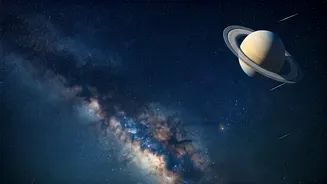
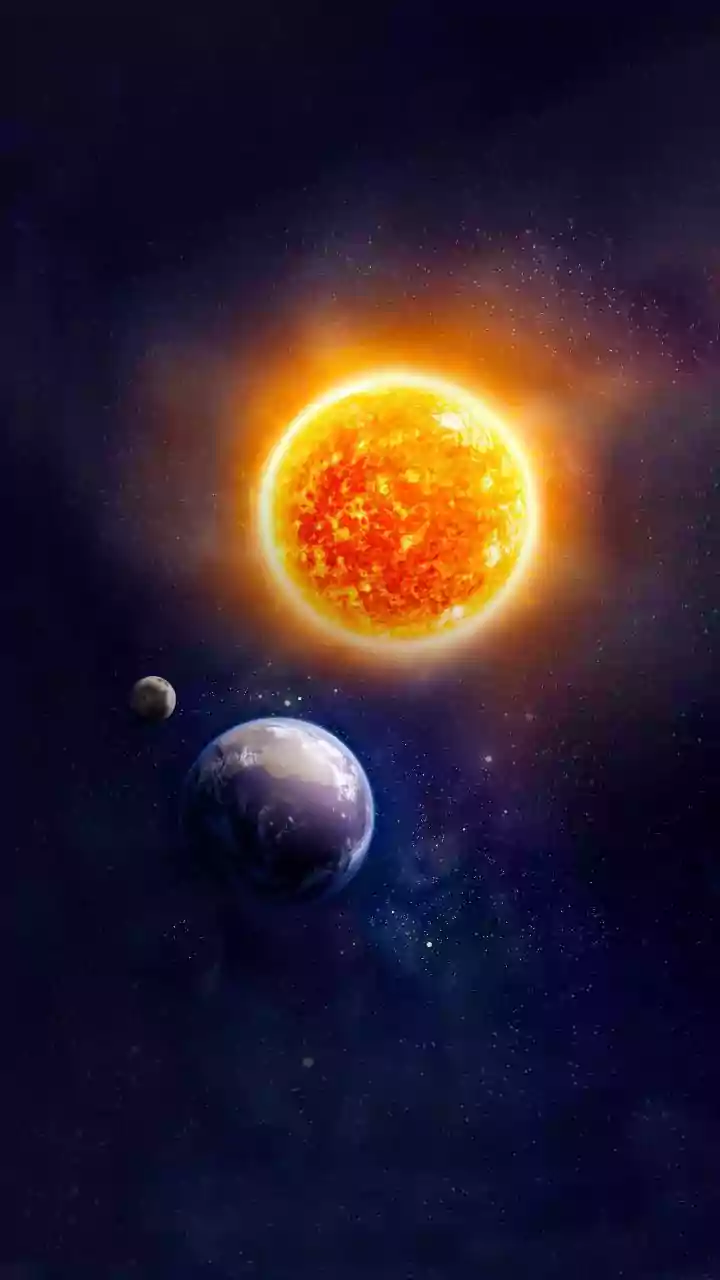
Every so often, from our perspective on Earth, two or more planets appear to pass very close to each other in the sky. This celestial alignment is called a conjunction. While the planets are still hundreds of millions of miles apart, they look like close companions for a few nights. These events are a beautiful and serene reminder of the clockwork motion of our solar system.
Bright planets like Venus, Jupiter, and Saturn are often involved in the most stunning conjunctions. Sometimes they’ll cozy up to Mars or Mercury, or even pass near a crescent moon, creating a breathtaking celestial portrait. These aren't sudden events; they unfold over several nights. Astronomy news sites and sky-watching apps will always give you a heads-up weeks in advance. Unlike a meteor, a conjunction is something you can go out and point to, watch slowly night after night, and even capture with a basic smartphone camera.
The Holy Grail: The Northern Lights
For those in the northern tier of the United States, the Aurora Borealis is the ultimate free show. This ethereal display of shifting, shimmering curtains of green, pink, and purple light is caused by charged particles from the sun interacting with Earth’s magnetic field and atmosphere. While most common in places like Alaska, strong solar storms can push the aurora far enough south to be seen in states like Montana, North Dakota, Minnesota, Wisconsin, and even occasionally in places like Washington, Idaho, and Maine.
Predicting an aurora is tricky, but not impossible. The NOAA Space Weather Prediction Center provides 30-minute to multi-day forecasts. To see them, you need three things: a strong solar storm, a clear and cloudless night, and a location with absolutely minimal light pollution. It’s an elusive target, but witnessing this silent, otherworldly dance of light is an experience that stays with you forever.
The Main Attraction: The Milky Way
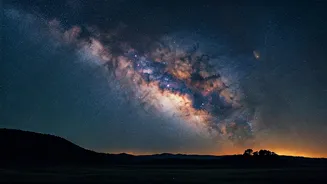
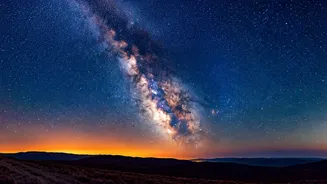
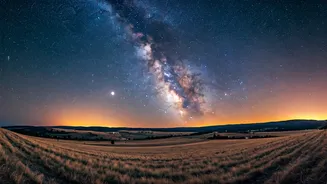
This isn't a special event; it's a permanent feature. The faint, hazy band of light stretching across the sky on a truly dark night is the collective glow of billions of stars in our own galaxy. Seeing the Milky Way in its full glory is perhaps the most profound astronomical experience available to the naked eye. It reorients your sense of place in the cosmos.
Unfortunately, light pollution has hidden it from more than 80% of Americans. To see it, you have to make a pilgrimage away from civilization. National parks, designated Dark Sky Parks, and remote rural areas are your best bet. The summer months are prime viewing time for the galaxy’s bright, dense core. Let your eyes fully adjust to the darkness, and the ghostly river of stars will slowly emerge, a humbling and magnificent sight that has inspired awe for all of human history.