





The rowing machine is a powerhouse for full-body fitness, but its array of settings can be intimidating. The key to a great workout lies in understanding resistance, allowing even absolute beginners to get started safely and effectively.
Why Rowing is a Cardio Champion
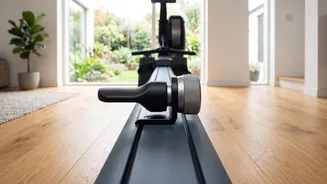
A rowing machine
provides a low-impact, high-reward workout that engages over 80% of your body's muscles in a single, fluid motion. This comprehensive muscle engagement of the legs, core, back, and arms is what makes it so effective for cardiovascular health. Regular rowing strengthens the heart, improves blood circulation, and can help lower blood pressure. Unlike high-impact exercises like running, rowing is gentle on the joints, making it a sustainable option for people of all fitness levels.
The Biggest Beginner Mistake: Resistance Overload
The most common mistake beginners make is setting the resistance or damper to the highest level, assuming it will lead to a better workout. In reality, this often does the opposite. Excessively high resistance can compromise your form, put unnecessary strain on your back, and make it difficult to maintain a smooth, rhythmic stroke. It encourages pulling with the arms instead of driving with the legs, which is where most of your power should originate. The goal is to work smarter, not just harder, by focusing on technique first.
Damper Setting vs. True Resistance
On many popular air rowing machines, the numbered lever (damper) is often confused with a resistance dial. This lever controls the amount of air flowing into the flywheel. A higher setting (like 10) allows more air in, making the stroke feel heavier, like rowing a large, slow boat. A lower setting feels lighter and faster, like a sleek racing shell. However, the true resistance and intensity come from how hard and fast you pull. For most workouts, a damper setting between 3 and 5 is recommended, even for elite athletes, as it allows for better technique and aerobic development.
Understanding Different Rower Types
Not all rowers are the same. While air rowers have a damper and user_driven resistance, other types work differently. Magnetic rowers offer quiet operation and have adjustable resistance levels that remain constant regardless of how hard you pull. Water rowers use paddles in a tank of water to create a smooth, consistent resistance that increases the harder you pull, mimicking the feel of on_water rowing. Hydraulic rowers are often more compact and use pistons, but they provide the least realistic rowing feel. Knowing your machine type helps you understand how to control your workout.
Finding Your Perfect Starting Point
For your first few sessions, the primary goal is mastering the form. On an air rower, start with the damper between 3 and 5. On a magnetic rower, choose a setting in the lower third of its range. Your focus should be on the sequence: legs, body, then arms on the drive; and the reverse on the recovery—arms, body, then legs. You should be able to maintain a conversation in short sentences. A good starting stroke rate is between 22 and 26 strokes per minute. Start with shorter sessions of 10–15 minutes and gradually increase the duration as your confidence and fitness grow.
How to Progress Safely
Once your form feels solid and consistent, you can start to increase the challenge. Rather than immediately cranking up the resistance, first try increasing your intensity by pushing harder with your legs and pulling with more power. This will naturally increase your workload and heart rate on an air or water rower. You can also focus on increasing your stroke rate for intervals or increasing the overall duration of your workout. Only after these should you consider small increases in the base resistance or damper setting for specific strength–focused training.