



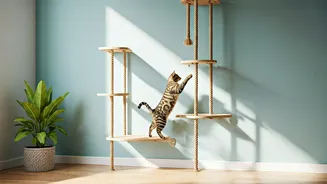
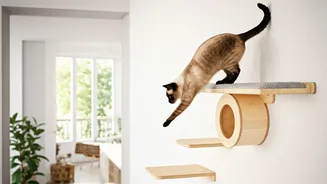
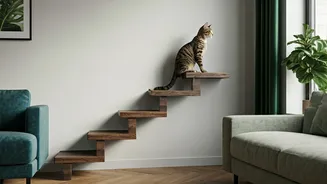


Why Cats Crave the High Ground
Ever wonder why your cat loves scaling the bookshelf or perching atop the refrigerator? It’s not just mischief; it's instinct. In the wild, a cat’s ancestors used vertical spaces for survival. Height provided a safe vantage point to spot predators and
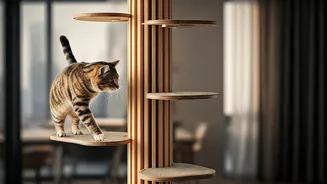
prey. For our domestic companions, this instinct remains powerful. A high perch offers a sense of security and control over their environment. From up high, they can observe household activities without being in the middle of the chaos, giving them a feeling of safety and confidence. Providing vertical territory is one of the most effective ways to cater to their natural behaviour and improve their well-being.
The Benefits of a Vertical World
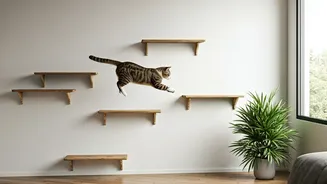
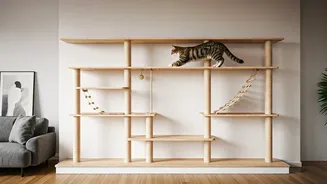
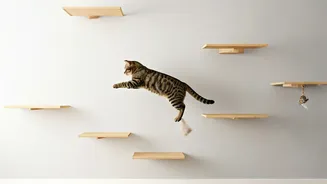
Installing wall steps, shelves, and perches—often called a 'cat superhighway'—does more than just decorate your walls. It provides crucial environmental enrichment that combats boredom and the behavioural issues that stem from it, like excessive scratching or anxiety. This setup encourages physical activity, helping your cat stay fit and agile as they leap, climb, and balance. It also effectively increases the usable space in your home from your cat's perspective. In a multi-cat household, vertical territory can be a game-changer, allowing cats to share a space more peacefully by creating separate zones and escape routes, reducing conflict and stress.
Choosing the Right Wall Steps
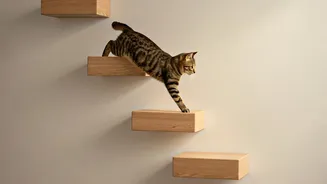
When selecting wall steps, prioritise safety and function. Solid wood is an excellent choice for its durability and sturdiness. Look for steps that have a non-slip surface; many come with carpet or sisal rope coverings, which also double as a satisfying scratching surface. Consider the size and weight of your cat. The steps should be wide and deep enough for them to comfortably perch and turn around. While you can find many pre-made kits online, a DIY approach using sturdy wooden brackets and planks from a hardware store can also be effective if you are handy. Always ensure any materials and finishes used are non-toxic and pet-safe.
Planning Your Cat's Highway
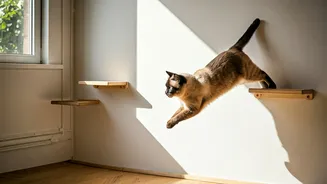
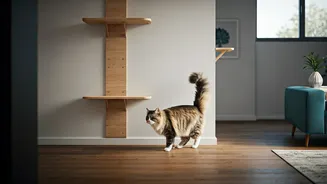
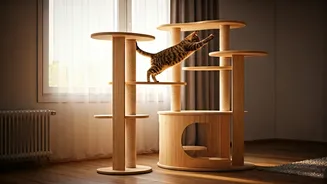
Before you start drilling holes, map out the path. A good cat highway has a purpose. Does it lead to a favourite sunny window? Does it connect a floor-level cat tree to a high-up perch or hammock? Think like your cat. The steps should be spaced to allow for comfortable, natural jumps—typically not too far apart horizontally or vertically. A good rule of thumb is a distance they can easily leap without straining. Create a flow that encourages movement. Start near the floor and create a path that meanders upwards. Avoid dead ends unless they terminate at a large, comfortable resting spot.
Installation for Maximum Safety
This is the most critical step. A wobbly or insecure shelf is more dangerous than no shelf at all. The key to a secure installation is mounting the steps directly into wall studs. Use a stud finder to locate these sturdy wooden beams behind your plaster or drywall. Do not rely on drywall anchors alone, especially for shelves that will support a cat's full, active weight. Use high-quality screws and brackets rated to hold significantly more than your cat's weight. Once installed, test each step by applying firm, downward pressure to ensure it’s completely stable before letting your cat explore.
Making the Introduction
Some cats will take to their new climbing wall instantly, while others may be more hesitant. Patience is key. Never force your cat onto the steps. Instead, make it an appealing destination. Place their favourite treats or a sprinkle of catnip on the steps to encourage exploration. Use a feather wand or laser pointer to guide them up the path in a playful way. Make the experience positive and low-pressure. Once they start using it, they'll quickly realise the joy of having their own private highway in the sky.