








The Front-of-Pack Fantasy
The front of a food package is prime real estate for marketing. Brands use appealing colours and buzzwords to create a 'health halo' around their products, making you think they are healthier than they might be. Terms like 'fat-free' can be misleading;
to compensate for lost flavour and texture, these products are often loaded with sugar. Similarly, a 'Made with Real Fruit' claim might only refer to a tiny amount of fruit concentrate, with the bulk of the product being sugar and refined flour. These claims are designed to make you feel good about your purchase, but they rarely tell the whole nutritional story.
Your Guide to the Ingredient List
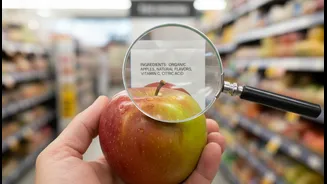
The most powerful tool you have as a consumer is the ingredient list. In India, the Food Safety and Standards Authority of India (FSSAI) mandates that ingredients be listed in descending order by weight. This means the first three ingredients are what the product is mostly made of. If sugar, maida (refined flour), or palm oil are at the top of the list, that's the primary substance you are consuming, regardless of the health claims on the front. A truly healthy product will have a short list of recognisable, whole-food ingredients.
Spotting Hidden Sugars and Salts
Sugar is a master of disguise, with dozens of different names on ingredient lists. Look out for terms like high-fructose corn syrup, dextrose, sucrose, maltose, cane juice, and fruit juice concentrate. Essentially, anything ending in '-ose' is likely a form of sugar. It can hide in savoury foods you wouldn't expect, like bread, pasta sauce, and ketchup. Similarly, 'reduced sodium' doesn't always mean low sodium; it just means it has 25% less than the original product, which could still be high. Always check the nutrition panel for the actual amount of sodium per serving.
Deconstructing Health Buzzwords
The grocery aisle is full of confusing terms. Let's clear some up. 'Multigrain' simply means a product contains more than one type of grain, but these grains could be refined, stripping them of nutrients and fibre. What you should look for is '100% Whole Grain' or '100% Whole Wheat', which ensures the entire grain kernel is used. The word 'natural' is another tricky one; it is not tightly regulated and can be used on products that contain things like high-fructose corn syrup. Always let the ingredient list be your guide, not these often-vague marketing terms.
Putting It All Together: A Practical Example
Imagine picking up a box of 'Multigrain Breakfast Cereal' that boasts it's 'fortified with vitamins'. The front of the box looks promising. Now, you flip it over. The ingredient list reads: Refined Wheat Flour (Maida) (40%), Sugar, Palm Oil, Mixed Millets (5%), Cocoa Solids, Salt, Vitamins. The 'multigrain' aspect, which is highlighted on the front, makes up only a tiny fraction of the product. The main ingredients are refined flour and sugar. This cereal is less of a healthy start to the day and more of a dessert masquerading as breakfast. By reading the back, you’ve uncovered the truth and can make a more informed decision.