



Why Use a Stargazing App?
Before diving into specific recommendations, it’s worth asking what these apps actually do. At their core, most use your phone's GPS and internal compass to create a real-time map of the sky. Just point your device upwards, and the app will identify the stars,
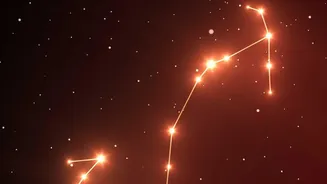
planets, constellations, and even satellites you're looking at. This augmented reality (AR) feature removes the biggest barrier for beginners: not knowing where to look. Many apps also provide detailed information on celestial objects, alert you to upcoming events like meteor showers or eclipses, and help you understand the mythology behind the constellations. They effectively act as a knowledgeable guide, available anytime, anywhere.
For the Beginner: Star Walk 2
If you are just starting your astronomical journey, Star Walk 2 is an excellent choice. It’s praised for its beautiful, user-friendly interface and immersive experience. The app is brilliant at the basics: point it at the sky, and it will overlay constellation art and identify celestial bodies in real-time. Even the free version is robust, offering satellite tracking and appealing AR overlays. While there is a paid version, the free offering is more than enough to get a curious beginner hooked on the wonders of the cosmos without feeling overwhelmed. Its intuitive design makes it one of the most approachable apps on the market.
For the All-Rounder: Stellarium Mobile
Stellarium is often considered the gold standard for mobile planetarium apps. It’s the pocket-sized version of a powerful desktop program used by amateur astronomers for years. Its free version provides a photorealistic view of the sky and a massive database of stars, planets, nebulae, and galaxies. You can search for specific objects and get impressively detailed information. For those who get more serious, a paid 'Plus' version unlocks even more features, including telescope control and an expanded catalog of over a billion stars. Stellarium works perfectly without an internet connection, making it ideal for trips to dark-sky locations.
For Quick and Easy ID: SkyView Lite
Sometimes you just want to know, “What’s that bright light over there?” SkyView Lite answers that question instantly and without fuss. It excels at quickly identifying objects with detailed descriptions. The app uses AR to pinpoint stars, constellations, and planets, and it works even without a Wi-Fi or GPS signal, making it perfect for off-grid adventures. A fun “time travel” feature lets you see the sky on different dates and times. While it may not have the vast database of more advanced apps, its simplicity and reliability make it an ideal tool for casual observers and families.
For the Serious Enthusiast: SkySafari
When stargazing evolves from a casual curiosity into a serious hobby, SkySafari is the app to grow with. It's a powerful planetarium that boasts an enormous database, even in its free version, and is lauded by experienced observers. The premium versions, like SkySafari 7 Pro, are designed for dedicated astronomers, featuring a catalog of millions of objects and the ability to control computerized telescopes. It helps you plan observing sessions and includes detailed information on the history and mythology of celestial objects. It can be more complex than beginner apps, but for those who want deep-sky data and advanced tools, it is unmatched.
For the Space News Junkie: The NASA App
While not a dedicated stargazing map in the same vein as others on this list, the official NASA app is a must-have for anyone interested in space exploration. Completely free, it offers a wealth of information, including a huge gallery of the latest images from missions, live NASA TV feeds, and trackers for the International Space Station (ISS). You can find detailed information on current and past missions, learning not just about the stars but about humanity’s efforts to reach them. It's the perfect companion for adding real-world context to the objects you see in the sky.