






A Trillion-Dollar Rock in the Asteroid Belt
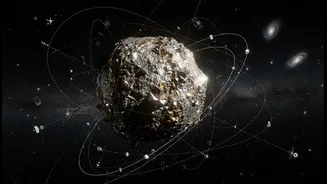
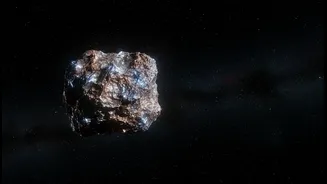
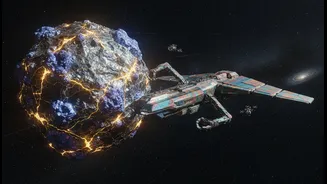
Meet 16 Psyche, a colossal object nearly 280 kilometres wide, orbiting the Sun in the main asteroid belt between Mars and Jupiter. Unlike its rocky or icy neighbors, Psyche is believed to be incredibly dense with metals. Scientists theorise it might be the exposed
core of a protoplanet, a building block of worlds whose outer layers were stripped away by ancient cosmic collisions. The main draw is its composition: a mixture of rock and vast quantities of metals like iron and nickel, with potential traces of gold and platinum. While the estimated value of these metals, sometimes pegged in the quintillions of dollars, is a hypothetical exercise, it serves as a powerful symbol of the sheer scale of resources waiting in space. This staggering potential has transformed Psyche from a scientific curiosity into a focal point for future economic ambition.
NASA's Journey to a Metal World
It's crucial to understand that NASA isn't on a mining expedition. The Psyche spacecraft, which launched in October 2023, is on a mission of pure discovery. Its goal is to study the asteroid to learn about the formation of planets; seeing an exposed core is like getting a rare glimpse into the heart of a world like Earth. As of July 2026, the mission is well underway. The spacecraft successfully performed a critical gravity-assist maneuver, using Mars's gravity in May 2026 to slingshot itself toward its destination. Arrival at 16 Psyche is scheduled for August 2029. While NASA's objective is knowledge, the data it will collect on the asteroid's precise composition and structure will be invaluable to anyone contemplating the future of space mining.
The New Global Space Race
The race for Psyche's perceived wealth isn't about one country planting a flag. It's a complex and growing competition involving established space powers, ambitious nations, and a new breed of private companies. The United States, through legislation like the 2015 Commercial Space Launch Competitiveness Act, has already created a legal framework for its citizens to own and sell resources mined in space. Luxembourg has followed suit, positioning itself as a global hub for space mining companies. Meanwhile, nations like China and Japan have their own ambitious space programs, and private startups like AstroForge and the Asteroid Mining Corporation are developing technologies for prospecting and extraction. This isn't just about wealth; it's about strategic advantage, resource security, and technological dominance in the 21st century.
A Heist Fraught with Challenges
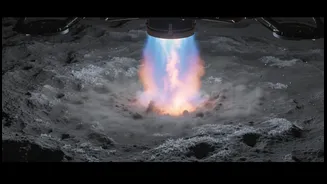
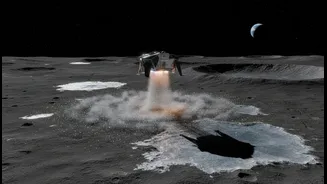
Actually mining an asteroid remains a task of monumental difficulty. The technological hurdles are immense, from designing robotic systems that can operate in microgravity to the challenge of processing ores in space and, most importantly, returning valuable materials to Earth economically. Beyond the engineering problems lies a legal grey area. The Outer Space Treaty of 1967 states that no nation can claim sovereignty over a celestial body, but it's ambiguous on whether private entities can extract and own the resources on them. The Artemis Accords, led by the U.S. and signed by many allies, assert that resource extraction is permissible, but major space powers like China and Russia are not signatories, setting the stage for potential future disputes.
India's Stake in the Cosmic Economy
For India, the burgeoning space economy represents both a challenge and an immense opportunity. While the Indian Space Research Organisation (ISRO) is currently focused on lunar and Mars missions, its track record of cost-effective and advanced space exploration provides a strong foundation. The country's rapidly growing private space sector, with companies like Skyroot Aerospace and Agnikul Cosmos, is a crucial asset. Gaining access to a new supply of critical minerals could reduce geopolitical dependencies and fuel economic growth. Though ISRO has stated asteroid mining is not an immediate priority, experts believe that as the sector becomes viable, India will be well-positioned to compete and collaborate, leveraging its engineering talent and frugal innovation to secure its place in this new frontier.