





An Unlikely Ally in a Toxic Fight
When we think of bacteria, we often think of disease. But in the fight against radioactive contamination, some microbes are emerging as powerful allies. Researchers are investigating a process called bioremediation, which uses living organisms to clean
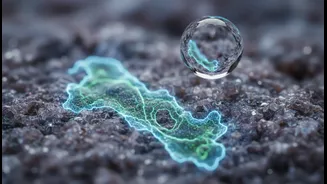
up pollutants. The focus of this cutting-edge research is on bacteria that have a unique and surprising metabolic ability: they can essentially 'breathe' toxic metals like uranium. By doing so, they change the chemical nature of uranium, converting it from a soluble form that spreads easily through water into a stable, solid form that is much easier to contain. This process effectively immobilizes the radioactive material, preventing it from migrating further into the environment and contaminating drinking water sources.
How Bacteria Neutralize Uranium
The secret to this process lies in the bacteria's metabolism. Certain types of bacteria, like those from the Geobacter family, perform a chemical process called reduction as part of their energy production. They transfer electrons to the dissolved uranium, altering its chemical state. Specifically, they change soluble uranium(VI) into insoluble uranium(IV). This newly formed solid mineral, often uraninite, precipitates out of the water. Recent studies have shown that this happens outside the bacterial cell. Some Geobacter species produce tiny protein filaments, sometimes called nanowires, that act as the primary sites for this reaction. This is a crucial protective mechanism, as it prevents the toxic metal from entering and damaging the bacterial cell itself.
Promising Results from the Lab
Laboratory studies have yielded incredibly promising results. In one recent experiment published in Nature Communications, scientists from Germany and Spain used water taken from a flooded uranium mine. This water already contained a natural community of bacteria adapted to the harsh environment. By adding glycerol as a food source for the microbes and maintaining an oxygen-free environment, they observed a remarkable outcome. After 130 days, the bacteria had removed about 95% of the dissolved uranium from the water samples. Other studies have shown similar success. Chinese scientists found that a team of two different bacteria, Pseudomonas and Shewanella, could remove all uranium from a sample in just two days by working together to enhance the electron transfer process.
From the Lab to the Real World
Despite the exciting findings, researchers emphasize that this work is still in its early stages. A major challenge is translating these controlled laboratory successes into effective, large-scale cleanup operations in a complex natural environment. In the real world, it would be difficult to distribute a food source like glycerol throughout a vast, flooded mine and maintain the precise oxygen-free conditions required for the bacteria to thrive. Furthermore, stimulating these bacteria can affect other elements in the water, such as iron and arsenic, and the long-term stability of the newly formed uranium solids needs more investigation. Environmental factors like pH and the presence of other chemicals like nitrates can also inhibit the bacteria's effectiveness.
The Future of Bioremediation
Even with these hurdles, the potential for microbial cleanup is immense. This approach offers a more environmentally friendly and potentially cost-effective alternative to traditional physical and chemical remediation techniques, which can be expensive and disruptive. Scientists are exploring how to optimize this natural process. Some research focuses on creating 'bio-barriers'—using biofilms of Geobacter to form a living wall that can immobilize uranium in the subsurface before it spreads. Others are looking into how to harvest the tiny vesicles that bacteria release to package and expel uranium, potentially creating a factory for microscopic sponges that can pull toxic metals out of water. This research not only offers hope for cleaning up legacy contamination from mining and nuclear activities but also opens doors for recovering valuable metals from waste streams.