







The Rise of 'Earthing'
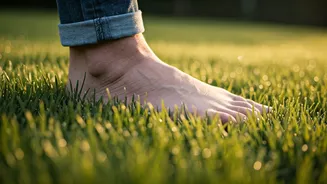
The practice of walking barefoot on natural surfaces, often called 'earthing' or 'grounding', has gained significant traction. Proponents believe that direct skin contact with the earth provides a host of benefits, from reducing inflammation to improving
sleep. This idea, combined with a broader cultural shift towards natural and minimalist living, has fuelled the barefoot movement. Social media 'challenges' encourage people to shed their shoes for short periods, documenting their experiences and promoting the feeling of connection to nature. While some claims are more spiritual than scientific, the movement taps into a desire to disconnect from technology and reconnect with our physical environment.
The Science of a Natural Stride
From a biomechanical standpoint, there's a compelling argument for going barefoot, at least some of the time. Most modern shoes, with their cushioned heels and narrow toe boxes, alter our natural gait. Walking barefoot encourages a 'forefoot' or 'midfoot' strike rather than a hard heel strike, which can reduce impact forces travelling up the kinetic chain to our knees and hips. Furthermore, without the confinement of a shoe, our toes can splay naturally, providing a wider, more stable base for balance. This simple act engages the small, intrinsic muscles within the feet that often become weak and lazy from being constantly supported by footwear. Strengthening these muscles is like building a better foundation for your entire body.
Connecting Feet to Posture
The headline's claim hinges on this foundational strength. Your feet are the starting point for your body's alignment. Weak or poorly functioning feet can lead to a chain reaction of compensations. For example, collapsed arches can cause the knees to rotate inward, which may tilt the pelvis and contribute to lower back pain. By walking barefoot on varied, natural terrain, you enhance proprioception—your body's awareness of its position in space. Your feet send more detailed feedback to your brain, allowing for tiny, constant adjustments that improve balance and can, over time, encourage a more upright and efficient posture. Think of it as waking up the intelligence in your feet, allowing them to support you as they were designed to.
A Step of Caution: The Risks
Before you toss your trainers for good, it's crucial to acknowledge the risks. Urban and even park environments are not pristine wilderness. Sharp objects like glass, stones, or metal pose an obvious threat of cuts and injury. There's also the risk of bacterial or fungal infections from unclean surfaces. Beyond external dangers, not everyone's feet are ready for the challenge. Individuals with certain conditions, such as diabetes-related neuropathy (which reduces foot sensation) or significant flat feet, may find that going barefoot exacerbates their problems or leads to injury. Decades of wearing supportive shoes mean our feet are often unconditioned for the demands of walking unshod, and transitioning too quickly can lead to stress fractures or plantar fasciitis.
How to Start Safely
If you're curious to try, the key is to be slow, smart, and mindful. Start with just five to ten minutes at a time on a safe, familiar surface like a clean lawn or sandy beach. Pay close attention to where you are stepping. After each session, inspect your feet for any cuts or soreness. As your feet adapt, you can gradually increase the duration and try different textures. Consider minimalist 'barefoot' shoes as a transitional tool. They offer protection from sharp objects while still allowing for a more natural foot movement and sensory feedback than traditional footwear. Most importantly, listen to your body. If you feel sharp pain, stop. The goal is to strengthen your feet, not to injure them.