

A Glimpse Into the 'Eye of God'
To understand the drama, you first have to know the main character. The Helix Nebula, located in the constellation Aquarius, is one of the closest and brightest examples of a planetary nebula. Despite the name, it has nothing to do with planets. Instead,
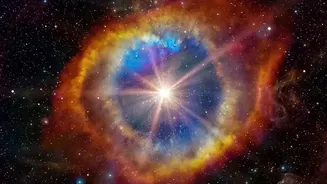
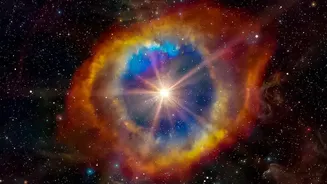
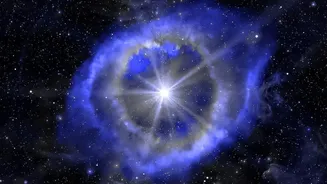
it’s the ghost of a star that was once much like our own Sun. After exhausting its fuel over billions of years, the star shed its outer layers of gas, which expanded into space. What remains at the center is a tiny, incredibly hot and dense core called a white dwarf. Over thousands of years, the radiation from this stellar remnant has illuminated the expanding shells of gas, creating the breathtaking structure we see. Its appearance in earlier telescope images earned it the popular nickname the 'Eye of God' for its resemblance to a giant, unblinking eye in the cosmos.
The Cosmic Collision Webb Captured
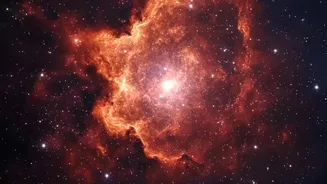
While previous images from telescopes like Hubble showed an ethereal glow, the James Webb Space Telescope’s powerful infrared vision pierces through the haze to reveal chaos. The new imagery highlights a violent interaction at the nebula's core. The central white dwarf is unleashing 'stellar winds'—streams of blisteringly hot gas traveling at incredible speeds. This scorching wind, superheated by the star's intense radiation, is slamming into the cooler, slower-moving clouds of gas and dust that the star ejected much earlier in its death throes. NASA describes it as a cosmic pile-up, where faster material crashes into a denser, slower shell, sculpting the nebula's intricate filaments and structures. This collision creates a clear transition zone, showing the stark difference between the hot, energized gas near the star and the cooler material farther out.
Unlocking the Secrets of a Star's End
This new view is more than just a pretty picture; it’s a crucial blueprint for understanding the final chapter of a Sun-like star’s life. By studying this collision, astronomers can learn how a star’s death recycles essential materials back into the galaxy. The ejected gas is rich in elements forged inside the star, and this process distributes them across space, providing the raw ingredients for future generations of stars and planets. The Helix Nebula essentially offers a preview of our own Solar System's distant fate, some five billion years from now. Webb’s ability to capture this process in such high resolution allows scientists to test their models of stellar evolution and see precisely how these beautiful, complex structures are formed and shaped by the physics of the dying star.
More Than Just a Pretty Picture
Each color and shape in Webb's image is a data point. The different hues represent temperature and chemistry, with blues indicating the hottest ionized gas and reddish tones tracing cooler molecular gas and dust. One of the most fascinating details brought into sharp focus are thousands of so-called 'cometary knots'. These are dense clumps of gas, each about the size of our solar system, with long tails that stream away from the central star like windswept flags. These knots are resilient enough to survive the harsh radiation and fierce winds, creating pockets where molecules can form and persist. By analyzing the structure and composition of these knots and the surrounding gas, scientists gain invaluable insights into the chemical processes that happen at the end of a star’s life, transforming its final breath into the building blocks for new worlds.