




The Sun’s Violent Temper
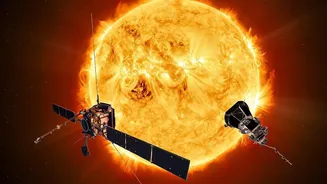
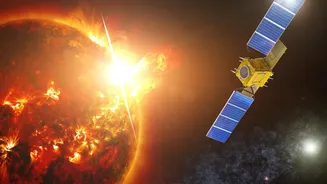
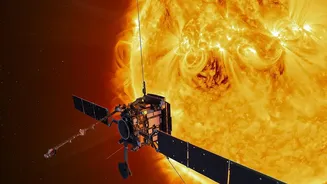
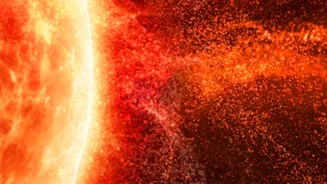
The Sun, the source of life on Earth, has a volatile side. It occasionally unleashes enormous bursts of energy and radiation known as solar flares and coronal mass ejections (CMEs). These events send streams of highly charged particles hurtling through
space. While Earth's magnetic field protects us on the surface, satellites orbiting above are far more exposed. When a powerful solar storm heads our way, it can have serious consequences for the technology we rely on daily. These events are not science fiction; they are a regular feature of space weather that scientists must constantly monitor.
Satellites in the Firing Line
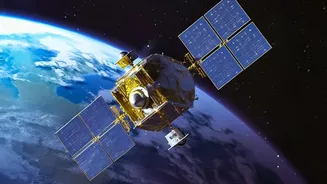
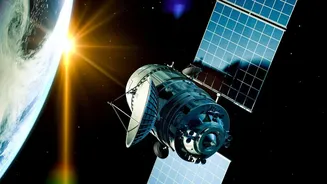
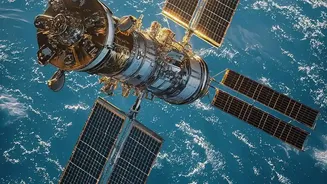
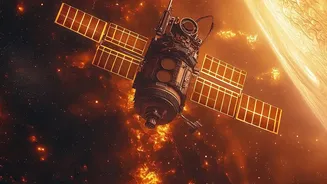
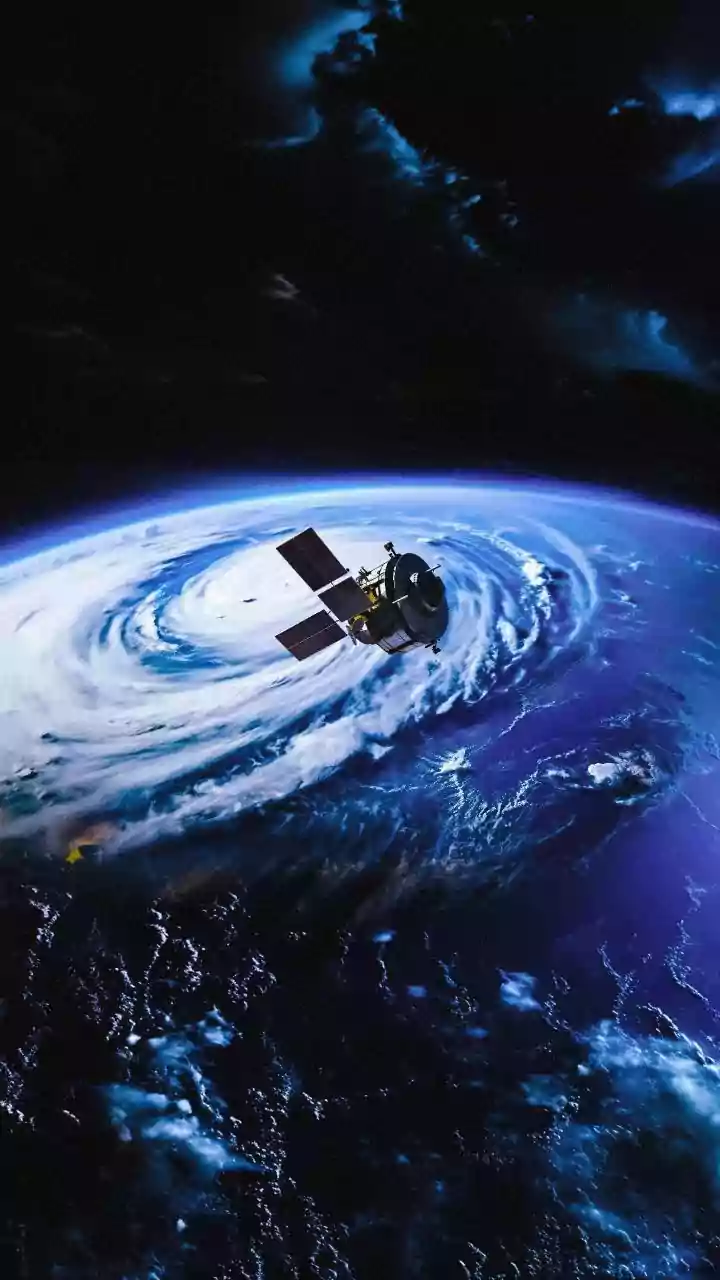
Communication satellites are particularly vulnerable to the effects of solar flares. The bombardment of high-energy particles can damage sensitive electronics, degrade solar panels that power the satellites, and cause phantom commands in their systems. This is known as spacecraft charging, where different parts of a satellite build up electrical potential, leading to discharges that can fry circuits. Furthermore, these solar events heat and expand Earth's upper atmosphere. This increases atmospheric drag on satellites in low-Earth orbit, which can alter their trajectory and shorten their operational lifespan. The disruptions can also interfere with the radio signals used for GPS and telecommunications, leading to blackouts and inaccurate navigation data.
Earth's Early Warning System
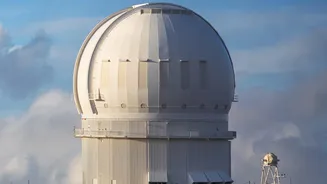
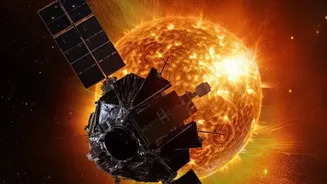
This is where ground-based space weather monitoring stations become indispensable. While space-based observatories like India's Aditya-L1 provide a crucial first look at the Sun's activity, ground stations offer a second, vital layer of defense. They monitor how Earth's own environment responds to incoming solar particles. By watching for changes in our planet's magnetic field and ionosphere, these stations can provide real-time data on the arrival and intensity of a solar storm. This information gives satellite operators critical time—from minutes to hours—to take protective measures, such as temporarily shutting down sensitive systems or reorienting spacecraft to minimize exposure.
How Ground Stations See the Invisible
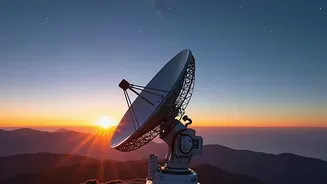
Ground-based observatories use a variety of instruments to detect the effects of space weather. Magnetometers are among the most important, as they measure fluctuations in the Earth's magnetic field. When a CME arrives, it compresses and disturbs the magnetosphere, and these changes are instantly detected on the ground, serving as a clear signal of a geomagnetic storm in progress. Another key tool is the ionosonde, a type of radar that monitors the ionosphere—the electrically charged layer of the upper atmosphere. Solar flares cause sudden increases in ionization, which disrupt radio wave propagation. Networks like the Super Dual Auroral Radar Network (SuperDARN) use these principles to map ionospheric disturbances across vast regions, providing a detailed picture of a storm's impact.
A Global and National Effort
Protecting our space assets is a global collaborative effort. Networks of observatories span the planet, from the polar regions to the equator, ensuring continuous monitoring. India plays a significant role in this international initiative. ISRO integrates data from its own ground-based magnetometers and ionospheric monitors with information from space missions like Aditya-L1. This creates a comprehensive data pipeline for forecasting space weather and its potential impact on the nation's critical infrastructure, from communication satellites to power grids. This combination of looking at the Sun from space and measuring the effects on the ground is what makes modern space weather prediction increasingly reliable.