



A New Strategy for the Red Planet
On July 8, 2026, NASA announced it had awarded contracts to seven companies under a new initiative called STRIDE, which stands for Science Transport and Robotic Innovation for Deployment and Exploration. With a total potential value of around $17 million,
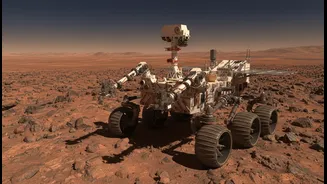
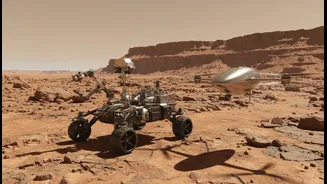
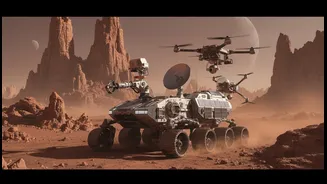
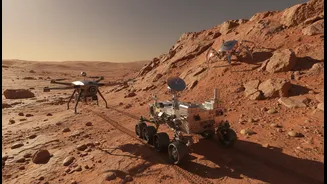
the program signals a strategic shift for the agency. Instead of designing every vehicle in-house, NASA is tapping into the commercial sector to develop innovative mobility systems. The goal is to create robots that can go where current rovers like Curiosity and Perseverance cannot: into steep craters, up rocky slopes, and across greater distances to investigate scientifically rich regions that have so far remained tantalizingly out of reach. This approach mirrors NASA's successful Commercial Lunar Payload Services (CLPS) program, fostering public-private partnerships to accelerate exploration and identify new capabilities.
Meet the New Robotic Trailblazers
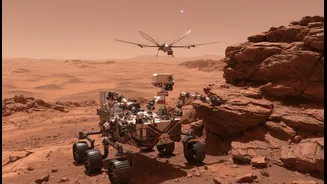
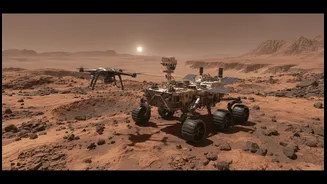
The seven companies selected represent a diverse portfolio of expertise. They are AeroVironment, Astrobotic, Venturi Astrolab, Ground Control Robotics, Honeybee Robotics, Intuitive Machines, and MEI Technologies. Many of these names are already established players in the burgeoning space economy. AeroVironment, for instance, was behind the trailblazing Ingenuity Mars helicopter, which proved powered flight was possible in the planet's thin atmosphere. Intuitive Machines and Astrobotic have been key partners in NASA's lunar delivery contracts. By bringing these firms into the fold for Mars, NASA is not just buying hardware; it is investing in a broader industrial base capable of supporting increasingly ambitious missions to the Red Planet and beyond.
Designed for Every Nook and Cranny
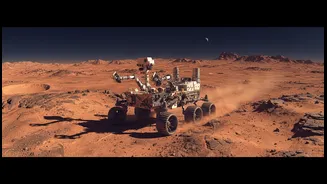
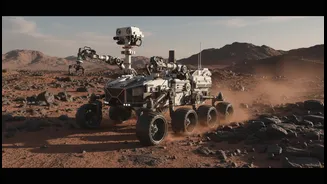
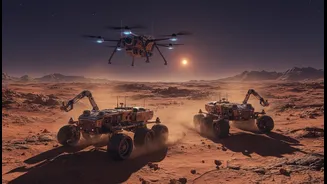
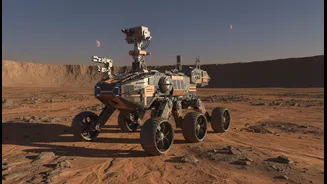
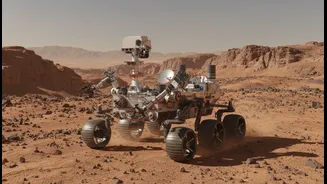
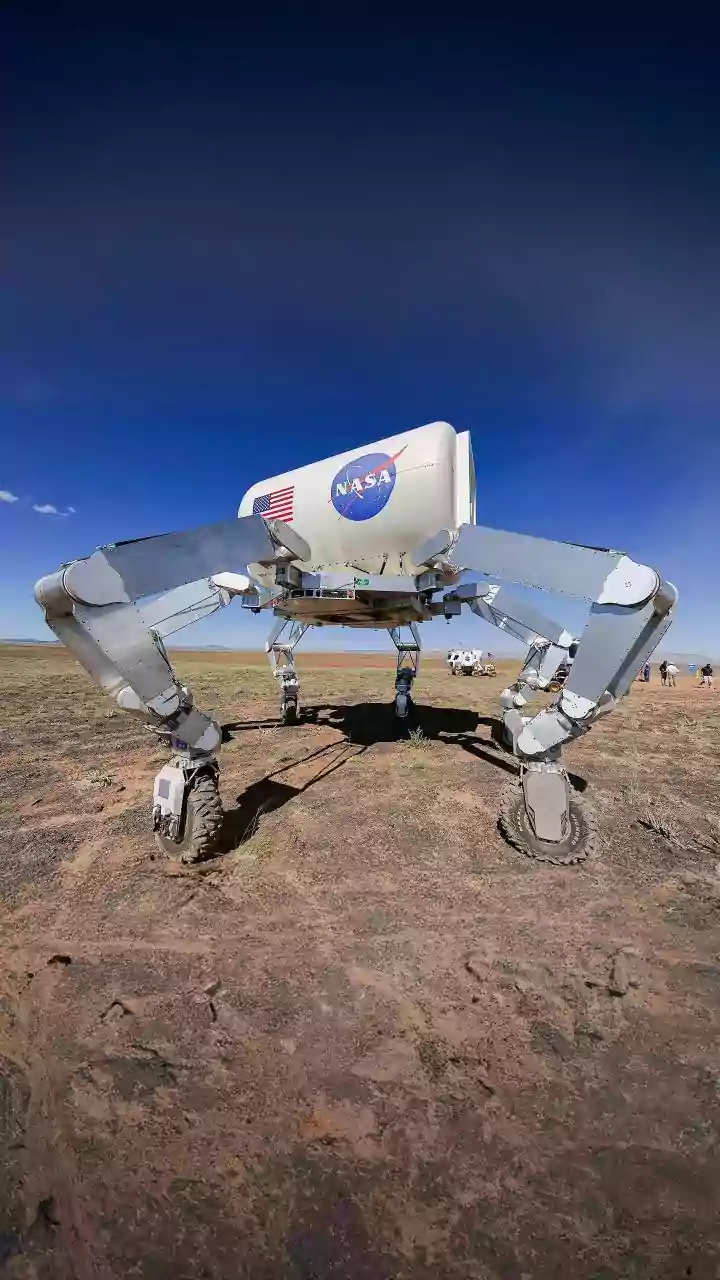
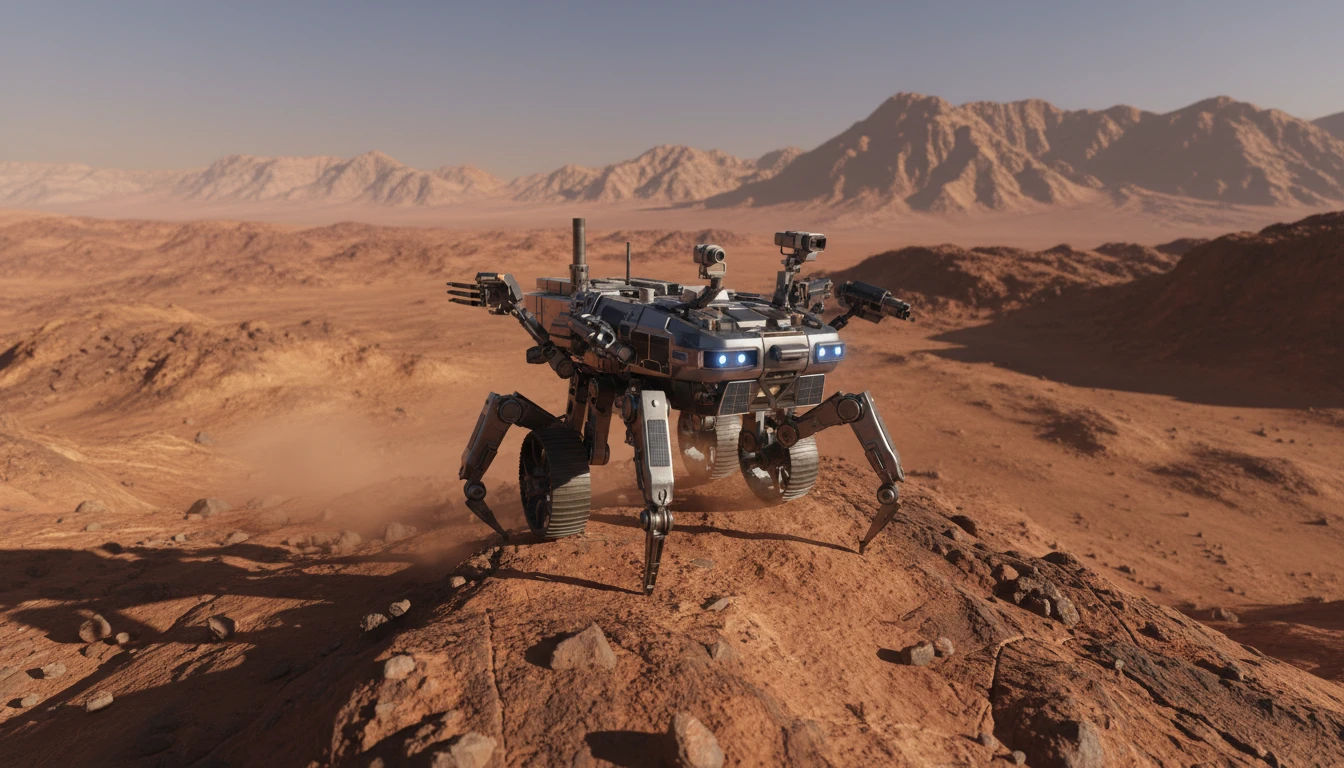
For decades, Mars rovers have been marvels of engineering, but they have consistently struggled with the planet's harsh terrain. The six-wheeled designs of rovers like Spirit, Opportunity, and Curiosity faced significant challenges with sharp, embedded rocks that tore at their aluminum wheels and soft sand that could trap them permanently. The STRIDE initiative directly addresses these past struggles by seeking out designs specialized for extreme environments. The program is looking for both surface and aerial technologies that can carry scientific instruments into these difficult-to-access zones. The new concepts could lead to legged robots capable of climbing steep inclines, fleets of smaller, cooperative drones for aerial reconnaissance, or rovers with novel wheel and suspension systems designed to handle jagged rocks and deep sand without sustaining critical damage. This diversification moves away from a one-size-fits-all approach to a more adaptable, multi-faceted exploration toolkit.
The Unchanging Martian Realities
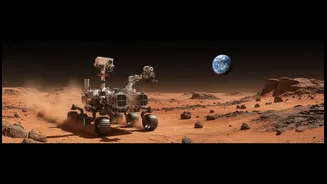
While these new contracts promise a leap forward in mobility, they don't erase the fundamental limits of exploring Mars. The planet remains an incredibly hostile environment. Extreme temperatures, a thin atmosphere, and intense radiation are constant threats to any machine. The vast distance from Earth means communication delays are unavoidable, making real-time control impossible and increasing the need for sophisticated autonomous navigation—another area where rovers have historically been limited. Furthermore, landing on Mars is itself a monumental challenge, requiring a complex sequence to shed enormous velocity safely. The $17 million allocated for STRIDE is for initial design studies, a modest sum in the world of interplanetary missions. These contracts are the first step in a long and expensive development process, and there is no guarantee that every concept will mature into a flight-ready vehicle. The ultimate limits of budget, physics, and the sheer unforgiving nature of the Red Planet remain firmly in place.