


Why Venus? Earth's Twisted Sister
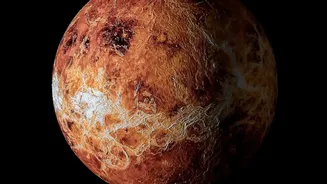
Venus and Earth are similar in size, mass, and composition, suggesting they were formed from the same cosmic materials. Yet, their paths diverged dramatically. While Earth became a haven for life, Venus devolved into the solar system's most hostile planet.
Its surface temperature hovers around a scorching 460°C, hot enough to melt lead, under an atmospheric pressure over 90 times that of Earth's. Scientists believe Venus once had liquid water oceans, much like early Earth. The crucial question is: what went wrong? Understanding the runaway greenhouse effect that turned Venus into a toxic inferno is not just an academic exercise. It serves as a planetary-scale cautionary tale, offering invaluable insights into climate change dynamics that could one day be relevant to our own planet's future.
Shukrayaan: India's Next Interplanetary Leap
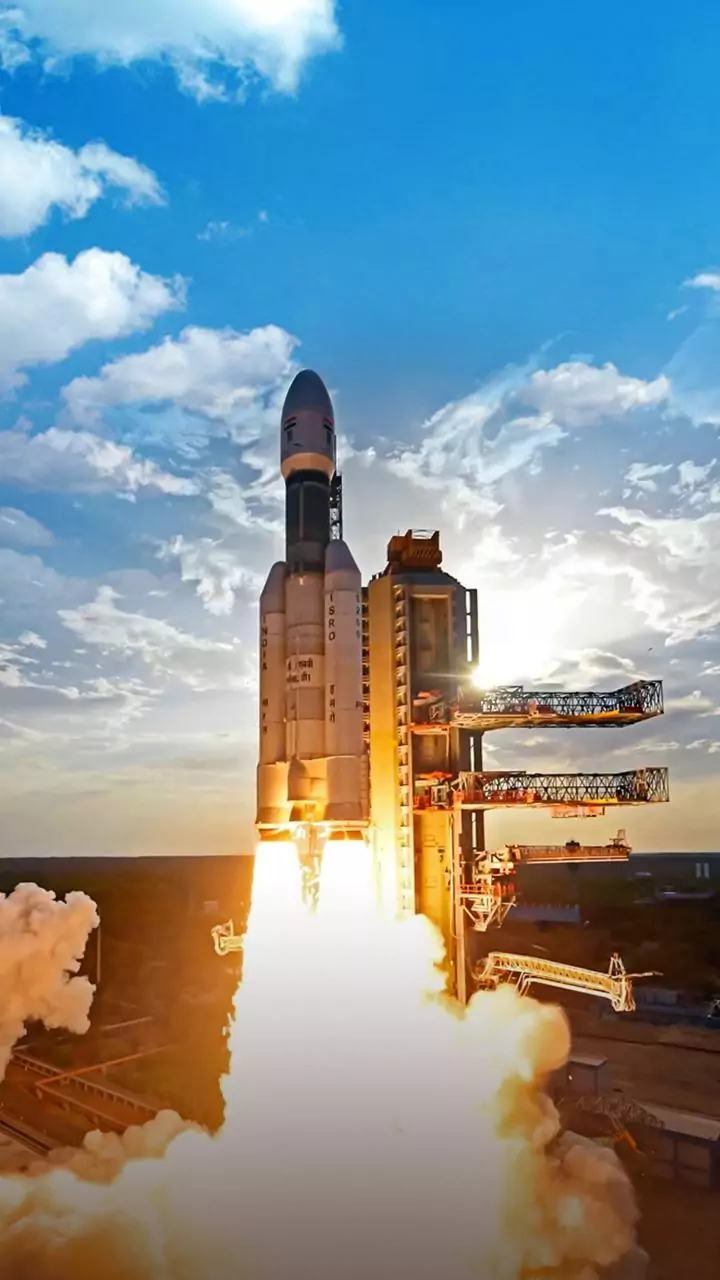
Following the resounding successes of Chandrayaan to the Moon and Mangalyaan to Mars, the Indian Space Research Organisation (ISRO) is embarking on its second interplanetary voyage. The Venus Orbiter Mission, affectionately known as Shukrayaan, received formal government approval in September 2024. The mission is slated for a March 29, 2028 launch aboard the powerful LVM-3 rocket. The spacecraft will undertake a 112-day journey to reach its destination, with a planned orbital insertion around Venus on July 19, 2028. With a budget of approximately ₹1,236 crore, Shukrayaan is an orbiter-only mission, meaning it will study the planet from above without attempting the monumentally difficult task of landing on its harsh surface.
Peering Through the Acid Clouds
To study a planet permanently shrouded in thick clouds of sulfuric acid, you need a very special toolkit. Shukrayaan will carry a payload of about 100 kg, comprising 19 advanced scientific instruments developed in India and with international partners like Russia, Sweden, and Germany. The star instrument is a high-resolution Synthetic Aperture Radar (SAR), which can peer through the dense clouds to map the planet's surface in unprecedented detail—up to four times the resolution of NASA's 1989 Magellan mission. Shukrayaan will also carry the first-ever ground-penetrating radar to Venus, which will map the planet's subsurface geology. This will help scientists understand Venus's geological history, including its extensive volcanic activity.
Hunting for Atmospheric Secrets
The mission's primary goal, as the headline suggests, is to investigate the complex Venusian atmosphere. A suite of instruments will analyze its chemical composition, structure, and super-rotating dynamics, where the atmosphere circles the planet faster than the planet itself rotates. One key instrument, VIRAL (Venus Infrared Atmospheric Gases Linker), co-developed with France and Russia, will look for specific gases. Another, the Venusian Neutrals Analyser (VNA) from Sweden, will study how the solar wind—a stream of charged particles from the Sun—interacts with the planet's upper atmosphere, a process that plays a huge role in shaping a planet's environment. These investigations will paint a comprehensive picture of Venus's climate and weather systems.
A Mission of Global Importance
ISRO's mission doesn't happen in a vacuum. There has been a global resurgence of interest in Venus, with NASA and the European Space Agency (ESA) also planning missions for the late 2020s and early 2030s. Shukrayaan will be a major Indian contribution to this international effort. By studying Venus, scientists hope to find answers to some of the most fundamental questions in planetary science: what makes a planet habitable? How and why do Earth-like planets evolve so differently? The data from Shukrayaan will not only showcase India's growing prowess in deep space exploration but also provide crucial pieces to the puzzle of planetary evolution, helping us understand our own world's past and potential future.