





The Ground Truth of Flooding
For decades, meteorologists have honed their ability to forecast storms by looking at the atmosphere. But a growing body of evidence suggests a crucial part of the weather puzzle lies not in the clouds, but in the soil. Recent studies are highlighting
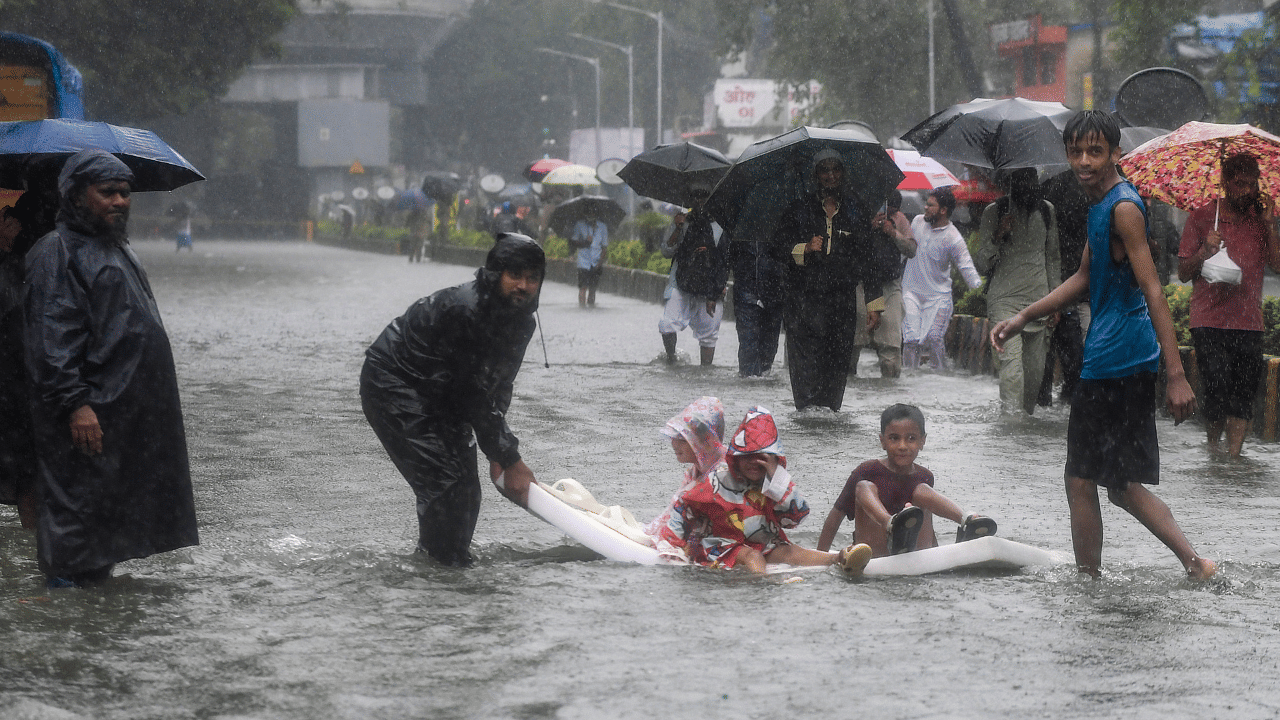
the powerful role of ground conditions, particularly soil moisture, in determining whether a heavy downpour results in a manageable event or a catastrophic flood. A study published in the Journal of Hydrometeorology analyzed over 40,000 atmospheric river storms and found that when soils were already saturated, flood peaks were two to four and a half times higher. It’s a simple but profound concept: a thirsty, dry landscape can absorb a significant amount of rain, whereas waterlogged ground cannot, forcing precipitation to become immediate runoff.
More Than Just a Sponge
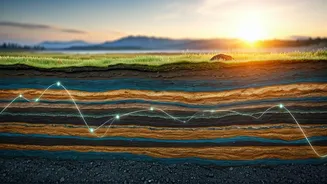
The ground’s influence goes beyond simply acting like a sponge. Scientists have identified a complex feedback loop where the land actually communicates with the atmosphere, influencing the formation and intensity of storms. This phenomenon, sometimes called the "brown ocean effect," describes how warm, wet soil can release heat and moisture back into the air, energizing a storm system in a way that mimics a warm ocean. One study focusing on Hurricane Florence confirmed this powerful mechanism, showing how the storm's passage over already soaked soil caused its rains to intensify, leading to record-breaking floods. The research demonstrated that the heaviest rains occurred over land that had been saturated for about three days, which was enough time to create a humid, energy-rich layer of air for the storm to feed on.
A Tale of Two Soils
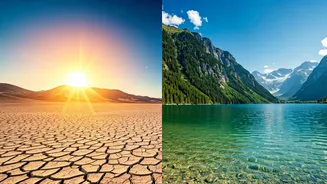
The interaction is not always straightforward. Other research has shown that contrasts between wet and dry patches of land can also create atmospheric circulations that trigger storms. A study led by the UK Centre for Ecology & Hydrology (UKCEH) found that large differences in soil moisture over hundreds of kilometers can increase rainfall by 10 to 30 percent in megastorm hotspots. This occurs because the temperature difference between wet and dry land creates shifts in wind, which can help storms develop. In some cases, storms are more likely to form over drier soils, which heat up faster and create rising air currents. Research in sub-Saharan Africa found that the most extreme thunderstorms were favoured over areas with sharp contrasts in soil moisture, especially when combined with wind shear.
Rethinking Flood and Drought Forecasting
These findings have significant implications for how we prepare for extreme weather. Incorporating detailed, real-time soil moisture data into forecasting models could dramatically improve the accuracy of flood warnings. Lead author of the Hydrometeorology study, Mariana Webb, notes that flood magnitudes don't increase linearly; instead, there's a critical wetness threshold, above which you see much larger flows. Recognizing this could help authorities issue more precise and timely alerts. Paradoxically, the way we receive rain can also contribute to future droughts. Research from Harvard Forest found that intense, short bursts of rain on rocky soils can lead to rapid drainage without properly replenishing soil moisture. This leaves soils drier near the surface, reducing evaporation and the amount of moisture that returns to the atmosphere to form future rain.
The Hidden Costs of Extreme Weather
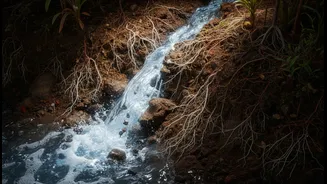
The connection between rainfall and the ground extends beyond flooding to public health and infrastructure. Extreme precipitation following a drought can cause rainwater to bypass the soil's natural filtering processes, flushing contaminants like pesticides and organic matter into groundwater aquifers. This can threaten drinking water supplies. A long-term study in Germany confirmed that extreme weather events were altering groundwater quality. Similarly, studies have shown a statistically significant link between extreme rainfall events and waterborne disease outbreaks. As cities expand, underground spaces like metro stations and parking lots are also becoming increasingly vulnerable to inundation during these events, highlighting the need for new evacuation strategies and infrastructure designs.