






The Silent Crisis Beneath Our Feet
India is the world's largest user of groundwater, with cities like Delhi, Bengaluru, and Chennai heavily dependent on it for daily needs. However, rapid urbanisation means that open spaces that once absorbed rainwater are now covered in concrete, preventing
natural recharge. This, combined with over-extraction, causes groundwater levels to fall, leading to shortages, higher costs for pumping, and increased reliance on expensive and unreliable water tankers. The problem is simple: we are taking water out much faster than nature can put it back in.
Rainwater Harvesting: A Simple, Powerful Solution
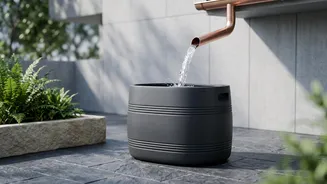
Rainwater Harvesting (RWH) is the simple practice of collecting and storing rainwater instead of letting it run off into drains. The concept isn't new; it’s a modern revival of traditional practices like stepwells and community ponds that sustained Indian communities for centuries. For an urban home, it means turning your rooftop into a personal water source. The captured water can be used for non-potable needs like gardening, washing cars, and flushing toilets, which can account for a significant portion of a household's daily water consumption.
Low-Cost Systems for Every Home
Implementing an RWH system doesn’t have to be complex or expensive. Two primary low-cost methods are perfect for metro homes: storing water for direct use and recharging groundwater. For direct storage, rainwater from the roof is channeled through pipes, passed through a simple filter (often made of sand, gravel, and charcoal), and stored in an existing sump or a new tank. A 'first-flush' diverter is a key, low-cost component that discards the initial, dirty water from a spell of rain, significantly improving water quality. The second method involves directing rooftop water into a recharge pit. This is a pit dug in a garden or driveway, filled with layers of stones and sand, which allows water to slowly percolate into the ground and replenish the local water table, directly helping to raise the levels in nearby borewells.
The Many Benefits for Your Home and City
The most immediate benefit is a reduction in water bills and less dependence on municipal supply or costly tankers. A typical urban home can harvest thousands of litres of water each monsoon, potentially covering its non-drinking water needs for months. Beyond personal savings, RWH has a huge community impact. It reduces demand on the city's overstretched water infrastructure and helps mitigate urban flooding by capturing runoff at the source. By recharging local aquifers, every participating home helps raise the groundwater level for the entire neighbourhood, contributing to long-term water security for all.
How to Get Started This Monsoon
Starting is simpler than you might think. First, assess your roof—a clean concrete or tiled roof is an ideal catchment area. Next, decide your goal: do you want to store water in a tank for direct use or recharge a borewell? You can find numerous local plumbers and specialised agencies who can install a basic system. The core components are gutters and pipes to transport the water, a first-flush diverter, a filter, and either a storage tank or a recharge pit. It’s also wise to check local municipal regulations, as many cities, including Bengaluru, Chennai, and Delhi, have made RWH mandatory for new buildings and offer incentives or rebates. National campaigns like the Jal Shakti Abhiyan also aim to promote and support these efforts.