





Journey to the Mesopelagic
The ocean’s twilight zone, known to scientists as the mesopelagic zone, is a vast layer of water that stretches globally from about 200 to 1,000 meters (roughly 650 to 3,300 feet) deep. It exists in the band between the bright, sun-drenched surface waters
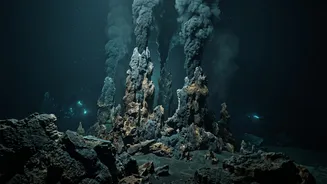
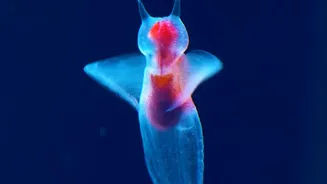
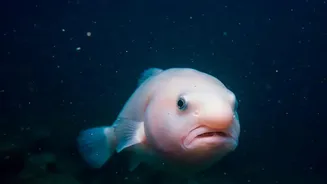
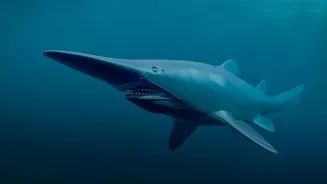
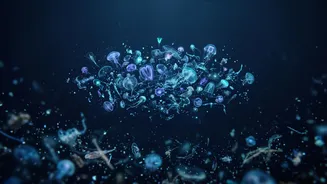
where photosynthesis occurs and the pitch-black abyss below. In this realm, sunlight fades to a permanent, faint glow, creating an environment filled with unique lifeforms adapted to the semi-darkness. Organisms here, from giant squid to peculiar blobfish and bioluminescent jellyfish, have evolved to survive under immense pressure in a world where flashes of living light are common.
A Hidden Abundance of Life
For decades, scientists vastly underestimated the sheer volume of life, or biomass, in the twilight zone. Early estimates were based on dragging nets through the water, a method that proved inefficient for capturing the agile and often gelatinous creatures of the deep. More recent studies using advanced sonar technology suggest the biomass of fish alone could be ten times greater than previously thought, potentially accounting for 90% of the ocean's total fish biomass. This zone is home to what is likely the largest animal migration on Earth. Every night, billions of animals, including lanternfish, squid, and shrimp, travel from the relative safety of the deep to feed in the plankton-rich surface waters, descending back into the darkness before dawn.
The Challenge of a Deep-Sea Census
Counting life in the twilight zone is extraordinarily difficult for several reasons. The immense pressure can cause deep-sea animals to change form or even disintegrate when brought to the surface. Many of the zone's inhabitants are fragile, gelatinous creatures like jellyfish that are easily destroyed by nets. Furthermore, sonar, while more effective than trawling, has its own limitations. The sound waves can be scattered by the dense layers of organisms, making it hard to get a precise count. The sheer vastness of this global habitat, which constitutes about 20% of the ocean's total volume, also makes comprehensive surveys a monumental task.
A Crucial Role in Climate Regulation
This massive, uncounted biomass is not just a scientific curiosity; it is a critical component of our planet's climate regulation system. The daily migration of twilight zone animals is a key part of the 'biological carbon pump'. As these creatures feed near the surface at night, they consume carbon-rich plankton. When they return to the depths, they transport that carbon with them. This process effectively removes enormous amounts of carbon dioxide from the atmosphere, sequestering it in the deep ocean where it can remain for hundreds or even thousands of years. Scientists estimate the twilight zone helps transport 2 to 6 gigatons of carbon annually, a service comparable to that of major rainforests.
An Ecosystem at a Crossroads
The twilight zone is one of the planet’s last great wild frontiers, but it faces growing threats even as we begin to understand its importance. As traditional fish stocks decline, commercial fishing interests are looking to the twilight zone as a new, unexploited source for products like fishmeal and omega-3 supplements. This 'gold rush' could have devastating consequences for an ecosystem we barely understand. Climate change also poses a significant risk. Warming waters could disrupt the food supply for deep-sea creatures and reduce the ocean's ability to store carbon, potentially leading to a dramatic decline in twilight zone life by the end of the century.