



In the vast emptiness of space, we assume gravity is king. But for a tiny, fast-spinning asteroid named 1998 KY26, another force may be at play: the gentle, persistent push of sunlight itself. This challenges a popular theory about its odd movement.
Meet the Asteroid in Question
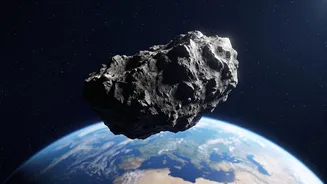
Asteroid
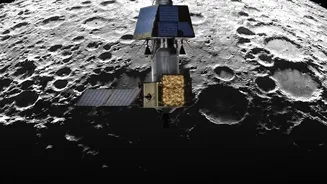
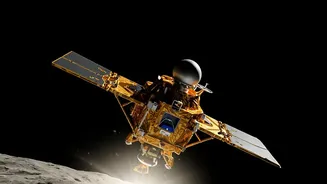
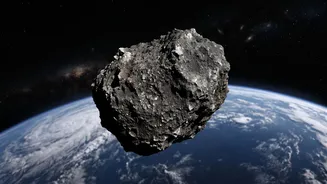
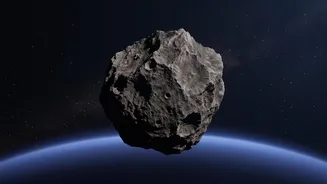
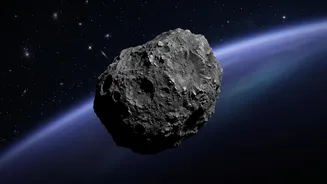
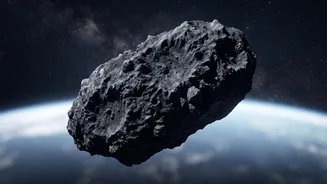
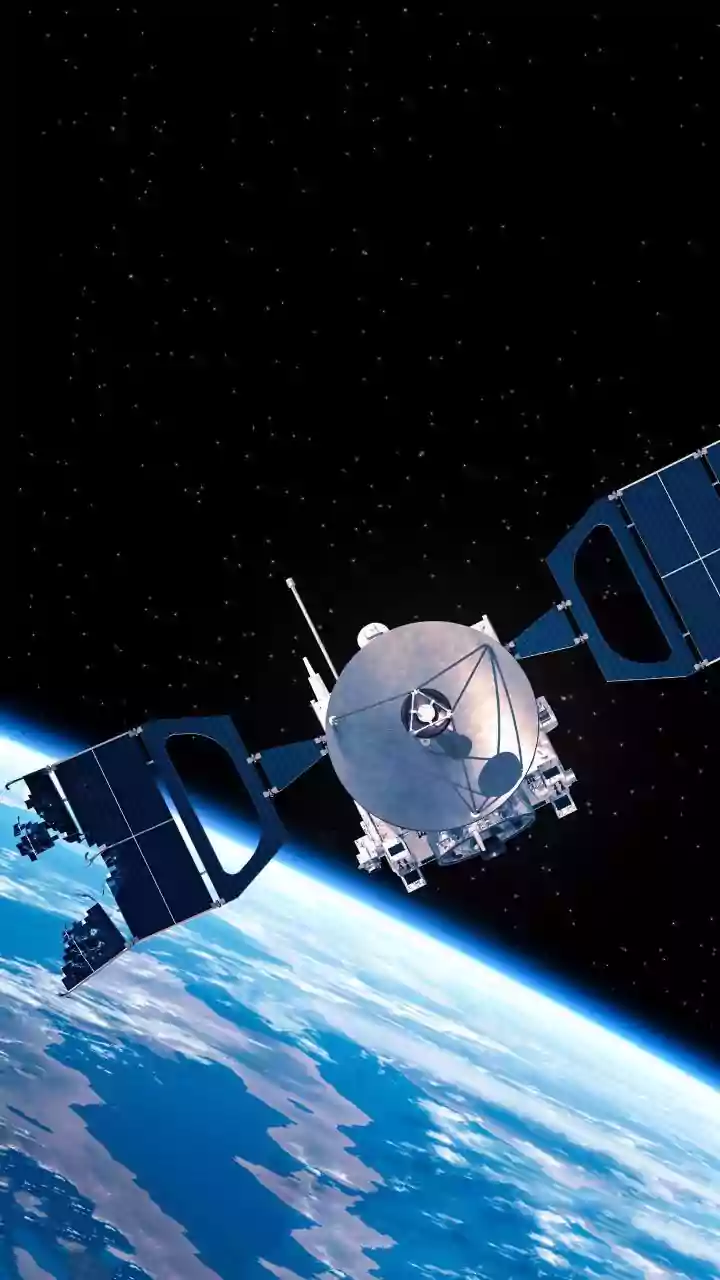
1998 KY26 is a fascinating and unusual object. Recent observations in 2024 have revealed it to be much smaller and faster-spinning than first thought. It measures only about 11 metres (36 feet) in diameter—roughly the size of a school bus—and rotates once every 5.35 minutes. This rapid spin is particularly noteworthy. Most importantly, its trajectory shows a strange acceleration that cannot be explained by gravity alone, puzzling scientists who track near-Earth objects. This cosmic mystery has made it a prime target for Japan’s Hayabusa2 spacecraft, which is scheduled to visit the tiny asteroid in July 2031, making it the smallest celestial body ever to be explored up close.
The 'Dark Comet' Theory Fades
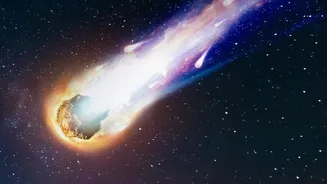
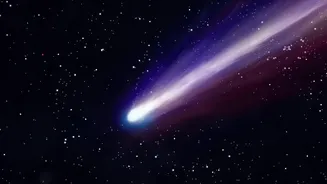
For a time, the leading explanation for the asteroid's strange acceleration was the 'dark comet' hypothesis. Comets get a propulsive kick when the sun's heat turns their ice into escaping gas, creating a jet effect. A dark comet would be one that releases gas so faintly it doesn't form a visible tail, making it look like an ordinary asteroid. This seemed like a plausible reason for 1998 KY26’s non-gravitational movement. However, a new study by aerospace engineers has cast serious doubt on this idea. Their computer models show the asteroid is simply too warm to hold onto buried water ice. The calculations suggest that even in its coldest regions, any ice would have sublimated and vanished in just a couple of thousand years, a relatively short time in the life of an asteroid.
An Invisible Push from the Sun
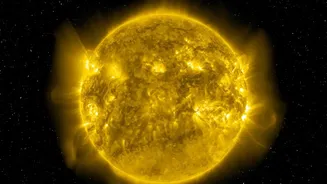
If not outgassing, then what is pushing 1998 KY26 off its predicted course? The new research points toward a more subtle force: solar radiation pressure. It sounds like science fiction, but it's a real phenomenon. Photons—the particles that make up sunlight—have no mass, but they do carry momentum. When they strike an object, they transfer a tiny amount of that momentum, exerting a minuscule but constant force. On Earth, this force is unnoticeable, but in the frictionless vacuum of space, this steady push can alter the path of a small, low-mass object like an asteroid over long periods. Think of it less like a shove and more like a constant, gentle breeze that slowly steers a ship off course.
Why It's Different from the Yarkovsky Effect
Scientists who study asteroid movements often talk about the Yarkovsky effect. This is also a solar-powered force, but it works differently. The Yarkovsky effect is a thermal reaction; an asteroid absorbs sunlight, heats up, and then re_radiates that heat as infrared energy. Because the asteroid is rotating, the 'hot spot' from the afternoon side radiates heat, creating a tiny recoil or thrust that pushes the asteroid. Solar radiation pressure, on the other hand, is the direct force from incoming photons hitting the surface. For most asteroids, the Yarkovsky effect is considered the dominant non_gravitational force changing their orbits. However, the unique properties of 1998 KY26—its incredibly small size and rapid spin—might mean the direct push of solar radiation is a more significant factor than the delayed thermal push of the Yarkovsky effect.
Implications for Planetary Defence
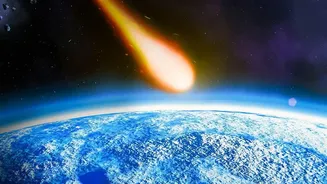
Accurately predicting the paths of near–Earth asteroids is a critical task for planetary defence. An object the size of 1998 KY26 is comparable to the impactors that caused the Tunguska and Chelyabinsk events. While this particular asteroid is not considered a threat, understanding all the forces that can alter an asteroid's trajectory is vital. If our models miscalculate the influence of subtle forces like solar radiation pressure or the Yarkovsky effect, our long–term predictions could be off by thousands of kilometres. Studying anomalies like 1998 KY26 helps scientists refine their models, ensuring we can more accurately track potentially hazardous objects in the future. The Hayabusa2 mission's visit in 2031 will provide invaluable ground–truth data, confirming whether sunlight's gentle push is indeed the dominant force shaping this tiny world's journey through the cosmos.