





A Resilient Orbiter's Discovery
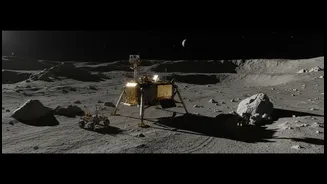
Long after the unfortunate hard landing of the Vikram lander in 2019, the Chandrayaan-2 orbiter has proven to be a resilient and invaluable national asset. Continuously circling the Moon, its suite of scientific instruments has remained fully operational,
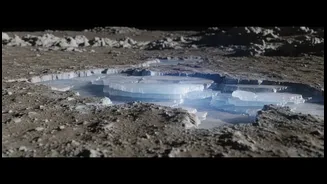
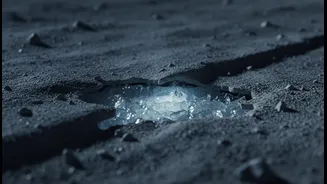
collecting a wealth of data. The latest breakthrough comes from scientists at the Physical Research Laboratory (PRL), who analyzed data from the orbiter's sophisticated radar system. Their findings, published in a peer-reviewed journal, provide some of the strongest evidence yet for the presence of water ice hidden beneath the surface in the Moon's perpetually dark south polar region.
The Power of Dual-Frequency Radar
This isn't just a simple snapshot. The discovery was made using the Dual-Frequency Synthetic Aperture Radar (DFSAR), the first of its kind to study the Moon. This instrument is a game-changer because it uses two different radar frequencies, L-band and S-band. Think of it like having two types of vision; the S-band is sensitive to the surface, while the longer-wavelength L-band can penetrate several metres below the dust and rock. By comparing how these two signals scatter and reflect, scientists can distinguish the signature of water ice from that of just rough, rocky terrain with much greater confidence. This dual-frequency approach provides a much clearer picture of what lies beneath the surface.
Peering into Double Shadows
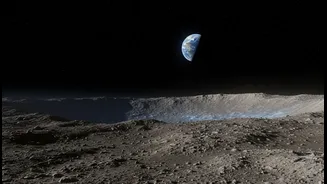
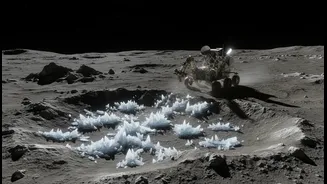
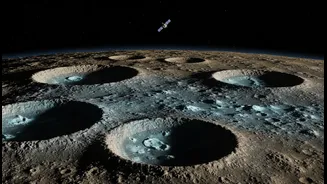
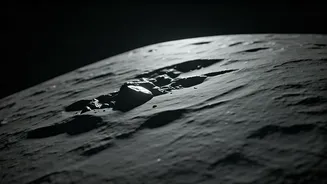
The focus of the research was on some of the most extreme environments in the entire solar system: "doubly shadowed craters". These are craters located inside larger craters that are already in permanent shadow. Sunlight has never touched the floors of these areas, allowing temperatures to plummet to an incredible -248 degrees Celsius. These deep-freeze conditions are perfect for trapping and preserving water ice over billions of years. The PRL scientists identified radar signatures consistent with subsurface ice in four of these doubly shadowed craters. One 1.1-kilometre-wide crater within the larger Faustini crater showed particularly strong evidence, not only in radar data but also in its physical shape, which suggests an impact may have revealed the ice-rich layers below.
Why This Finding Matters
The confirmation of subsurface water ice is more than just a scientific curiosity; it has profound implications for the future of space exploration. Water is the most critical resource for establishing a long-term human presence on the Moon. Launching water from Earth is incredibly expensive, so finding it locally is key. Lunar ice can be melted for drinking water, and it can also be split into its component elements, hydrogen and oxygen. These can provide breathable air for astronauts and, crucially, be used to create rocket fuel. This finding essentially strengthens the argument that the lunar south pole could one day serve as a refuelling station for missions deeper into the solar system.
Bolstering India's Lunar Legacy
This discovery by the Chandrayaan-2 orbiter is a significant addition to India's legacy of lunar exploration. It builds upon the initial hints of water from Chandrayaan-1 and complements the historic on-ground success of Chandrayaan-3. It demonstrates ISRO's capability to conduct long-term, high-quality science from orbit. By providing crucial data on the location and nature of potential resources, India is not just participating in the global race to the Moon; it is actively shaping our understanding of it. This data will be vital for planning future robotic and human missions, making the south pole an even more attractive destination for space agencies worldwide.